
FDOT Safety Push Targets Driver Behavior, Not Just Infrastructure
By Lisa Neff
Traffic deaths are often discussed as engineering problems — add a signal here, widen a lane there, build a roundabout somewhere else.
But in a presentation to the Sarasota/Manatee Metropolitan Planning Organization board May 18, the state transportation department’s regional safety administrator said the biggest danger may be sitting behind the wheel.
“Are YOU the other driver?” a slide in Keith Robbins’ presentation asked.
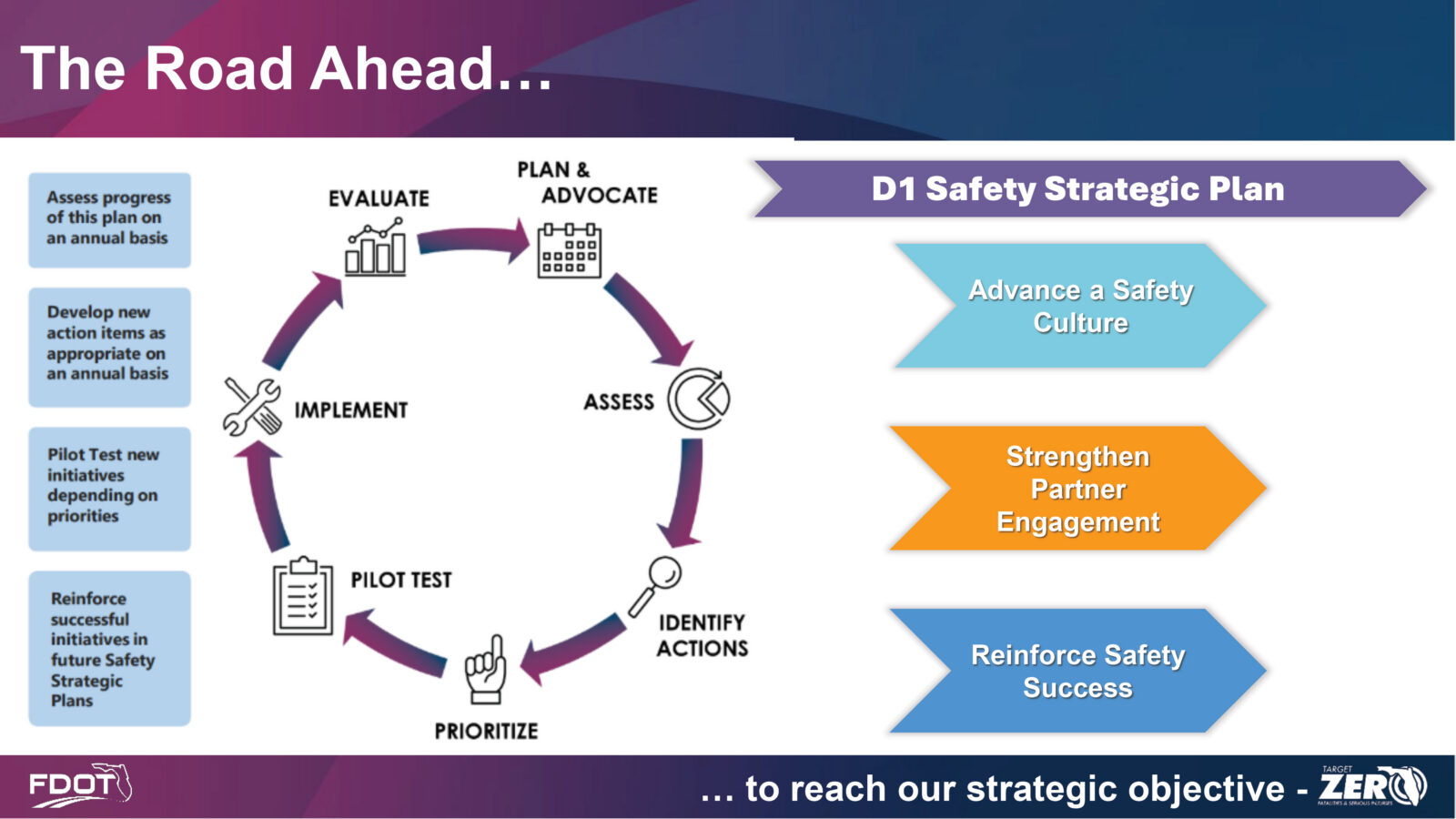
Robbins, safety administrator for the Florida Department of Transportation’s District One, presented the agency’s new “Promoting a Traffic Safety Culture” strategy to the MPO board meeting in Sarasota, framing crashes less as infrastructure failures and more as a behavioral challenge requiring a broader cultural shift.
The MPO is the regional transportation planning agency responsible for coordinating long-range transportation priorities and federal transportation funding decisions for Sarasota and Manatee counties. Its board includes local elected officials and transportation representatives who help shape policy and project priorities.
Robbins said the strategy grew out of more than a year of work and aligns with the state’s developing Strategic Highway Safety Plan and the Federal Highway Administration’s Safe System Approach.
“This is not a project-based plan — it is a culture-based plan,” he said.
The strategy aims to reduce fatalities and serious injuries through behavior changes, partnerships and coordinated safety efforts rather than prescribing specific road projects. The plan includes one-year, three-year and five-year objectives focused on advancing traffic safety culture, strengthening partner engagement and reinforcing successful safety improvements.
Here is a summary of key elements presented to the board:
• District One averages two traffic deaths and seven serious injuries daily;
• Survey respondents most often cited “other drivers” as their biggest concern;
• The current five-year work program includes 65 safety projects totaling more than $107 million;
• Sarasota and Manatee counties account for more than $49 million in safety funding across 50 projects;
• Key priorities include changing driving behaviors and achieving “Target Zero” — eliminating traffic fatalities and serious injuries.
Robbins said survey results highlighted the challenge facing transportation officials. Among 150 respondents, 74% identified the behavior of other motorists as their primary concern. Thirty percent cited “other drivers” generally, while aggressive and distracted drivers each drew 22%.
“We keep coming back to the same question: what concerns people most when driving?” Robbins said. “The consistent answer is other drivers.”
District safety data showed lane departures and intersections remain among the highest categories for fatal and serious injury crashes. Robbins said Manatee County ranked relatively high statewide in several emphasis areas, while Sarasota County showed fewer major warning signs but did have elevated numbers.
The presentation also highlighted investments in safety projects throughout the district, including median modifications, intersection upgrades, signal improvements, pavement markings and lighting enhancements.
Board members responded positively, frequently tying the presentation’s themes to projects already underway in their communities.
Manatee County Commissioner Tal Siddique said local governments increasingly are finding ways to improve safety without relying on large-scale road expansion projects.
“Infrastructure dollars aren’t going as far on capacity improvements, but they’re going much further on functional improvements,” Siddique said.
He pointed to roundabouts, signal changes and median projects that improve traffic movement while reducing crashes. He also noted Manatee County recently launched a dedicated safety page on its capital improvement program website to highlight smaller projects such as raised crosswalks and raised intersections.
Bradenton Mayor Gene Brown, who chairs the MPO, emphasized the role of roundabouts and relatively simple measures that can improve driver behavior and reduce crashes.
“People still complain about them, but the public has to understand that as more go in, the benefits become clear,” Brown said.
Near the end of the discussion, Brown shifted from policy to something more personal.
A former funeral director, Brown said he had witnessed firsthand the consequences of distracted driving and road rage.
“Last Tuesday my 16-year-old grandson got his driver’s license,” Brown said. “I’m more nervous now than I ever was when my own children turned 16.”
The comment landed squarely on the point Robbins had spent the presentation making: traffic safety may ultimately depend less on roads and more on the people using them.