
AMITW Weekly Nesting Numbers
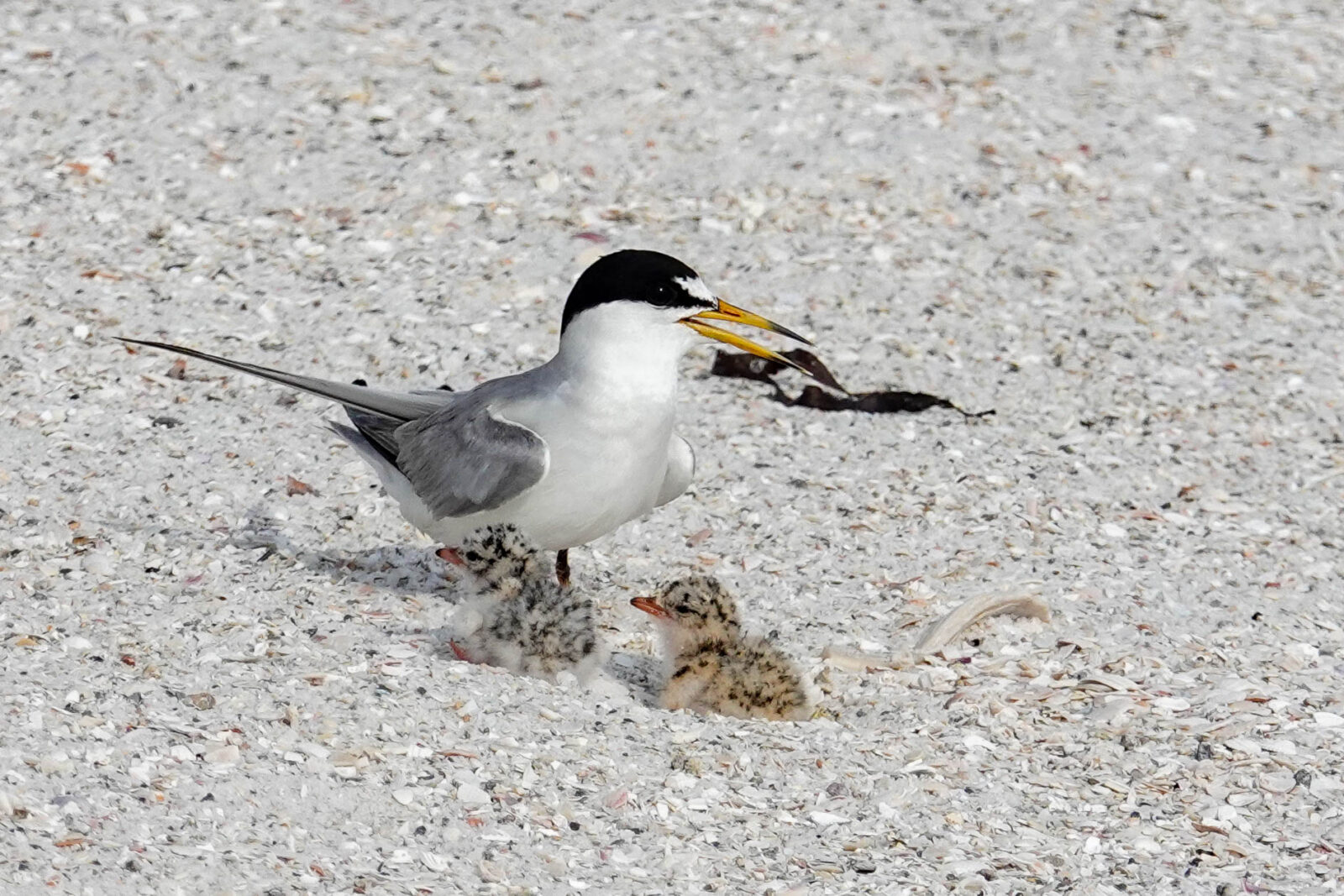
Least tern chicks Amelia and Charlie sit near their parent. These two chicks were born this week and stay close to their parents for protection from predators and the heat. As chicks get older they wander further away from their parents. It’s important to keep an eye out for them as they don’t always stay within the posted boundaries! Credit: Kathy Doddridge
SEA TURTLES:
| 6/20/2026 – 6/26/2026 | Loggerhead | |
| Nests this week | 55 | 55 |
| False Crawls this week | 78 | 78 |
| 2026 Total Nests | 301 | 301 |
| 2026 Total False Crawls | 362 | 362 |
| 2026 Adult Disorientations | 17 | 17 |
Nesting numbers are still looking good and following the track of numbers from 2022 and 2023. Hatching season should be starting in the next week, so we are checking every nest very thoroughly every day for new hatchling tracks. You can also visit our website for weekly updates at https://islandturtlewatch.com/conservation/sea-turtle/
Sea Turtle Release THIS MONDAY 8am
Krysta, the loggerhead turtle, will be satellite tagged at Coquina Beach THIS Monday as part of Sea Turtle Conservancy’s Tour de Turtles. Krysta will be satellite tagged, thanks to her sponsor, Hurricane Hanks, so you can track her travels. This event is FREE and open to the public. Check Sea Turtle Conservancy or AMITW’s Facebook Event page to find out the exact location when you get up in the morning. Get there early because the release will occur exactly at 8am! **AS WE ARE TAGGING A NESTING TURTLE, WE WILL NOT HAVE THE EXACT LOCATION OF THE RELEASE UNTIL THE MORNING OF THE RELEASE.** Check out the AMITW or Sea Turtle Conservancy Facebook page or sign up for our Turtle Release Alert Email list to get the latest update: https://app.e2ma.net/app2/audience/signup/2015345/1750310/ This event is FREE and open to the public, there is no need to formally RSVP.
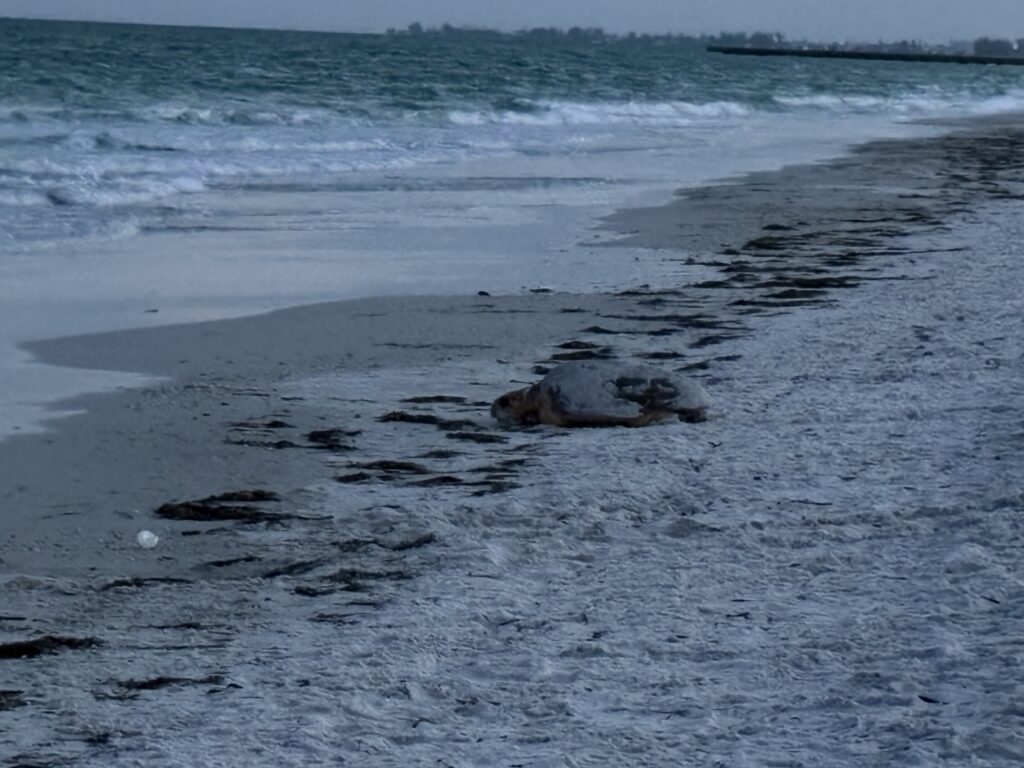
AMITW was treated to an exciting sight Wednesday morning, when a mother loggerhead was crawling back to the water after nesting just as we started patrol. Credit: Kristen Mazzarella
It’s ALMOST hatching time!
If you haven’t checked your property to make sure that there are no lights that can be seen from the beach, now is the time! Hatchling sea turtles use the light of the night sky as a cue to find their way to the Gulf. If they see light brighter than the night sky, they will head in the wrong direction. AMITW has turtle friendly light guides that can help with that as well as FREE PAR 20 Amber light bulbs (available in limited quantities). If you are in need of turtle friendly educational supplies such as rack cards, table tents, or coloring pages, you can order FREE materials at islandturtlewatch.com/get-involved/educate
Here are some other ways you can make sure the beaches of Anna Maria Island stay safe for nesting sea turtles and their hatchlings:
- Please check the area for turtle crawls before you place your canopies and beach chairs
- Remove all beach furniture and toys from the beach at night.
- Fill in holes that may entrap turtles crawling up to lay their nests
- Do not use flashlights, cellphones, flash photography or fishing lamps on the beach.
- Do not approach nesting turtles or shine lights at turtles
- Flatten sandcastles so turtles have a clear path to lay their nests
- Respect posted areas. Keep at least 5 feet away from posted sea turtle nests.
- If you encounter a nesting turtle, remain quiet and observe from a distance.
- If you see a sea turtle in trouble, call AMITW at 941-301-8434 or FWC at 888-404-3922
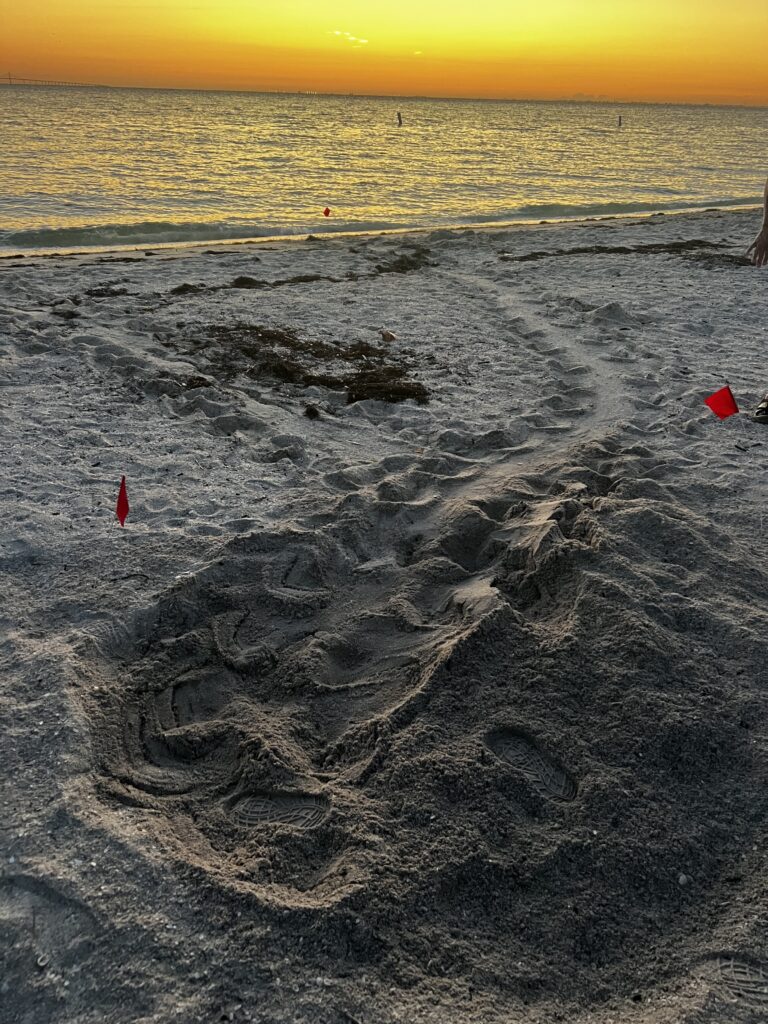
Turtle patrol finds a new loggerhead nest at sunrise while patrolling along the Tampa Bay side of Anna Maria. Sea turtles will nest along nearly any stretch of sandy beach and around 50 nests a year are documented on this 1 mile stretch of Bayside beach on Anna Maria. Credit: Mary Kate Camara
SHOREBIRDS:
AMITW are checking two shorebird colonies on AMI daily to monitor their progress and document new chicks and any chick or egg losses. Over the July 4th weekend, we will have volunteers from AMITW and Manatee Audubon posted near the shorebird colonies as Bird Stewards, to educate the public about shorebirds and how to protect them. We will set up a spotting scope to view the new chicks up close. Come say hi to our volunteers, watch the Least Terns and Black Skimmers from a safe distance, and learn how you can share the beach with shorebirds!
The three older Least Tern chicks are now two-weeks and have begun to grow their pin feathers. Since they are still unable to fly, it is the perfect time to band each of the chicks. After a gentle capture, “Percy”, “Vera” and “Nancy” were weighed and their bills and wings measured. Then a silver federal band and unique identifying color bands were loosely affixed to their legs. All birds were banded under Elizabeth Forys’s Federal Master Banding permit: 24258, state: LSSC-21-00034
According to the USGS, bird banding opens up new lines of scientific research such as population analysis, survival estimates, and tracking movements. By better understanding these patterns, scientists can answer questions that go far beyond birds, helping track ecosystem change, guide conservation decisions, and protect both wildlife and human communities.
Least Terns: Adults – 26; Chicks – 7; Nests – 9
Black Skimmers: Adults – 9; Nests – 0
You can also visit our website for weekly updates at https://islandturtlewatch.com/conservation/shorebirds/data/
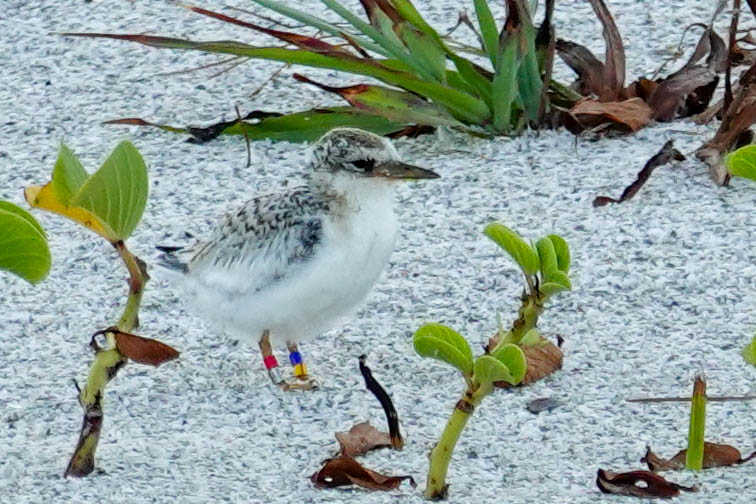
This week Dr. Elizabeth Forys visited our Least Tern colony to collect measurements and weights on three of the chicks and attach identification bands. Once the chicks have fledged (learned how to fly) and left Anna Maria Island, if they are spotted elsewhere and the bands are reported, we will be able to learn where they travel to and whether they return to Anna Maria to nest when they are older. You can report banded birds to www.reportband.gov. Credit: Kathy Doddridge
Please help ensure the survival of our colonies by following these Shorebird-friendly tips:
- Respect the posted bird closures and keep your distance. If birds become agitated or leave their nests you are too close!! A general rule is to stay at least 300 feet away from a shorebird nest.
- Avoid flying kites or drones near shorebird colonies – they look like predators and will scare the birds off their nests.
- Place trash in its proper place and do not feed wildlife. Food scraps attract predators to the beach. Litter on beaches can entangle birds and turtles.
- Keep pets away from nesting areas. Even well-behaved pets can be perceived as a threat. Keep cats indoors.
- Do not intentionally force birds to fly. When birds are chased or disturbed, they use energy they need to reserve for nesting and migration.
- Do not use fireworks on the beach
- Spread the word! If you see people disturbing nesting birds, sea turtles, or nest sites, gently remind them how their actions may hurt the animals’ survival. If they continue to disturb, please call and report their activities to FWC’s Wildlife Alert hotline at 888-404-FWCC (3922).
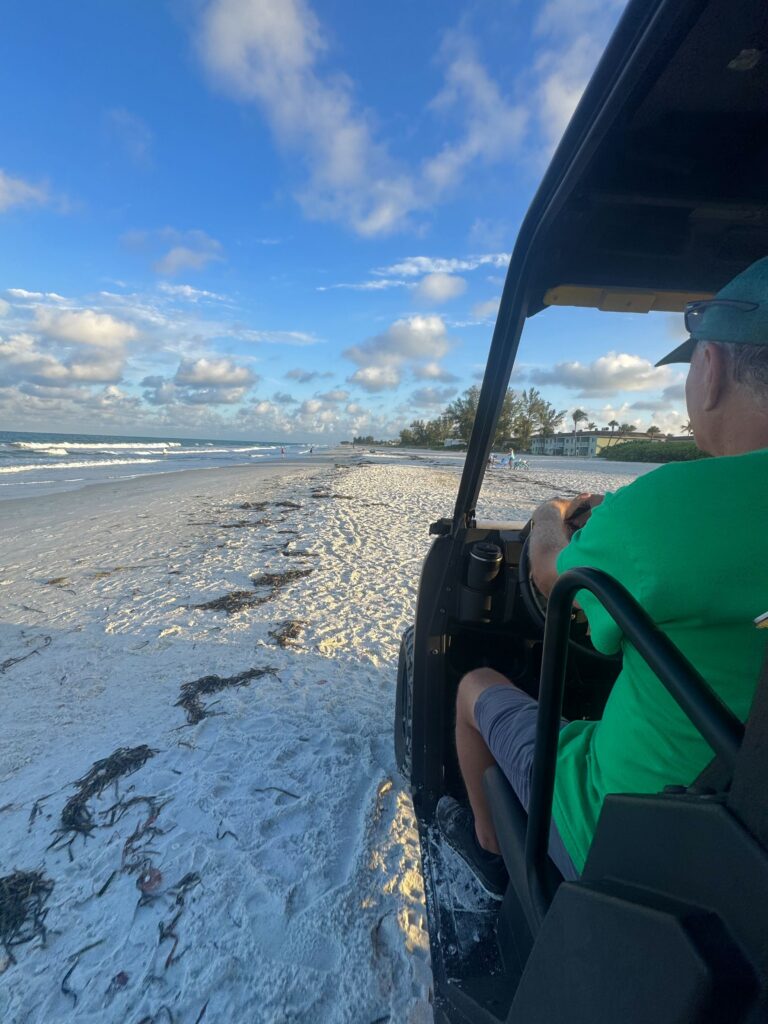
AMITW Volunteer Chuck Anderson patrols along the waterline to find new sea turtle crawls on turtle patrol. We can tell when a sea turtle has emerged when we find a pair of tracks that look like tractor tires- one coming out of the water and one returning to the water. Credit: Terri Edwards
MISCELLANEOUS:
Turtle Tracks and Shorebird Facts talks – Mondays from 10am – 11am at Holmes Beach City Hall 5801 Marina Drive, Holmes Beach. FREE. No reservations necessary!
AMITW 24-hour Hotline: (941) 301-8434 (this can be found at the bottom of all the yellow turtle nest signs!)
Order FREE outreach materials at https://islandturtlewatch.com/get-involved/educate/
Provide to guests or post in your rental properties! Rack cards, door hangers, posters, and window clings, educate visitors about how to protect sea turtles and shorebirds on AMI.
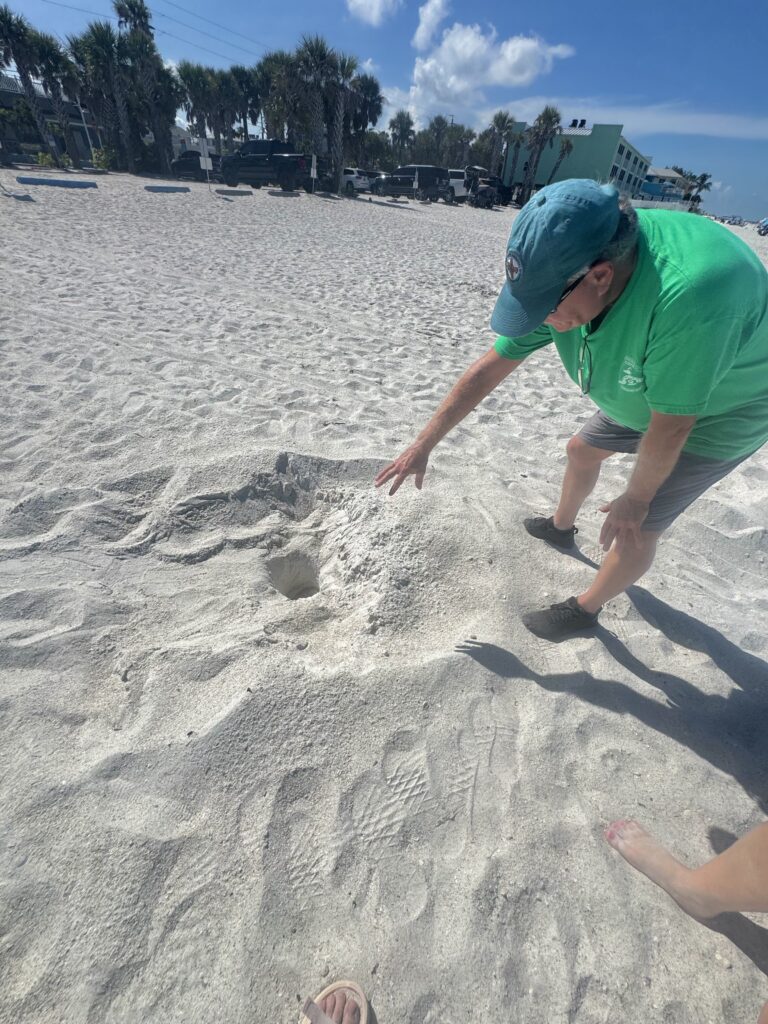
AMITW Volunteer Chuck Anderson investigates an abandoned egg chamber left behind by a loggerhead sea turtle. Nesting turtles are very susceptible to disturbance and even if she has dug a complete egg chamber, the turtle may leave the beach without laying any eggs. This means she will have to come up on another stretch of beach later that night or the next night to try to deposit her eggs. It’s best to leave the beach to turtles at night so we don’t interrupt a nesting turtle. If you are on the beach at night and see a nesting turtle, keep at least 20 feet BEHIND the turtle (away from her face) and do not use any lights or flash. Credit: Terri Edwards