
AMITW Nesting Numbers
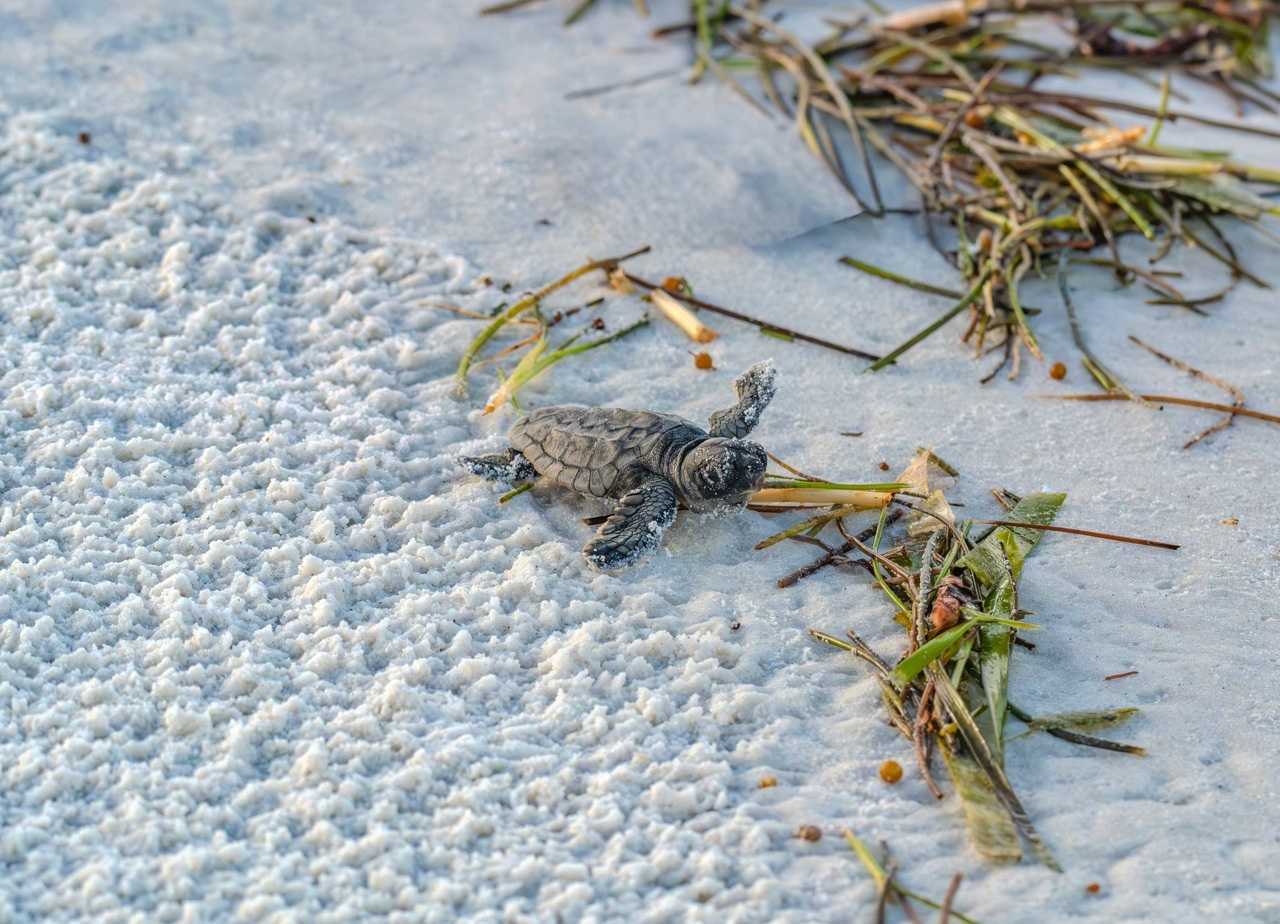
A loggerhead hatchling makes its way to the water after being found inside of a hatched nest 3 days after the main hatch while AMITW conducted an inventory. Credit: Amy Waterbury
SEA TURTLES:
| 7/11/2026 – 7/17/2026 | |
| Nests this week | 24 |
| False Crawls this week | 25 |
| 2026 Total Nests | 409 |
| 2026 Total False Crawls | 517 |
| 2026 Adult Disorientations | 20 |
| 2026 Hatched Nests | 36 |
| 2026 Nests Inventoried | 22 |
| Nests remaining on the beach | 368 |
| 2026 Hatchlings Produced | 1,726 |
| 2026 Hatchling Disorientations | 16 |
| 2026 Min # Disoriented Hatchlings | 478 |
| 2026 Diso Hatchlings found dead | 37 |
Sea turtle hatching is happening now and Turtle Patrol is busy looking for new nests, checking all existing nests, responding to disorientations, and conducting nest inventories 3 days after a nest has hatched. Nest inventories are conducted to determine the hatch success of the nest. All the contents of the nest are removed and counted to determine how many eggs were laid and how many of them hatched. Currently we are seeing over 70% hatch success on the nests that have been inventoried. If you see the AMITW Turtle Patrol conducting a nest inventory, feel free to come by and watch to see how well the nests did and learn more about sea turtles. Nest inventories are also the best way to get to see hatchling sea turtles as some live hatchlings may be found in the nest and will be released.
Although we are seeing good hatch successes on our nests, we need to make sure that the hatchlings make it to the water so that they have a chance to grow up and return to nest in 25-30 years. You can help protect these hatchlings by:
- Turn off or shield white lights visible from the beach after dark, or switch to amber-filtered bulbs with shields. Hatchlings will follow the brightest light and we want to make sure that’s the night sky over the Gulf.
- Close blinds and curtains on Gulf-facing windows at night
- Remove beach chairs, umbrellas and other gear from the sand before sunset so that mother sea turtles don’t have obstacles to go over or get stuck in on their way to nest on the beach.
- Fill in any holes dug in the sand before leaving the beach so hatchling and adult sea turtles don’t get stuck in them.

A loggerhead hatchling makes its way to the water after being found inside of a hatched nest 3 days after the main hatch while AMITW conducted an inventory. Credit: Amy Waterbury
Find a Disoriented Hatchling? Call our 24-hour Hotline!
Please do not release found hatchlings to the Gulf! AMITW has a team of on-call volunteers manning the phones 24-hours. So, if you see a hatchling or adult sea turtle in distress, please call our 24-hour Hotline (941) 301-8434 and our trained volunteers will respond promptly. You can also find this number on the yellow nest signs and on our website www.islandturtlewatch.com
Need to Tell Your Guests about Turtle Season?
Order FREE outreach materials at https://islandturtlewatch.com/get-involved/educate/
Provide to guests or post in your rental properties! Rack cards, door hangers, posters, and window clings, educate visitors about how to protect sea turtles and shorebirds on AMI.
Turtle Tracks and Shorebird Facts talks – Mondays from 10am – 11am at Holmes Beach City Hall 5801 Marina Drive, Holmes Beach. FREE. No reservations necessary!
SHOREBIRDS:
Least Terns
Adults – 52
Chicks – 11
Nests – 0
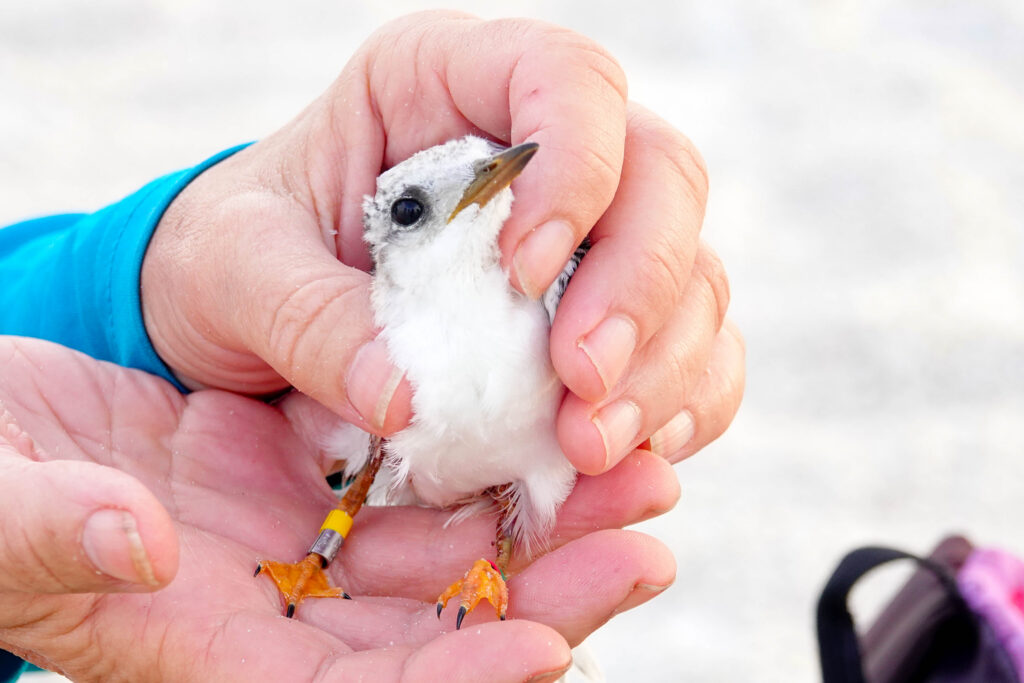
Least Tern chick “Carlos” sports Green/Red and Yellow/Silver bands. Credit: Kathy Doddridge
Black Skimmers
Nests – 0
The Least Tern colony continues to thrive with a total of 11 chicks at varying ages. Five youngsters have now fledged — or have learned to fly. Three other Least Tern chicks are almost ready to fly, which is the perfect time to band them. After a gentle capture, “Pearl”, “Carlos” and “Leon” were weighed and their bills and wings measured. Then a silver federal band and unique identifying color bands were loosely attached to their legs. All birds were banded under Elizabeth Forys’s Federal Master Banding permit: 24258, state: LSSC-21-00034.
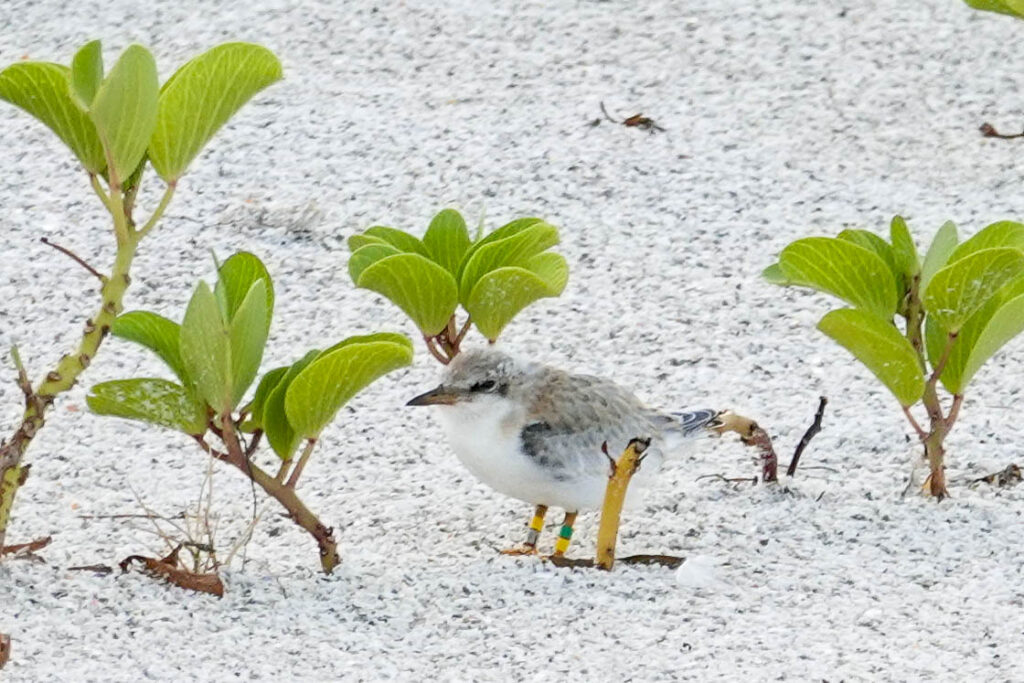
Least Tern chick “Pearl” sports her new Green/Yellow and Yellow/Silver bands Credit: Kathy Doddridge
According to the USGS, bird banding opens up new lines of scientific research such as population analysis, survival estimates and tracking movements. By better understanding these patterns, scientists can answer questions that go far beyond birds, helping track ecosystem changes, guide conservation decisions and protect both wildlife and human communities.
In other news, the Black Skimmer nest established over the July 4th holiday was predated and the posting was removed.
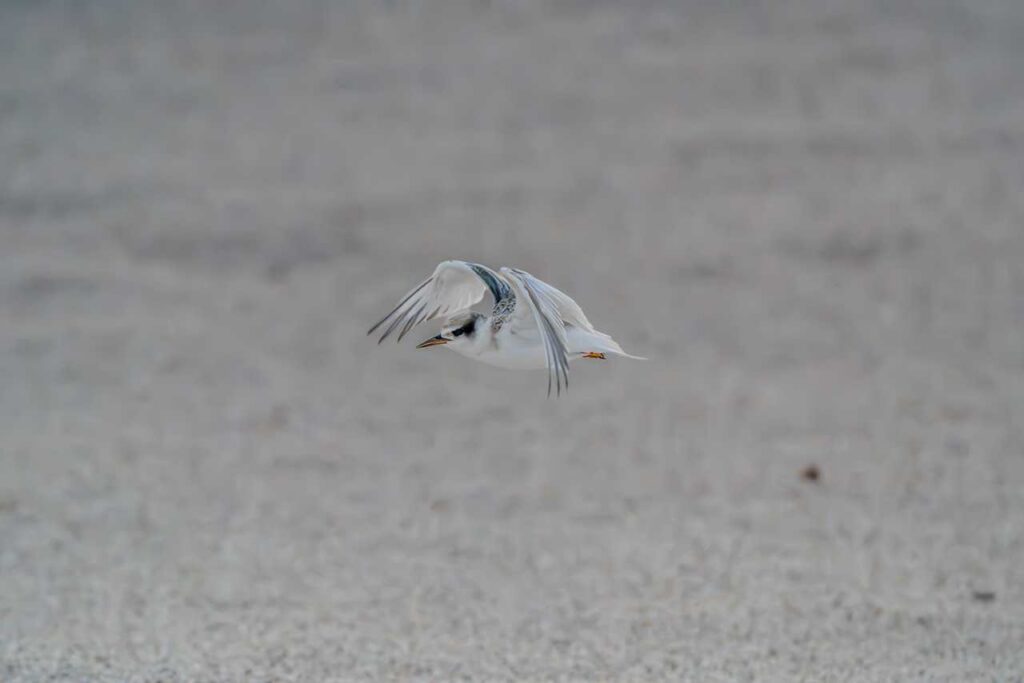
Success! One of the Least Tern chicks hatched on AMI fledges (learns to fly)! Please be careful around the bird closure as not all chicks have mastered the art of flying yet and may be wandering outside of the bird closure. Credit: Amy Waterbury
As we wait for the last few chicks to learn to fly, it is important to remember that they may be traveling outside the posted closure. Beachgoers should use caution when walking in the area. When chicks feel threatened by an avian predator, they lay flat on the sand and can be difficult to see.