
AMITW Weekly Nesting Numbers
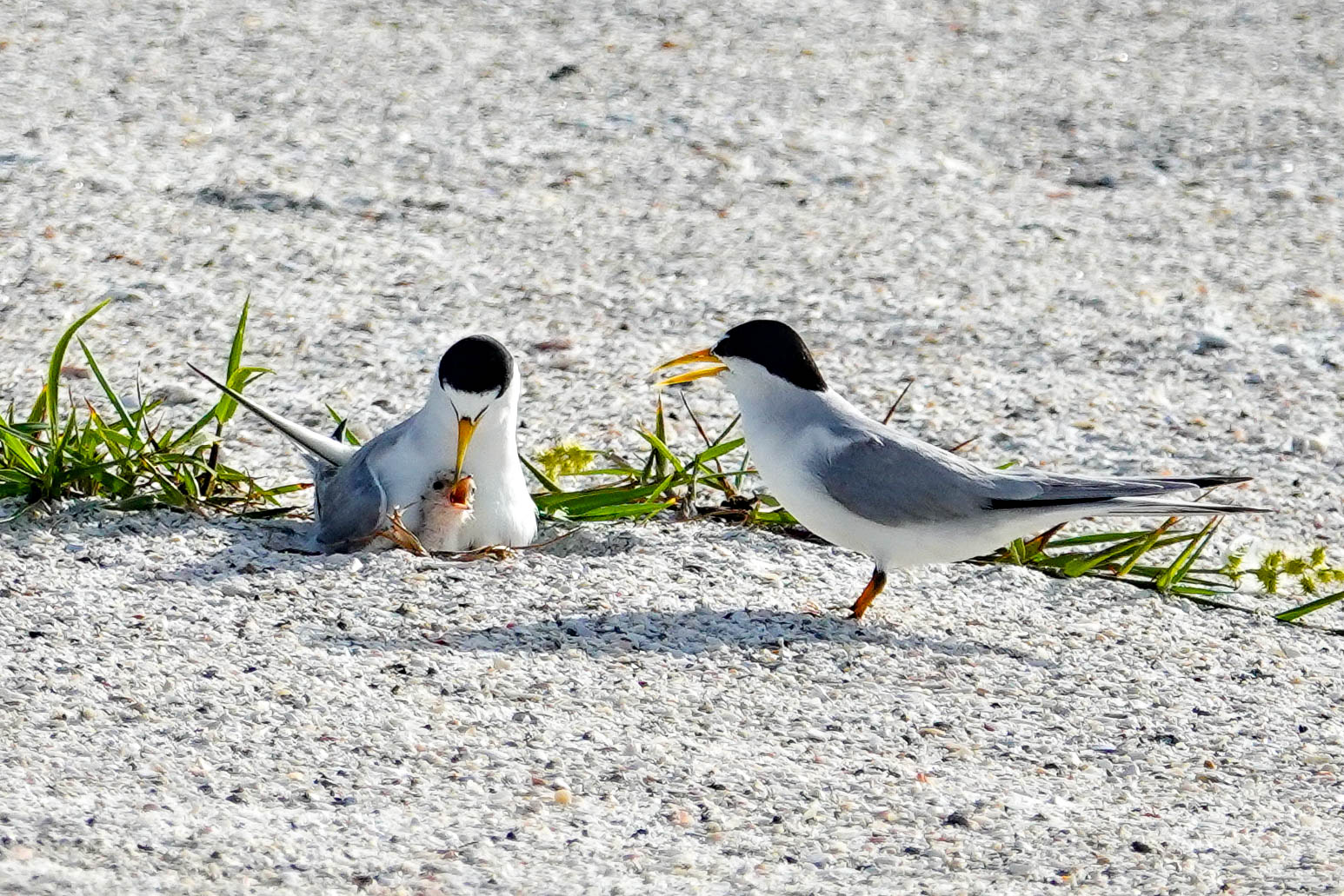
The first Least Tern chick was sighted with its parents on June 2nd. Did you know that Least Tern chicks are mobile only minutes after they hatch? They can travel outside the posted boundaries so it’s important to keep your distance from a posted bird closure and watch where you are walking if you are walking nearby. Credit: Kathy Doddridge
SEA TURTLES:
| 5/30/26 – 6/5/206 | Loggerhead | Green | |
| Nests this week | 47 | 47 | 0 |
| False Crawls this week | 44 | 44 | 0 |
| 2026 Total Nests | 127 | 127 | 0 |
| 2026 Total False Crawls | 131 | 131 | 0 |
Nesting numbers remained steady from last week to this week but they are starting to increase on a daily basis so we should see nesting pick up over the next few weeks. We have been noting a lot of trash and holes left on the beach overnight. Trash can entangle nesting turtles and they can get trapped inside holes. Please remember to leave the beach clean, flat and dark so that mother sea turtles can safely nest on the island.
Here are some other Turtle Friendly Tips:
- Please check the area for turtle crawls before you place your canopies and beach chairs.
- Remove all beach furniture and toys from the beach at night.
- Fill in holes that may entrap turtles crawling up to lay their nests.
- Flatten so turtles have a clear path to lay their nests.
- Respect posted areas. Keep at least 5 feet away from posted sea turtle nests.
- If you encounter a nesting turtle, remain quiet and observe from a distance.
- If you see a sea turtle in trouble, call AMITW at 941-301-8434 or FWC at 888-404-3922
- Do not use flashlights, cellphones, flash photography or fishing lamps on the beach.
- Do not approach nesting turtles or shine lights at turtles.
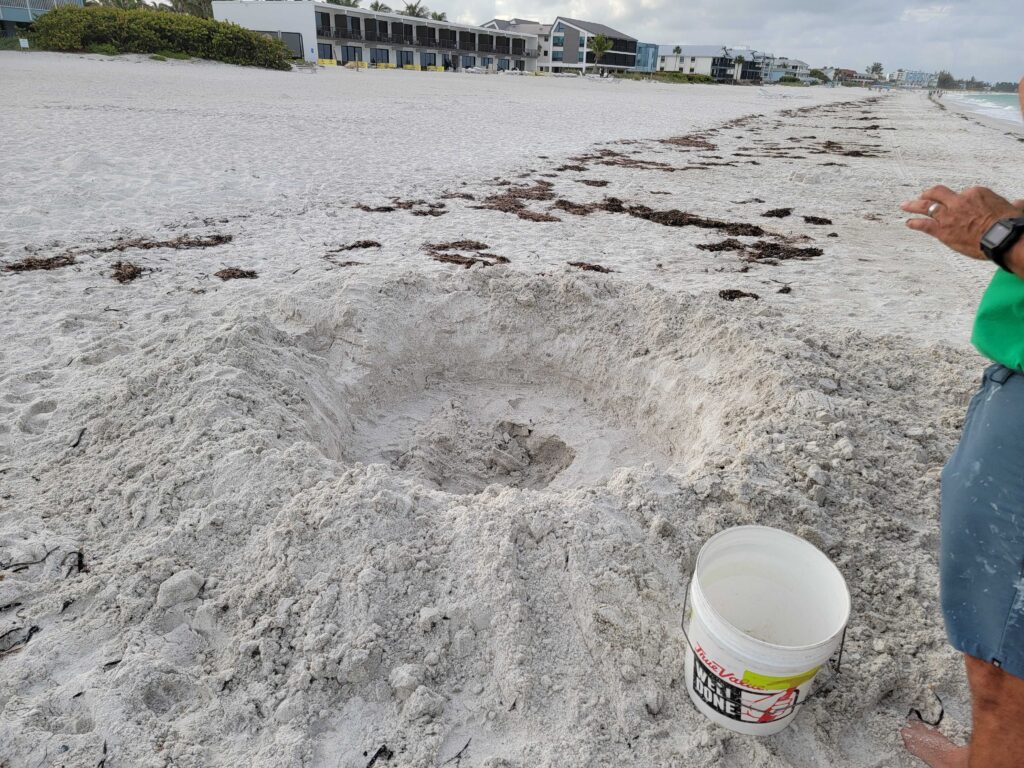
Large holes dug on the beach like this one should be filled in before you leave the beach. Not only are they hazardous to people walking on the beach, but nesting sea turtles and their hatchlings can fall into them and get stuck leaving them susceptible to predation and dehydration. Please fill your holes before you leave the beach and if you are walking at sunset, fill in the holes that you see so the turtles have a clear path to lay their nests. Credit: Karen Anderson
SHOREBIRDS:
6/5/2026
Black Skimmer Colony: 59 birds; 21 on nests.
Least Tern Colony: 38 birds; 26 on nests.
The Least Tern and Black Skimmer colonies started the week with extremely high numbers of birds and nests — 80 Least Terns on 39 nests and 126 Black Skimmers on 44 nests.
One Least Tern nest hatched two chicks on June 2/3.
Sadly, by the morning of June 4 both chicks were missing and volunteers discovered the presence of a Coyote. The coyote could be seen on the evening/morning of June 4 as well as June 5. At the same time, Black Skimmer eggs had been abandoned or damaged.
The primary predators for nesting birds are Fish Crows, Gulls, cats and coyotes. The Black Skimmer colony has experienced significant loss as a result of these predators with only 21 nests remaining. The Least Terns continue to incubate on 26 nests and the colony was expanded to accommodate additional nests.
AMITW have reached out to Florida Fish and Wildlife Conservation Commission shorebird team for guidance.
With the disruption to the colonies, it is of utmost importance that the remaining birds on nests are not disturbed. You can help ensure the survival of these nests by following these tips:
- Respect the posted bird closures and keep your distance. If birds become agitated or leave their nests you are too close!! A general rule is to stay at least 300 feet away from a shorebird nest.
- Avoid flying kites or drones near shorebird colonies – they look like predators and will scare the birds off their nests.
- Place trash in its proper place and do not feed wildlife. Food scraps attract predators to the beach. Litter on beaches can entangle birds and turtles.
- Keep pets away from nesting areas. Even well-behaved pets can be perceived as a threat. Keep cats indoors.
- Do not intentionally force birds to fly. When birds are chased or disturbed, they use energy they need to reserve for nesting and migration.
- Do not use fireworks on the beach
- Spread the word! If you see people disturbing nesting birds, sea turtles, or nest sites, gently remind them how their actions may hurt the animals’ survival. If they continue to disturb, please call and report their activities to FWC’s Wildlife Alert hotline at 888-404-FWCC (3922).
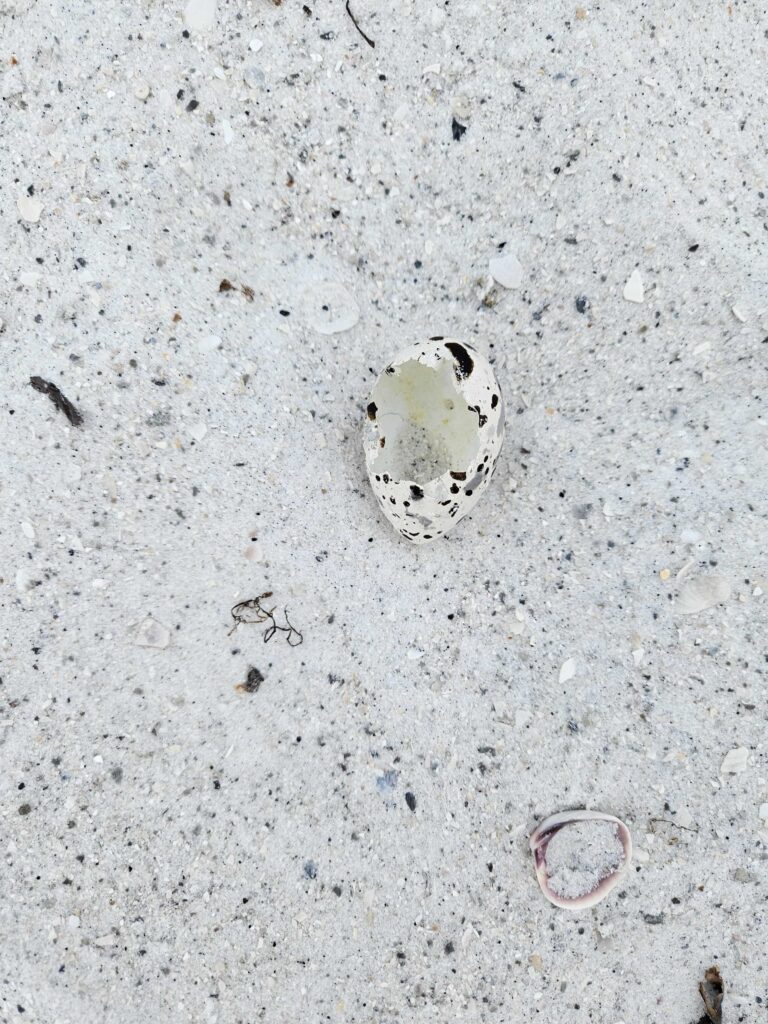
The remnant of a Black Skimmer egg was found indicating that it was eaten by a predator. You can prevent predation by taking your trash with you and not feeding birds on the beach. These actions attract predators to the colony. Credit: Kathy Doddridge
MISCELLANEOUS:
- Turtle Tracks and Shorebird Facts talks – Mondays from 10am – 11am at Holmes Beach City Hall 5801 Marina Drive, Holmes Beach. FREE. No reservations necessary!
- AMITW 24-hour Hotline: (941) 301-8434 (this can be found at the bottom of all the yellow turtle nest signs!)
- Order FREE outreach materials at https://islandturtlewatch.com/get-involved/educate/ Provide to guests or post in your rental properties! Rack cards, door hangers, posters, and window clings, educate visitors about how to protect sea turtles and shorebirds on AMI.
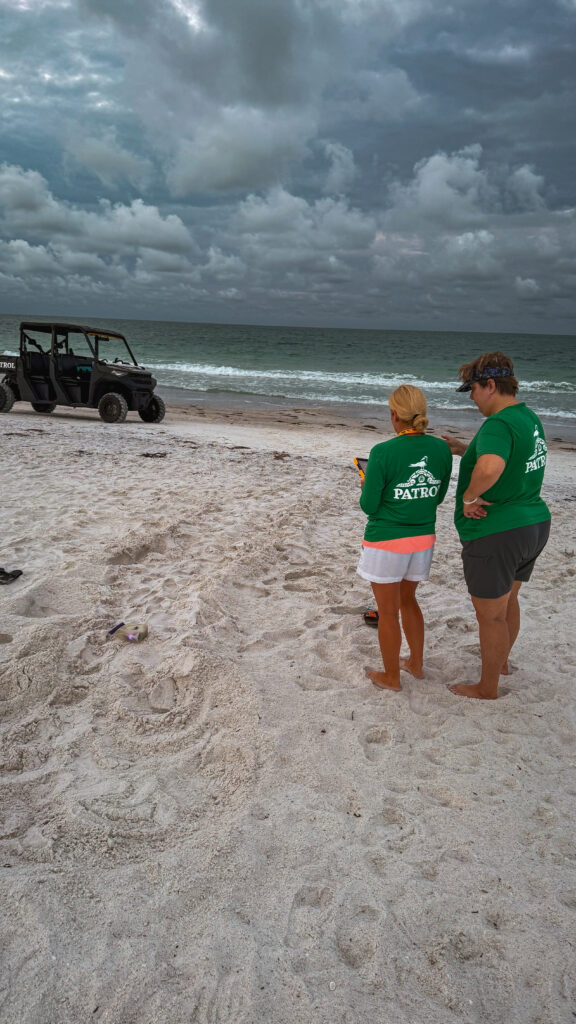
AMITW Patrollers Natalie Rosbury (left) and Danielle Kimberly (right) enter the data for a brand new nest. AMITW patrols along the waterline every morning at dawn to find the tracks from sea turtles coming up to lay their nests. Each track has an incrawl (turtle coming out of the water) and an outcrawl (turtle returning to the water). Credit: Jerry Miller