
AMITW Weekly Nesting Numbers
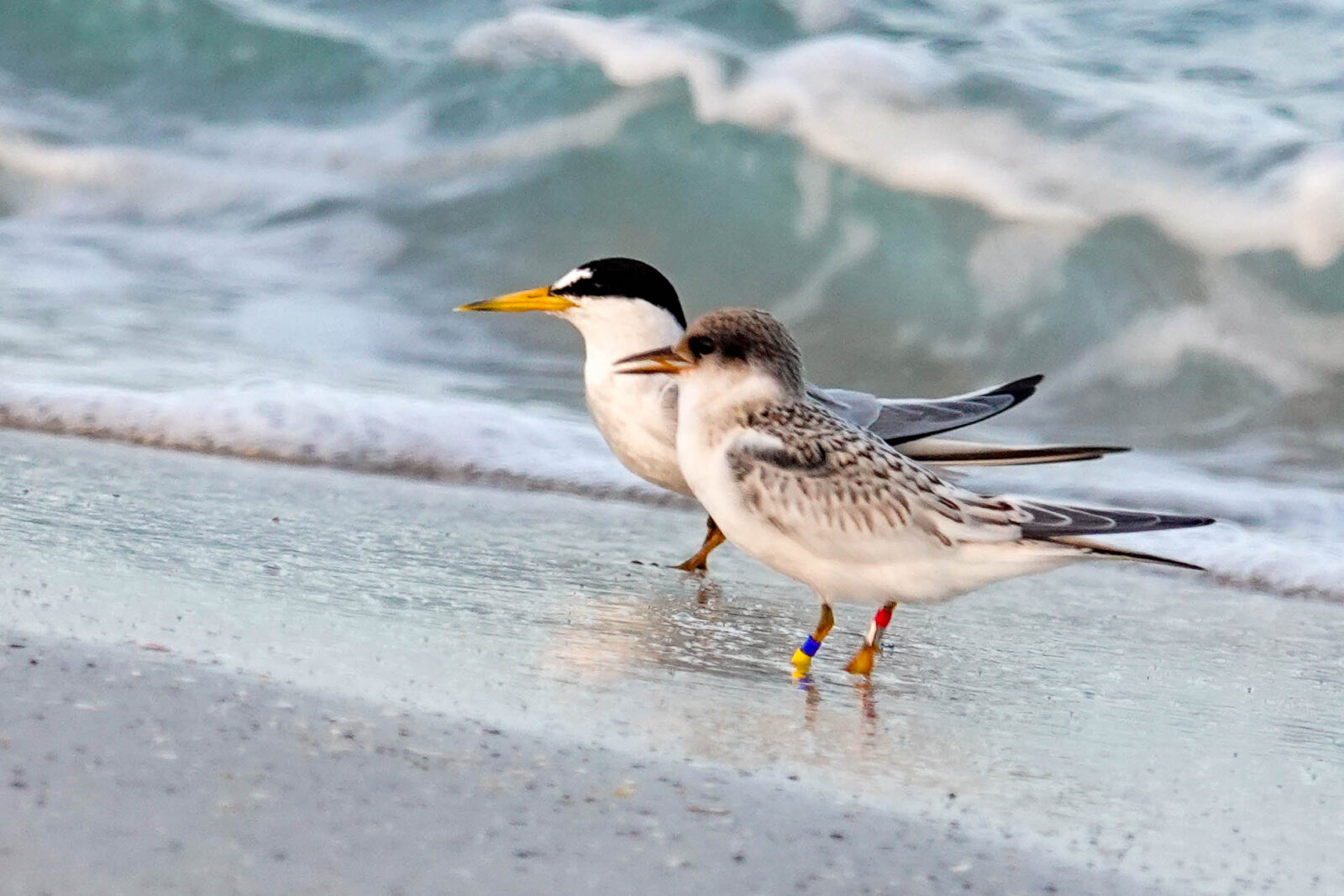
Persi, one of the first Least Tern chicks to hatch in the colony has fledged and almost reached the size of an adult. Standing here with it’s parent, you can see Persi’s flight feathers and bands for identification. Credit: Kathy Doddridge
SEA TURTLES:
| 7/4/2026 – 7/10/2026 | |
| Nests this week | 40 |
| False Crawls this week | 57 |
| 2026 Total Nests | 385 |
| 2026 Total False Crawls | 492 |
| 2026 Adult Disorientations | 20 |
| 2026 Hatched Nests | 8 |
| 2026 Hatchling Disorientations | 4 |
| 2026 Nests Inventoried | 0 |
Hatching Has Begun!
We had our first nests hatch this week and will be conducting our first nest inventories this weekend. Nest inventories are conducted three days after a nest hatches to determine the success of the nest by counting the hatched egg shells and comparing them to the total number of eggs in the nest. Please see the attached Press Release for information about our first hatch and sadly, our first disorientations. I have also added a few more rows to the table above to keep track of hatches, inventories and disorientations.
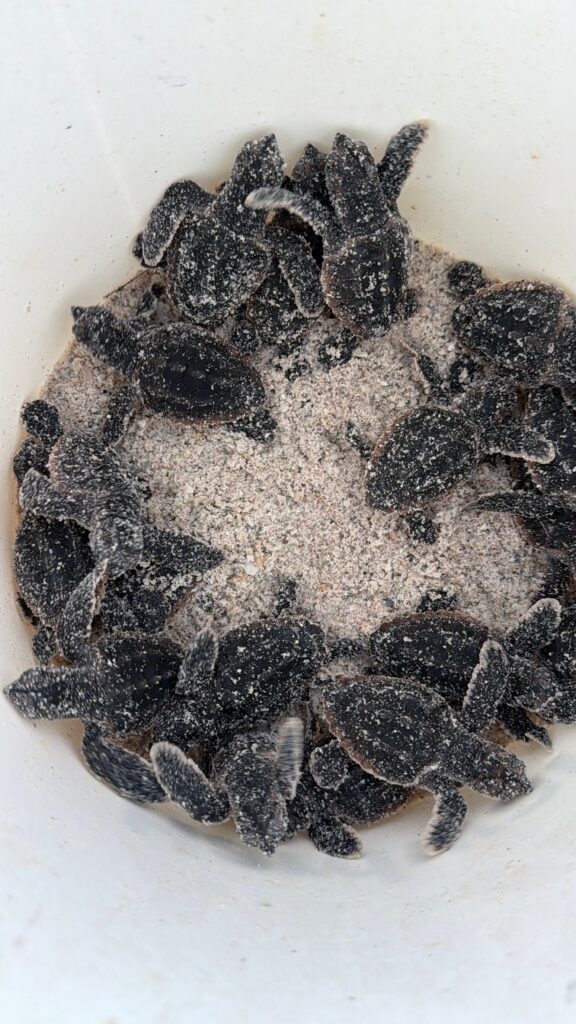
Eighteen disoriented hatchlings were retrieved from a pool in Holmes Beach – more hatchlings from the same nest were found in two other pools later in the day. Hatchlings found in pools have used up some of their “swim frenzy” and if placed in the Gulf may not have enough energy to make it to their destination. These hatchlings were taken to rehabilitation and will have to be released offshore. Credit: Cindy Hodge
Find a Disoriented Hatchling? Call our 24-hour Hotline!
Hatching season also means that we have a team of on-call volunteers manning the phones 24-hours. So, if you see a hatchling or adult sea turtle in distress, please call our 24-hour Hotline (941) 301-8434 and our trained volunteers will respond promptly. You can find this number on the yellow nest signs and on our website www.islandturtlewatch.com
Need to Tell Your Guests about Turtle Season?
Order FREE outreach materials athttps://islandturtlewatch.com/get-involved/educate/
Provide to guests or post in your rental properties! Rack cards, door hangers, posters, and window clings, educate visitors about how to protect sea turtles and shorebirds on AMI.
Turtle Tracks and Shorebird Facts talks – Mondays from 10am – 11am at Holmes Beach City Hall 5801 Marina Drive, Holmes Beach. FREE. No reservations necessary!
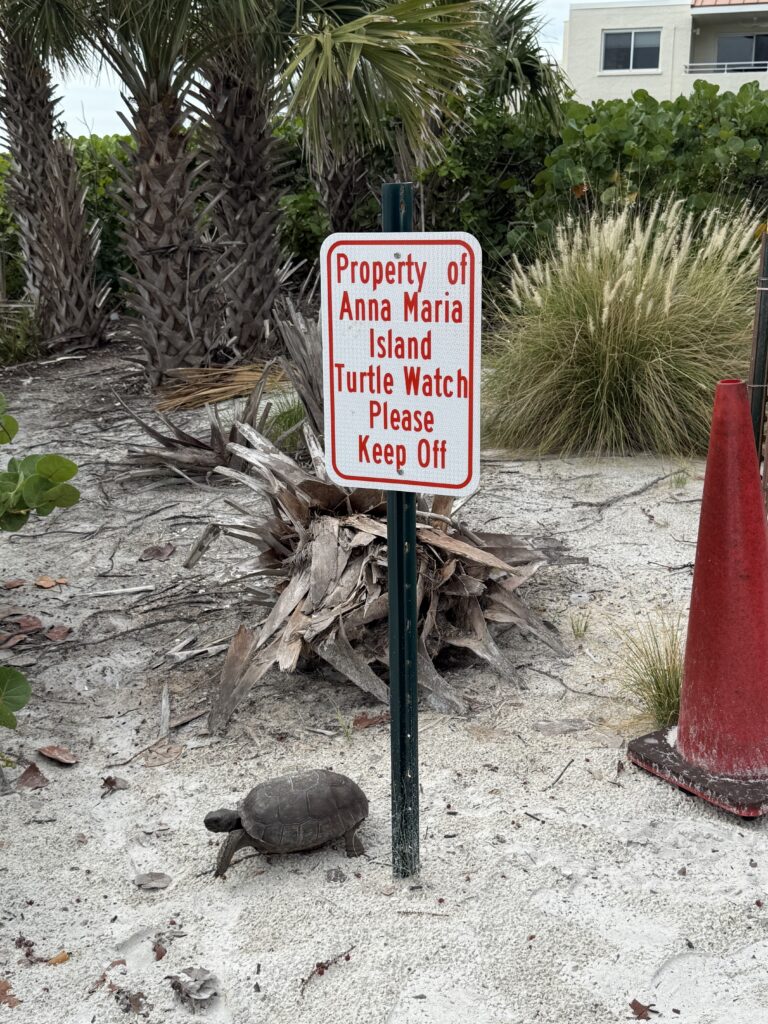
A gopher tortoise tries out for Turtle Patrol on Manatee Public Beach. Gopher Tortoises are a protected species of land tortoise that live on the beach and in the dunes and are often mistaken for sea turtles. Please do not put them in the water, they are not great swimmers! Credit: Lisa Picciano
SHOREBIRDS:
Least Terns
32 Adults
12 Chicks
2 Nests Remaining
Black Skimmers
26 Adults
1 Nest
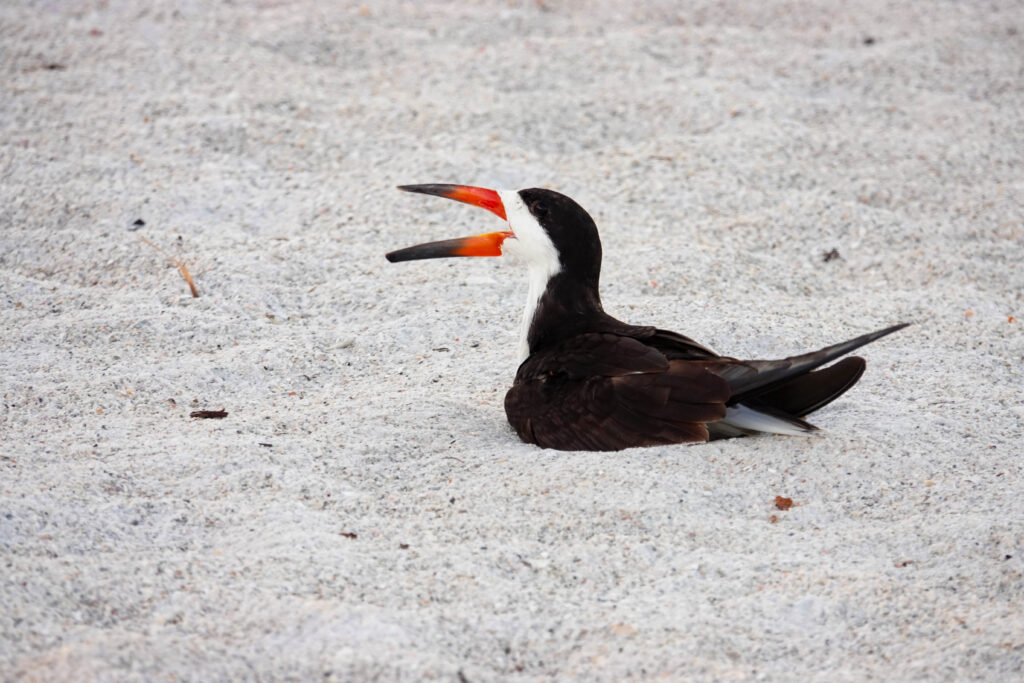
A lone Black Skimmer tries once more to nest on Anna Maria Island. A single Black Skimmer nest was found on July 4th outside the posted closure and is now incubating eggs in her own separate closure posted nearby. Credit: Kathy Doddridge
Members of AMI Turtle Watch and Manatee Audubon joined forces to watch over the Least Tern colony during the holiday weekend. This outreach effort is critical to the management of threatened species by educating beachgoers and protecting the birds from disturbance. Thanks to their help, we are happy to report that all chicks and nests survived the busy weekend.
On July 4, a Black Skimmer decided to try once more to nest in the area. She is currently sitting on two eggs in a separate area just outside the enclosure.
Our Least Terns are growing rapidly due to the vigilance of the parents bringing fish that are nearly as big as the chicks. Persi, the oldest chick, is almost the same size as the adult. Two chicks joined the colony on July 8. As this was the 250th anniversary of the first reading of the Declaration of Independence, the chicks were named Mary and Libby. We welcomed two more chicks on July 10 . . . Rudy and Vinnie.
As the chicks become more mobile, they are often seen outside the posted enclosure. Beachgoers should use caution when walking in the area. When chicks feel threatened by an avian predator, they lay flat on the sand and can be difficult to see.
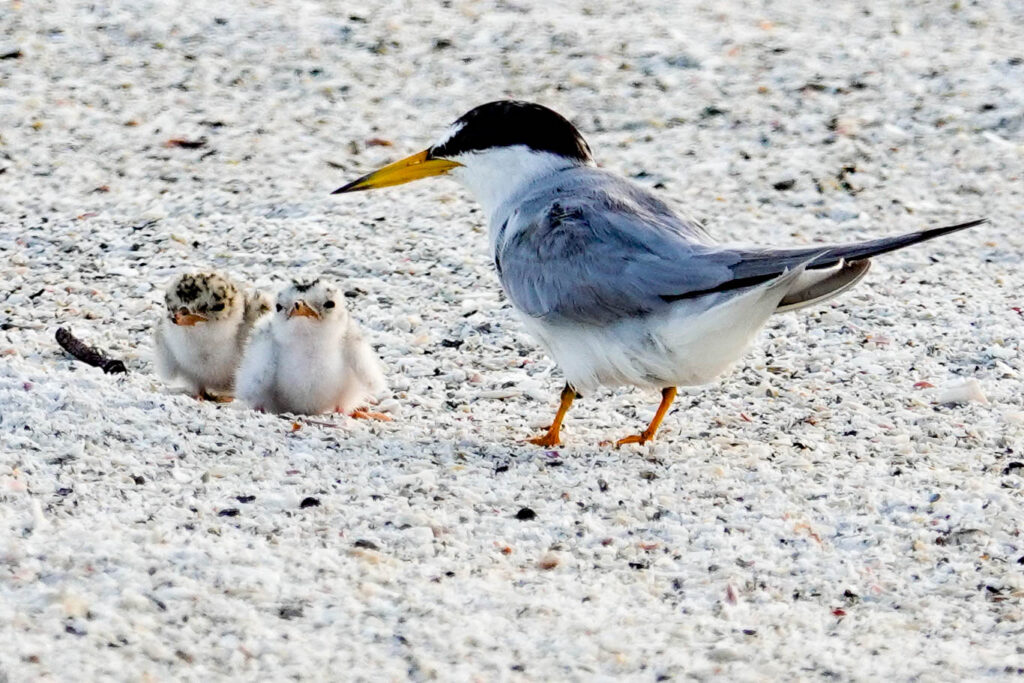
Two brand new Least Tern chicks hatched on July 8th, the 250th anniversary of the first reading of the Declaration of Independence and were named Mary and and Liberty. Credit: Kathy Doddridge
Please help ensure the survival of our colonies by following these Shorebird-friendly tips:
- Respect the posted bird closures and keep your distance. If birds become agitated or leave their nests you are too close!! A general rule is to stay at least 300 feet away from a shorebird nest.
- Avoid flying kites or drones near shorebird colonies – they look like predators and will scare the birds off their nests.
- Place trash in its proper place and do not feed wildlife. Food scraps attract predators to the beach. Litter on beaches can entangle birds and turtles.
- Keep pets away from nesting areas. Even well-behaved pets can be perceived as a threat. Keep cats indoors.
- Do not intentionally force birds to fly. When birds are chased or disturbed, they use energy they need to reserve for nesting and migration.
- Do not use fireworks on the beach
- Spread the word! If you see people disturbing nesting birds, sea turtles, or nest sites, gently remind them how their actions may hurt the animals’ survival. If they continue to disturb, please call and report their activities to FWC’s Wildlife Alert hotline at 888-404-FWCC (3922).
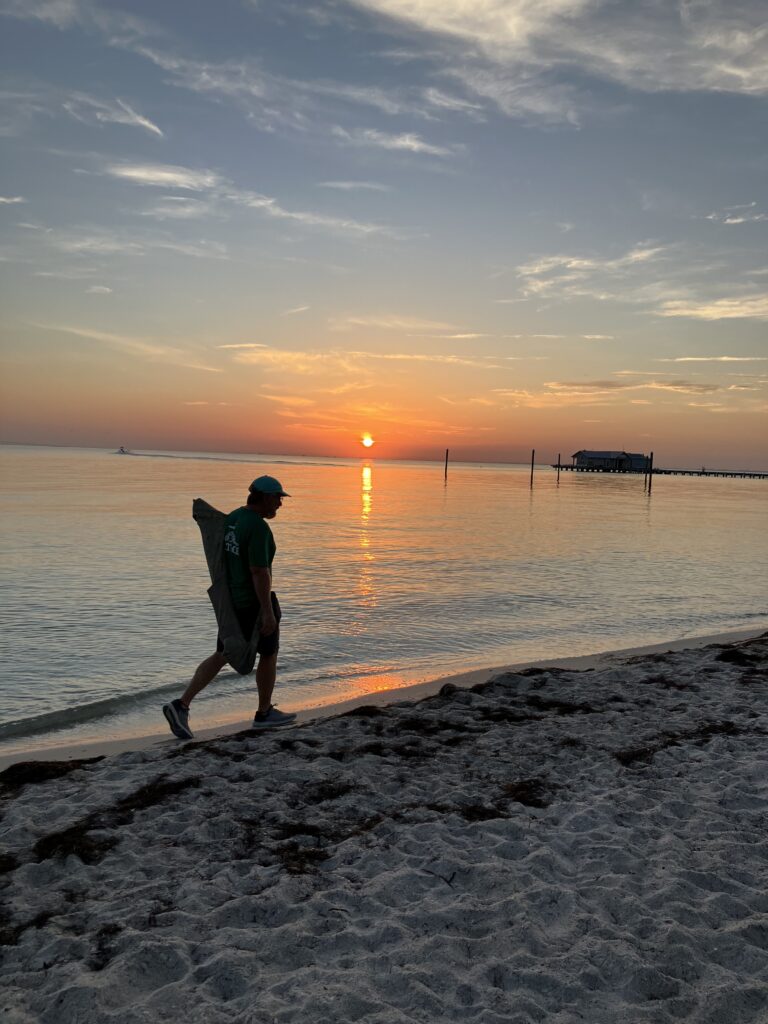
AMITW Patroller Jeff Richmond patrols the Bayside of Anna Maria at sunrise. Credit: Maureen Richmond
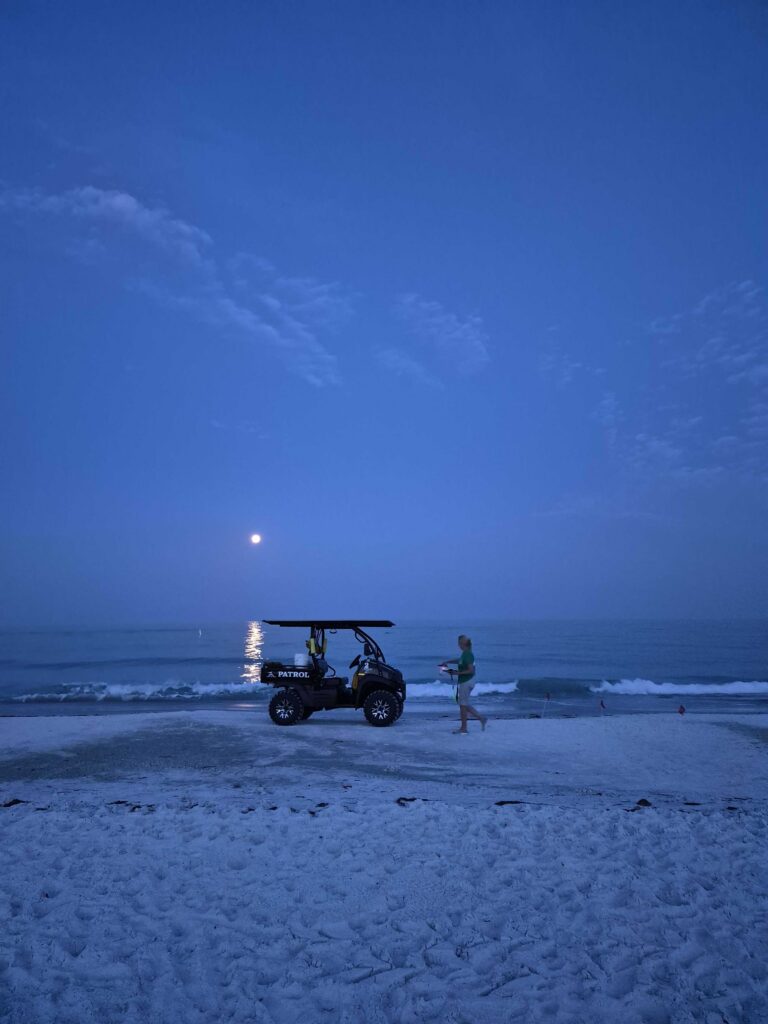
Turtle patroller, Birgit Kremer stops to document a new false crawl illuminated by the full moon. Credit: HansUweDuerr