
Tourism Strong Heading Into Summer, TDC Hears
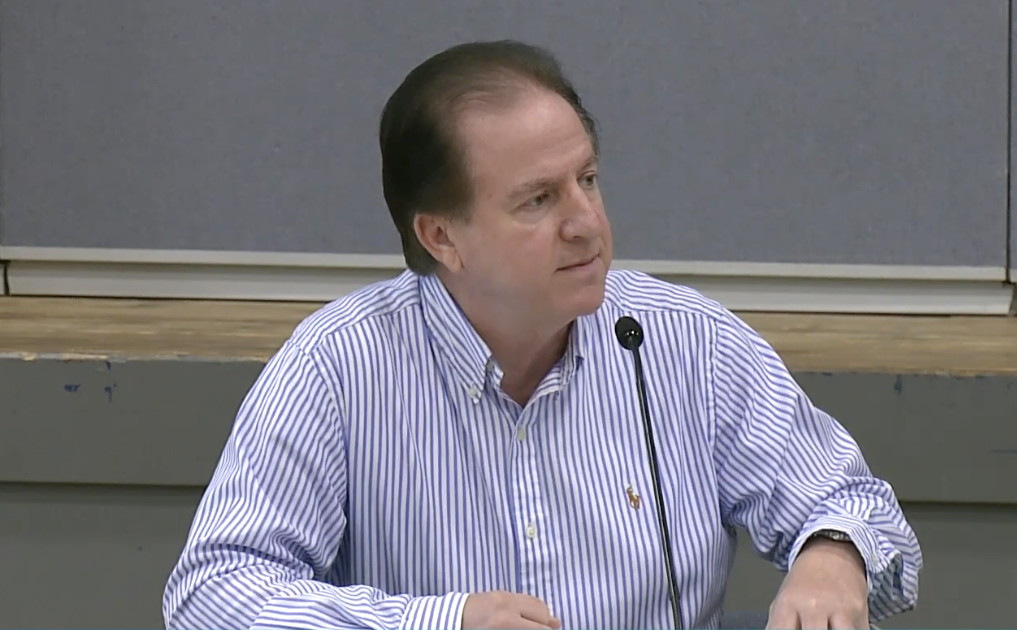
Bradenton Area Convention and Visitors Bureau executive director Elliott Falcione addresses the Manatee County Tourist Development Council during a meeting June 15.
By Lisa Neff
The Bradenton area drew more than 614,000 visitors in the first quarter of 2026, generating $633.7 million in direct spending as lodging occupancy held near 77%.
Joseph St. Germain, president of Downs St. Germain Research, presented the first-quarter data and an overview of his firm’s methodology June 15 to the Manatee County Tourist Development Council, which met at the Center of Anna Maria Island, 407 Magnolia Ave., Anna Maria.
According to the data, the 614,600 visitors to the Bradenton area from January through March booked 776,600 room nights and spent $633.7 million.
Of the total direct spending, 72.8% — or $461.5 million — came from visitors staying in paid accommodations such as hotels and vacation rentals. Combined lodging showed a 76.8% occupancy rate, a $305.97 average daily rate and $237.70 in revenue per available room.
The typical visitor that quarter arrived as part of a couple, was 60 years old, earned a median household income of $135,400 and stayed about 6.4 days.
Nearly 29% were visiting the area for the first time, which St. Germain said is above average.
Satisfaction was high, with 94% of visitors saying they are very likely to return.
Top domestic origin markets were New York City and Minneapolis-St. Paul, each at 6.3%.
About 4% of visitors came from Canada, a share that has dipped but has not disappeared. St. Germain said Canadian travelers “haven’t stopped traveling” despite less enthusiasm for U.S. destinations amid current cross-border tensions.
A majority of visitors drove to the area, while 30% flew into Sarasota Bradenton International Airport.
St. Germain walked the council through how his firm collects data, using intercept interviewers placed at resorts, hotels, SRQ, restaurants and other gathering spots throughout the county on weekdays and weekends. The firm conducts more than 200 surveys per month and more than 600 per quarter.
Asked to explain the practical value of the data, St. Germain said visitor counts and spending figures help make the case for tourism’s role in the local economy and can be used “very much in advocacy.”
Bradenton Area Convention and Visitors Bureau executive director Elliott Falcione called the research paramount.
“I’ve been here long enough where we didn’t have a research firm,” Falcione said.
He added, “You’re just casting a net hoping you’ll catch a visitor.”
Falcione said rising average daily rates help his team refine who they’re targeting. “If I’m selling a Maserati, I’m probably not targeting somebody that can only afford a Chevy,” he said.
Before the research presentation, the council voted unanimously to recommend that county commissioners adopt an ordinance amending and restating the tourist development plan. The ordinance updates the spending caps within each funding category, or “bucket,” that governs how the county’s 6% bed tax proceeds are distributed.
Under the proposed ordinance, which the commission would consider in August, annual spending limits would include:
- Up to $3.5 million for operation of the Bradenton Area Convention and Visitors Bureau.
- Up to $12 million for advertising and promoting tourism.
- Up to $5.1 million for the Bradenton Area Convention Center in Palmetto.
- Up to $3.25 million for county-owned beach park facilities.
- Up to $7 million for public transportation, including piers, docks, ferry vessels and multimodal trails.
- Up to $10 million for sports stadiums and venues, including the Premier Sports Campus.
One-time capital expenditures include up to $30 million for a special event auditorium near the Premier Sports Campus.
The Pittsburgh Pirates spring training facility is funded at up to $450,000 per year through September 2032, and arts, historical, educational and cultural activities at up to $3 million annually.
An emergency marketing fund would be capped at $1 million.
Falcione said the goal in setting the caps higher than current projections is to avoid returning to commissioners every year for amendments.