The Art of Robert Johnson
Written by Shelly West
For this issue’s cover artist, painting didn’t begin with a brush; it began with a pencil.
Long before Robert Johnson touched paint to canvas, he was deeply immersed in drawing. It was a daily practice, a favorite pastime, and the foundation on which everything else would be built. Through countless hours of sketching, he developed not only technical skills but a quiet confidence in his ability to observe and recreate the world around him.
That foundation followed him to Key West, where a turning point awaited.
Surrounded by vibrant galleries and an explosion of color and creativity, Johnson felt something shift. The artwork he encountered there alive with light, energy, and bold expression sparked a realization: it was time to move beyond graphite and into color. Painting, he discovered, opened an entirely new dimension of storytelling.
From the start, Johnson was drawn to realism. He admired artists who could capture a scene exactly as it appeared, and he committed himself to mastering that precision. Years of practice refined his ability to render detail, light, and texture with accuracy. But alongside that discipline, another style quietly emerged.
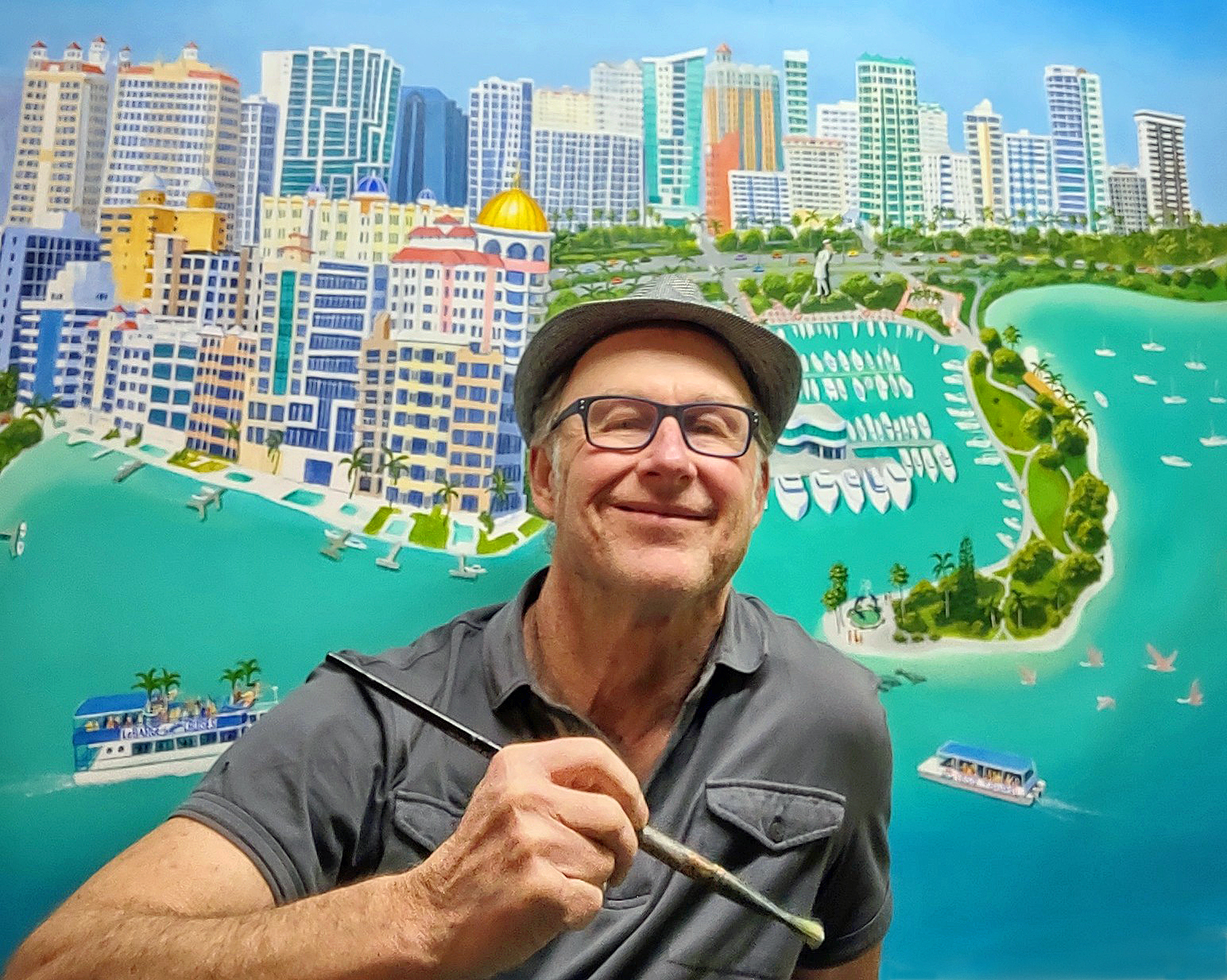
There was a freer side to his work, one that embraced expression over exactness. In these pieces, Johnson allowed himself to interpret rather than replicate, focusing on mood, energy, and the emotional essence of a scene. Over time, he realized that both approaches were essential. Today, his work moves fluidly between realism and whimsy, balancing technical skill with creative freedom.
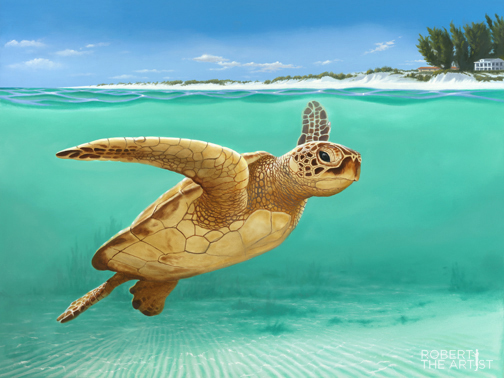
That duality is also reflected in his perspective. Johnson often paints from a bird’s-eye view, offering sweeping, almost cinematic compositions. In other works, he explores the boundary between worlds above and below the waterline, revealing the rich marine life that defines the region he calls home.
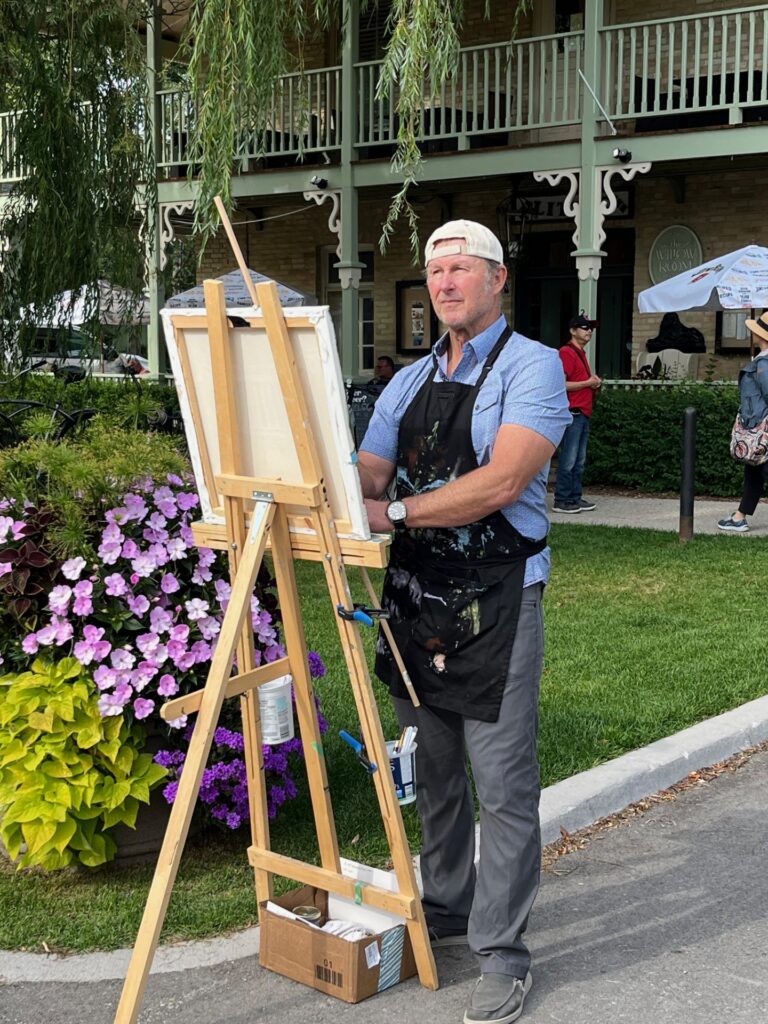
Inspiration, for Johnson, is rarely forced. It arises naturally in his daily routine, often while exploring the area by bicycle. A particular quality of light, the shimmer of sun on water, or the contrast between bright highlights and deep shadows can stop him in his tracks. At other times, it’s the atmosphere of a familiar place, a favorite restaurant or bar, a moment of stillness, a feeling that lingers long after he leaves and eventually finds its way onto canvas.
What he strives to capture is not just what a place looks like, but how it feels.
“I hope people feel a sense of joy and connection,” he said. “A sense of being there.”
His paintings invite viewers into those moments, warm afternoons, glowing sunsets, quiet coastal scenes, and often awaken something personal in return. Nostalgia, memory, and a sense of place are central to his work. A viewer might recognize a location or be reminded of a feeling they’ve experienced before.
Johnson’s process is as layered as his subject matter. He works primarily from photographs he takes himself, though he also paints on location whenever possible. Each piece begins with rough sketches, followed by light washes to establish composition and form. From there, he gradually builds the painting in stages, locking in darks and lights, working from background to foreground, and refining details with each pass.
It’s a slow, deliberate approach. Many of his paintings take significant time to complete, a process he embraces fully. The accumulation of small, thoughtful details is part of what brings his scenes to life.
Certain subjects call him back again and again.
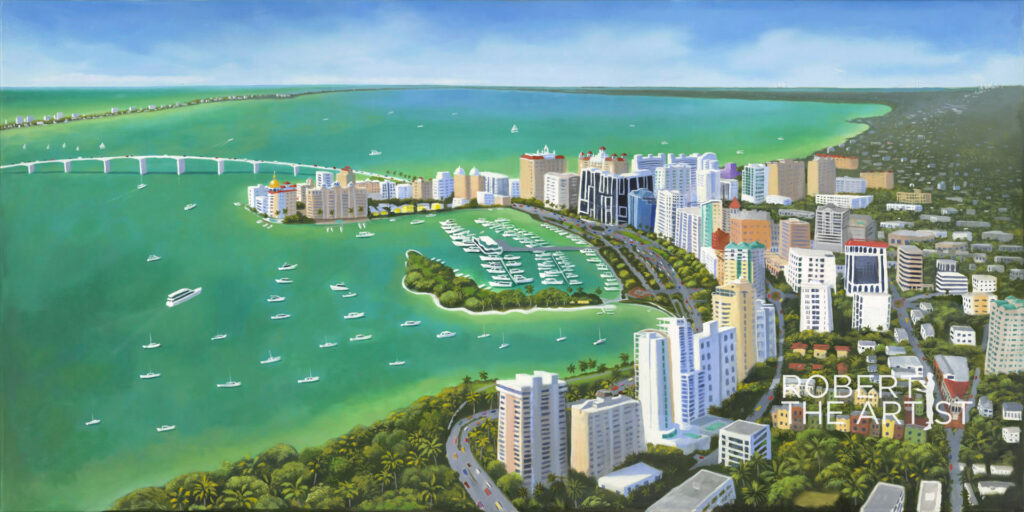
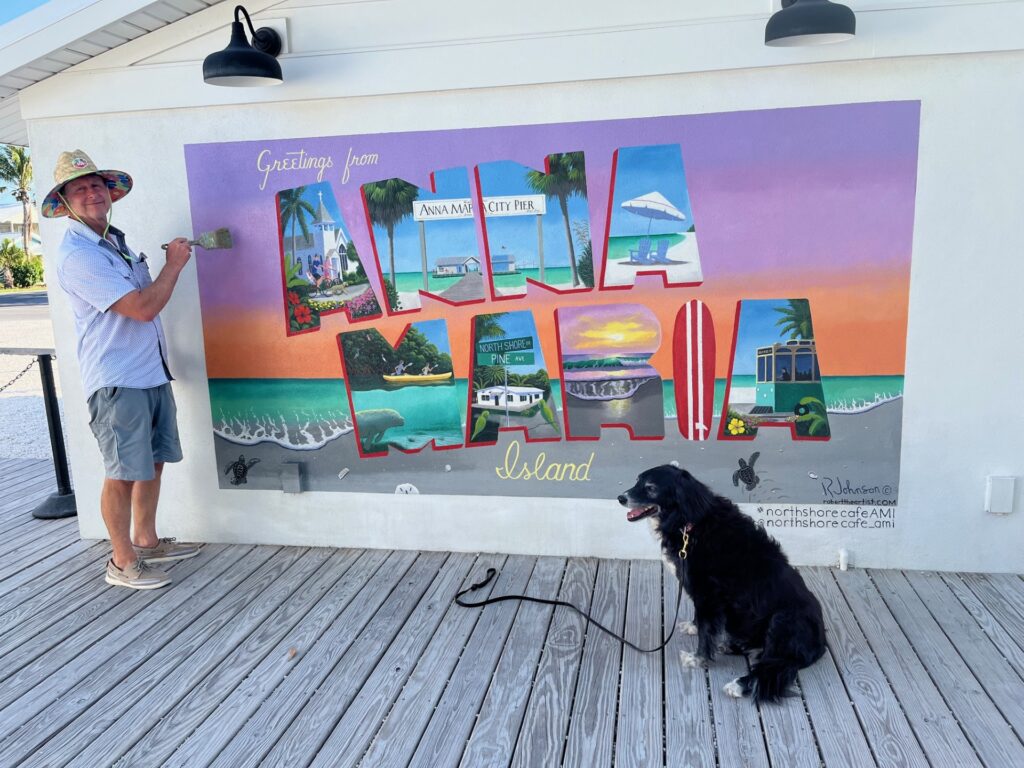
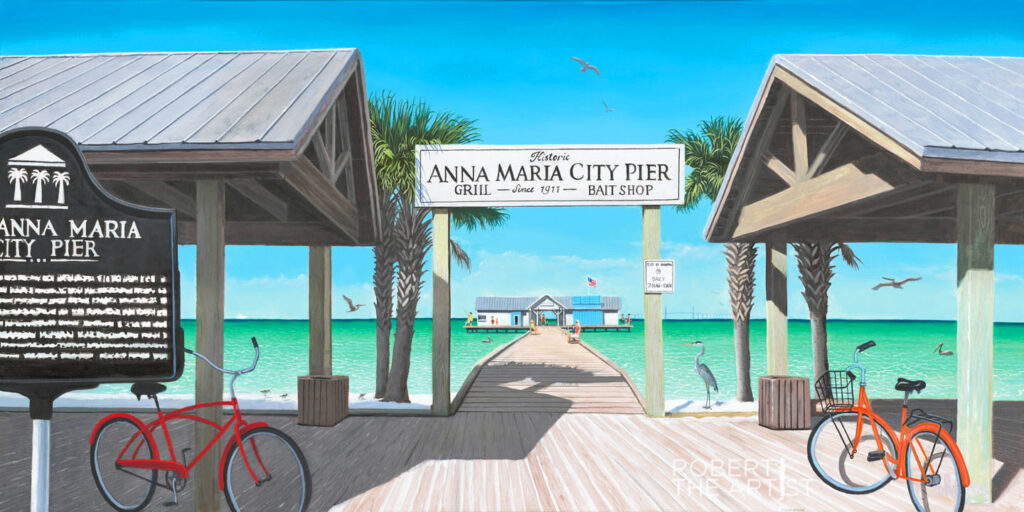
Landmarks like City Pier and Rod & Reel Pier have appeared in his work across different times of day and changing conditions, from bright afternoons to twilight to moonlit nights. These recurring studies have become more than paintings; they are visual records that preserve moments as these beloved places evolve over time.
In many ways, Johnson’s work functions as a series of time capsules.
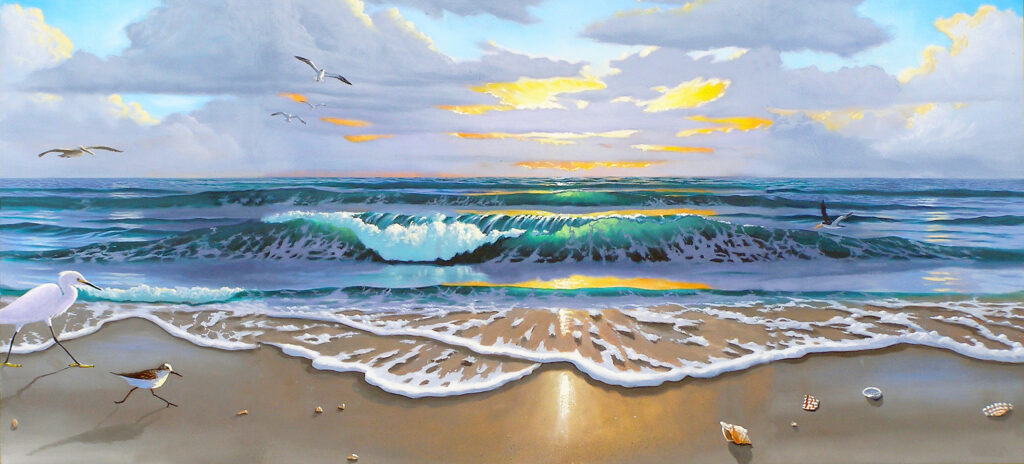
Another recurring subject, breaking waves at sunset, reveals his fascination with light in motion. When the last rays of the day illuminate the crest of a wave from within, the result is something almost luminous, filled with energy and drama. It’s a fleeting moment, but one he captures with striking clarity.
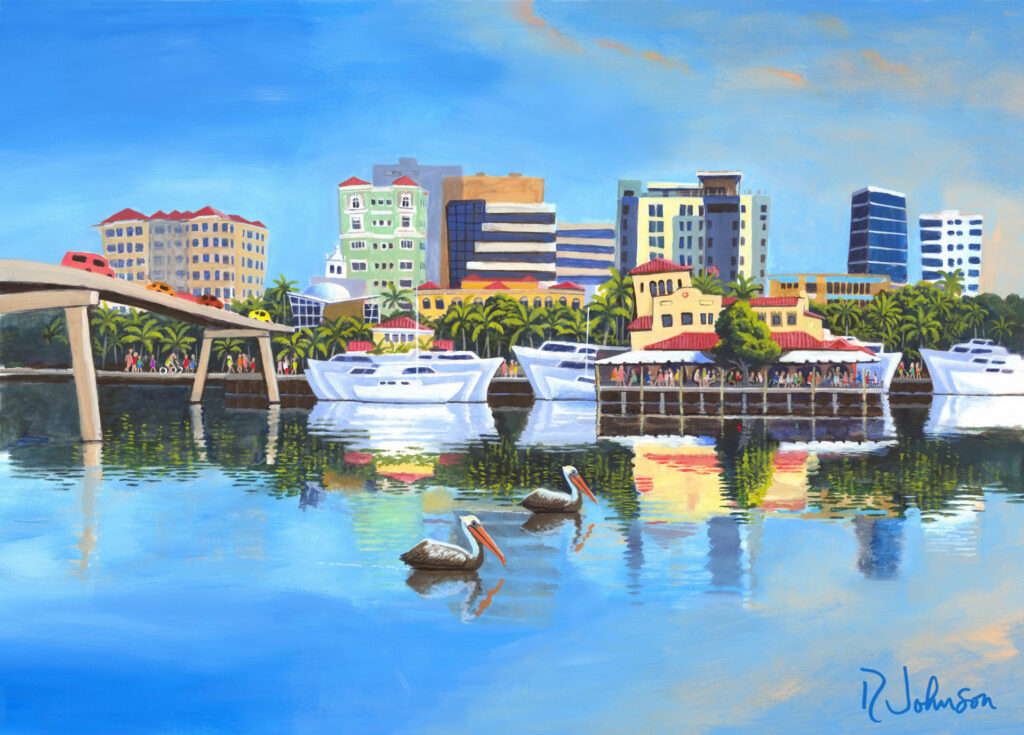
Living and working in this coastal environment has profoundly shaped Johnson, both as an artist and as a person. The abundance of natural beauty from manatees and seabirds to sweeping landscapes and lively local gathering spots has provided an endless source of inspiration. It has also fueled his productivity, allowing him to create a large and deeply personal body of work.
More importantly, it has given his art a sense of purpose.
Many of the places he paints are changing, and Johnson is keenly aware of that. Through his work, he aims to preserve not just their appearance, but their spirit, capturing the essence of a place at a particular moment in time.
One painting, in particular, holds special meaning for him.
Titled Manatee River, it embodies everything he values most. The composition spans both above and below the waterline, showcasing birds, fish, and the region’s intricate ecosystem. As an avid kayaker and nature enthusiast, Johnson feels deeply connected to these environments and the creatures that inhabit them.
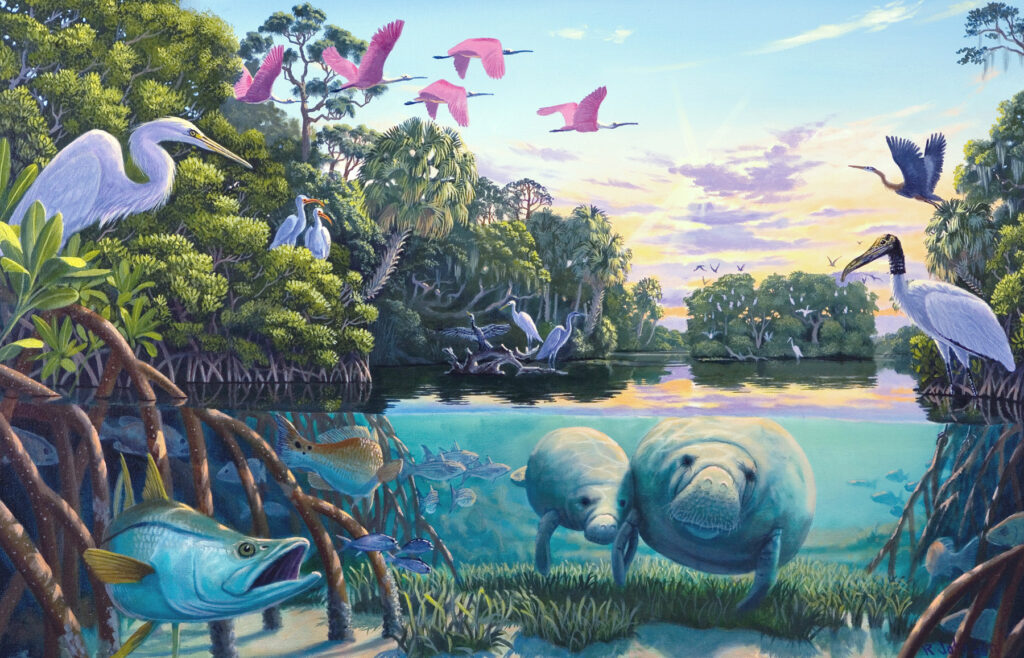
“This painting represents everything I love,” he said.
It’s not just a depiction of nature; it’s a celebration of it, and a reminder of its importance. Through works like this, Johnson hopes to inspire appreciation and, ultimately, protection of the natural world.
Being featured as this month’s cover artist is, for him, both an honor and an opportunity.
He sees it as a chance to share not only his artwork, but the years of dedication behind it and the deep love he has for this area. His paintings, filled with local landmarks, wildlife, and everyday moments, are a tribute to the community and environment that continue to inspire him.
More than anything, he hopes viewers walk away with something personal.
A memory. A feeling. A sense of connection.
Because in Robert Johnson’s work, the goal isn’t just to show you a place, it’s to bring you back to it.
Visit: roberttheartist.com