
The Bench Says Goodbye. Judge Smith Shares His Love of Local History
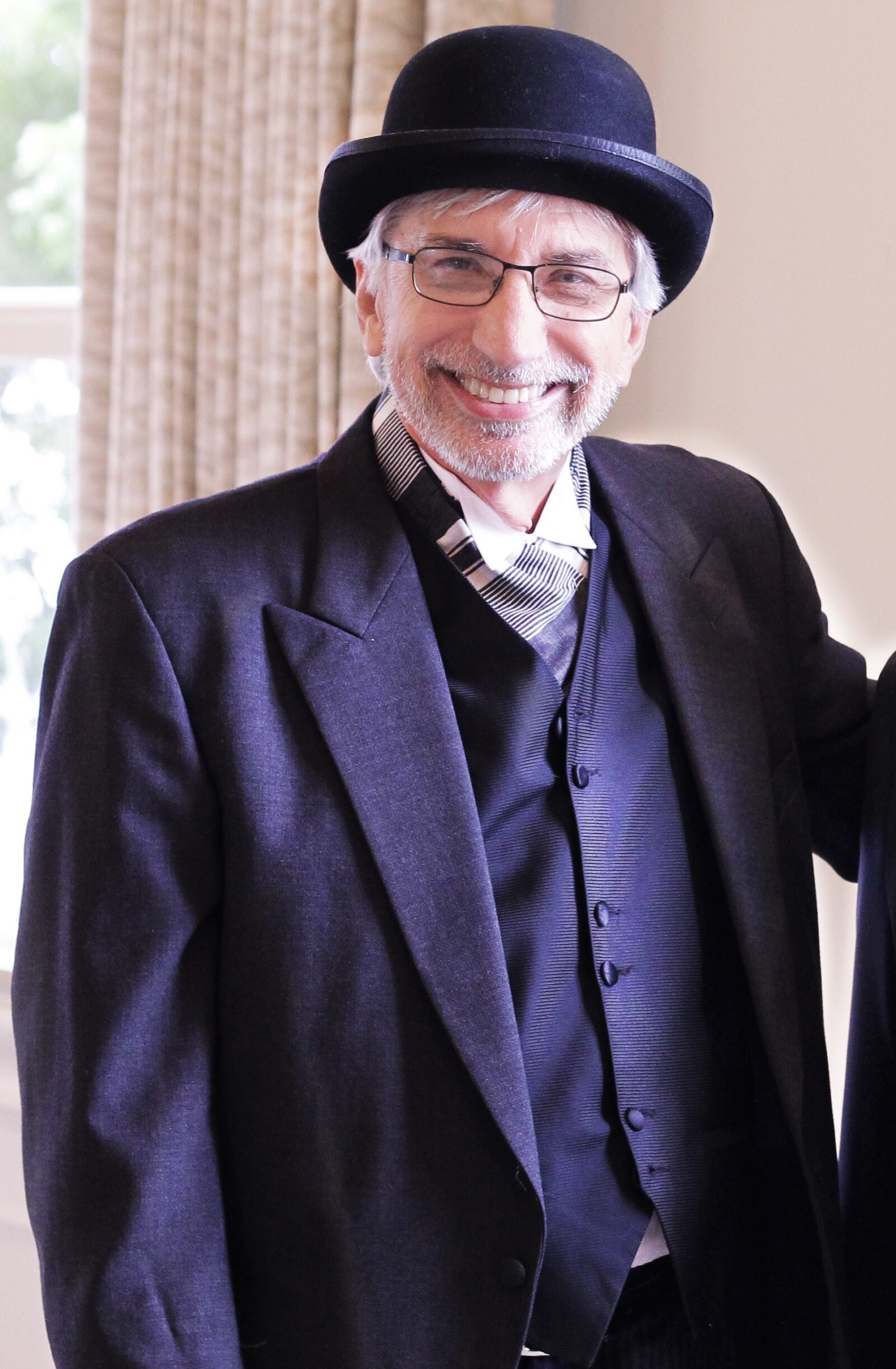
Written by Terri Edmund
When Judge Gilbert A. Smith Sr. came out of retirement in 2003 to swear in his son as president of the Manatee County Bar Association, he said, “I didn’t think he’d ever become a lawyer, but I’m proud of him.” Smith Sr. had no inkling his son would be elected to the same position he held for 20 years, as judge to Florida’s 12th Judicial Circuit. Eighteen years later, Judge Smith Jr. celebrated his last day on the bench in the only fitting place: the Jury Assembly Room named for the late Judge Gilbert A. Smith Sr. We know Dad’s proud.
Judge Smith Jr. would have preferred to serve out his elected term ending in December, but rules are rules. Florida’s Constitution says his 75th birthday is the end of his circuit.
“It’s time,” he says. “Not because I’m tired of the work or because of my health. Eighteen years is a long time.” Besides, Judge Smith wants to travel with his wife, Anita, do more volunteer work, and dig even further into local history—his personal passion.
Judge Smith is a walking archive and chronicler of Manatee County history. He shares his extensive research in his books, Lawyers & Legends of Manatee County (in its second edition) and Legends of the Bench, Part One. His books are certainly the most comprehensive histories of our local judiciary and perhaps of Manatee County ever written.
Beginnings
“The history was in cardboard boxes when I started,” Judge Smith tells us. He writes of the county’s beginning, when, in 1842, Josiah and Mary Gates sailed upriver to settle a town named Manatee encompassed by Hillsborough County at that time. Those who followed were farmers and fishermen, cattlemen and merchants—not a lawyer among them. When the 5,000-acre county of Manatee was created in 1855, positions of justice were held by community leaders, including a carpenter who built the first Manatee County Courthouse on ground originally settled by Josiah and Mary Gates.
Describing the Civil War, Smith writes, “warships were patrolling the river and all waterways. Contingents of both Union and Confederate soldiers camped along the Manatee River from time to time.” During the war, James Green, a cattleman and early justice of the peace, joined the Union Army. When Florida surrendered, Green rose to power and convinced officials to move Manatee’s county seat to Pine Level, a location 35 miles inland and much closer to his cattle business.
Even though it took a full day by horse or carriage to reach Pine Level from Manatee, “all Manatee County citizens were forced to travel to Pine Level to complete court business and, in some cases, if they wanted to vote.” Judge Smith’s description of Pine Level reads like a spaghetti western. “Saturday nights were known to feature gambling, drinking, shootings, and just plain raisin’ hell,” Smith writes, mentioning saloons outnumbered other businesses 14 to one. The early courthouse was a 20- x 30-foot log building with a hanging tree out back. Judges traveled by horse and buggy to hold court, and eventually a lively town blossomed to serve the cattle industry.
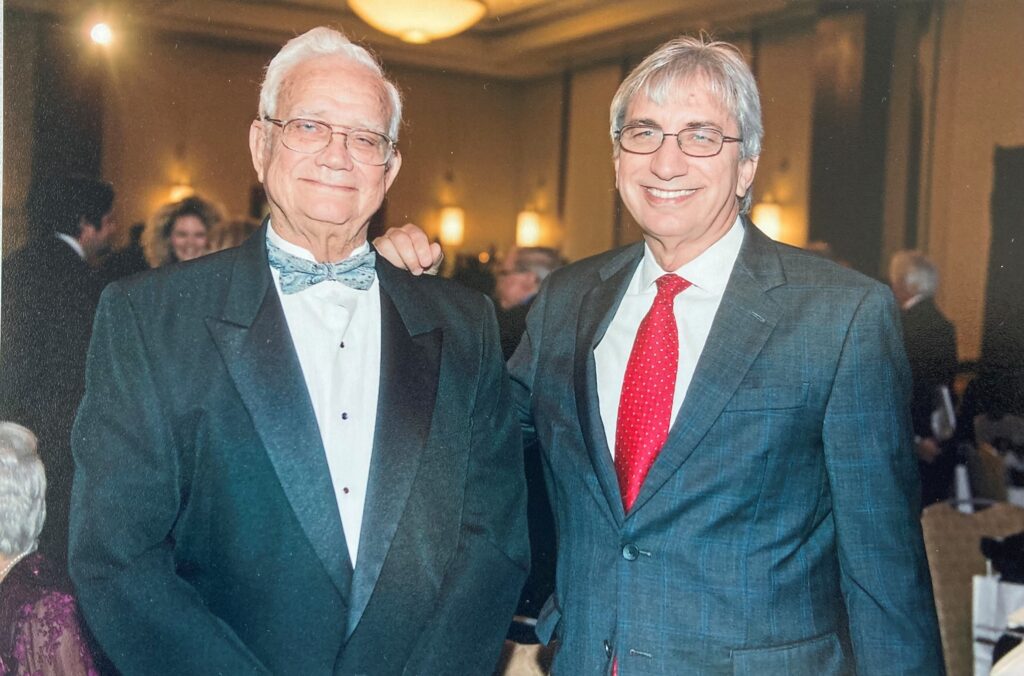
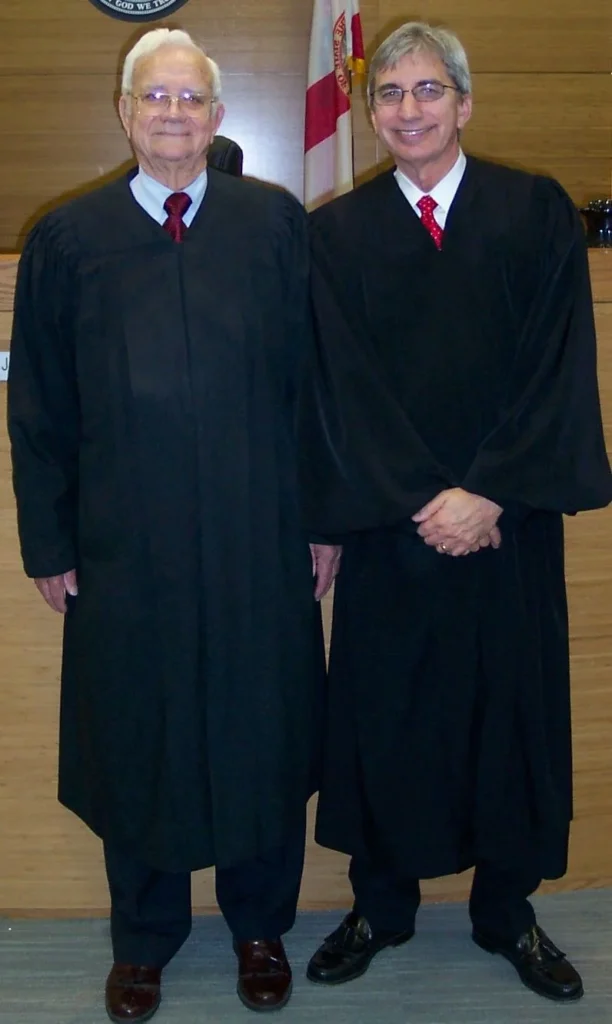
Judge Gilbert A. Smith Sr. and Judge Smith Jr.
Preserving Our Past
Judge Smith’s books are loaded with surprising historical treasure, like a hanging on the roof of the courthouse while spectators watched from neighboring buildings.
Did you know there was once a concrete pond on the courthouse grounds featuring a live alligator? We learn about the origins of now-lost Council’s pool hall across from the courthouse and of Babe Ruth getting a ticket for speeding through Bradenton at 70 miles per hour. The arresting officer, Sam Murphy, later became a judge known to issue the occasional marriage license from his home over the weekends.
Thanks to Judge Smith, once-everyday things we might forget will be remembered, like Navy vet Frank Marra setting up shop as “The Hot Dog Man” at the corner of Manatee and Main. If you had the pleasure, you won’t forget his special sauce.
Judge Smith’s latest work, Legends of The Bench, Part One, provides an extensive history of the 12th Judicial Circuit through 1979, including the service of his father, who lived to be 94 years old.
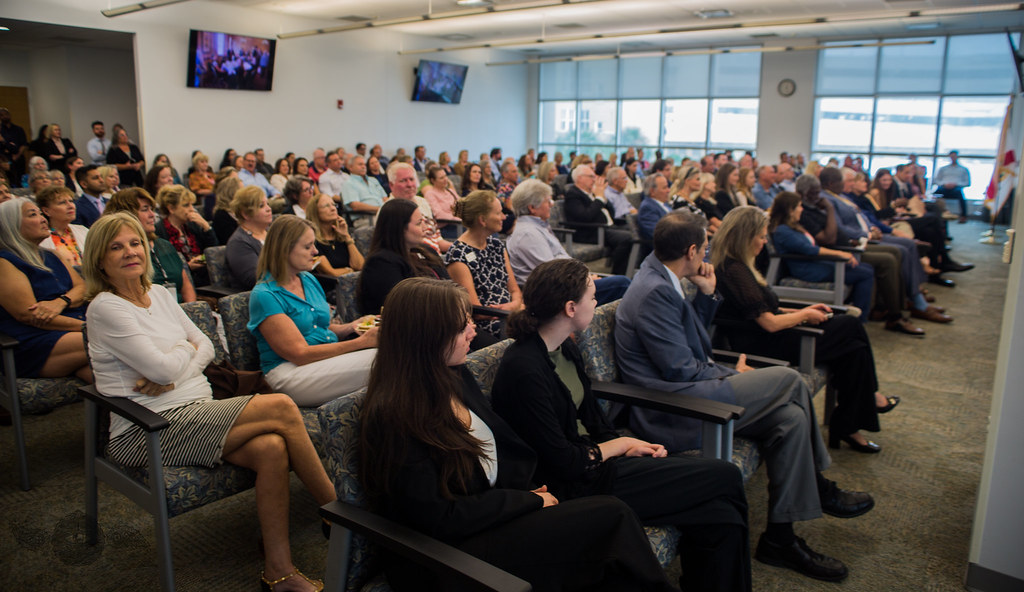
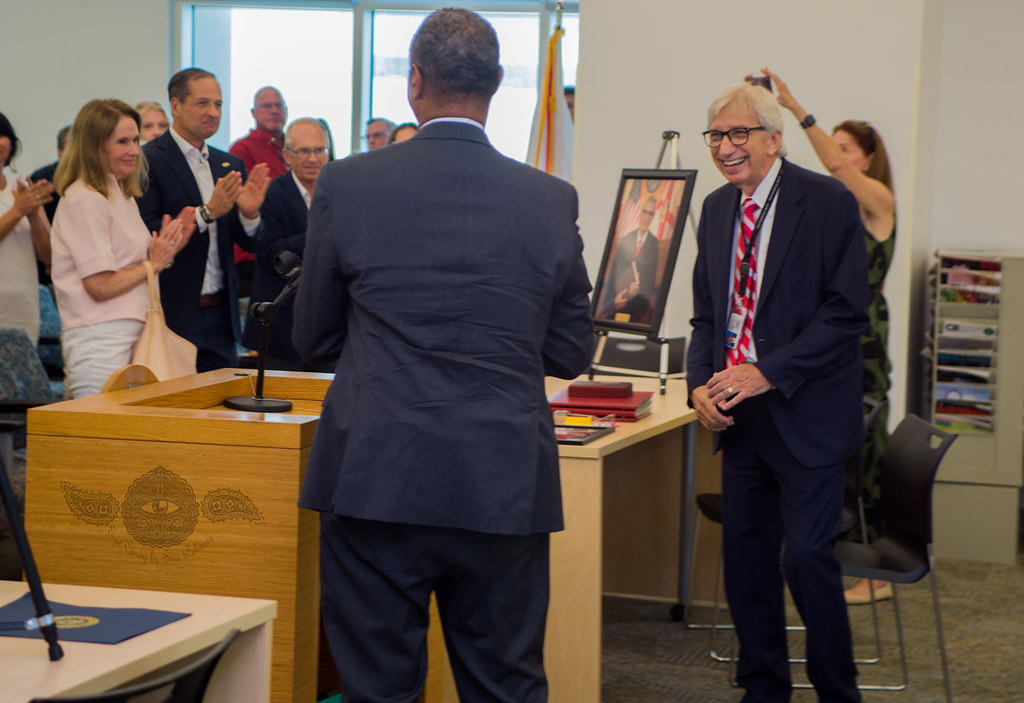
Judge Smith Jr. – Retirement Party Photos by: Siva Beharry
An Unusual Career Path
“So often, students graduate from college, go to law school, become lawyers, and then become judges. Well, I didn’t do that,” Smith laughs. “I’ve worked since I was a kid. When I was a Boy Scout, I worked out at Camp Flying Eagle. In college, I had all kinds of interesting jobs.” He drove dump trucks for the county highway department, was an orderly at Manatee Memorial when the beds were still hand-cranked, and chauffeured a funeral home hearse.
He graduated from Manatee Junior College, then University of South Florida before joining the Manatee County Work Release Program. This early experience immersed Smith in law enforcement, probation, and parole until he veered into a yet different direction—banking. He started as a teller with a small local bank and worked up to vice president of consumer lending at a time when mortgage rates cut into wallets at 18 percent.
Finally, the family tug and a desire to see more of the west he’d enjoyed as an Eagle Scout lured Smith to law school at the University of Pacific in Sacramento where he worked in a supervised release program designed to relieve jail overcrowding. After graduation, the San Joaquin Valley’s winter drizzle drove him back to Florida.
Besides his father, young Smith admired an uncle, the well-respected Chesterfield Smith who was president of the American Bar Association during the high-profile days of Watergate. Just out of law school, he first joined his uncle’s law firm before he and three colleagues created the Bradenton firm where Smith practiced until he ran for office in 2008.
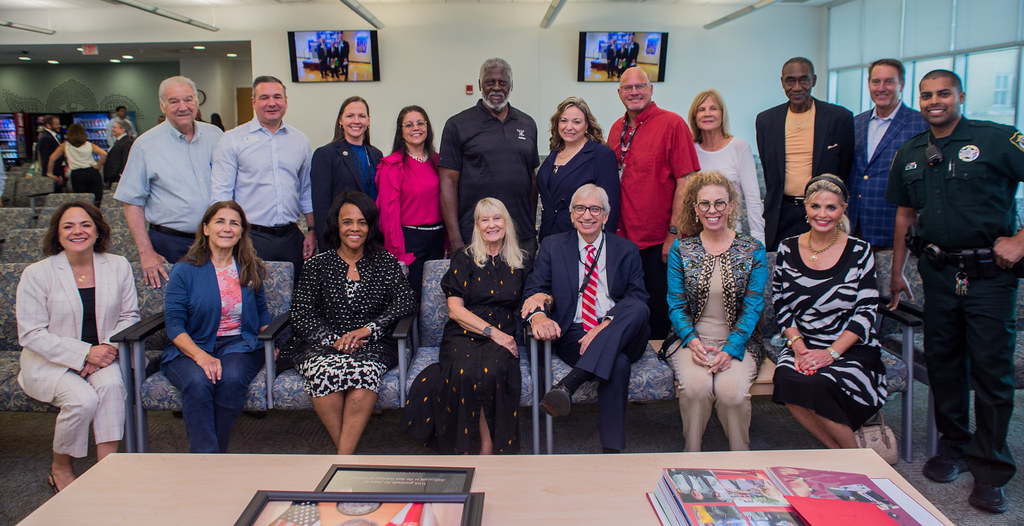
Next on the Docket
Judge Smith has no plans to slow down in retirement. He is very involved with Boy Scouts, the Chamber of Commerce, and the Bradenton Kiwanis Club, whose first hundred years he digested in an impressive two-volume book set aptly titled Champions of Children.
“I’m going to keep my law license active, and I hope to do pro bono work,” he says. “One of the things I have experienced sitting as a judge is that there are so many people who cannot afford attorneys because the fees are so high.”
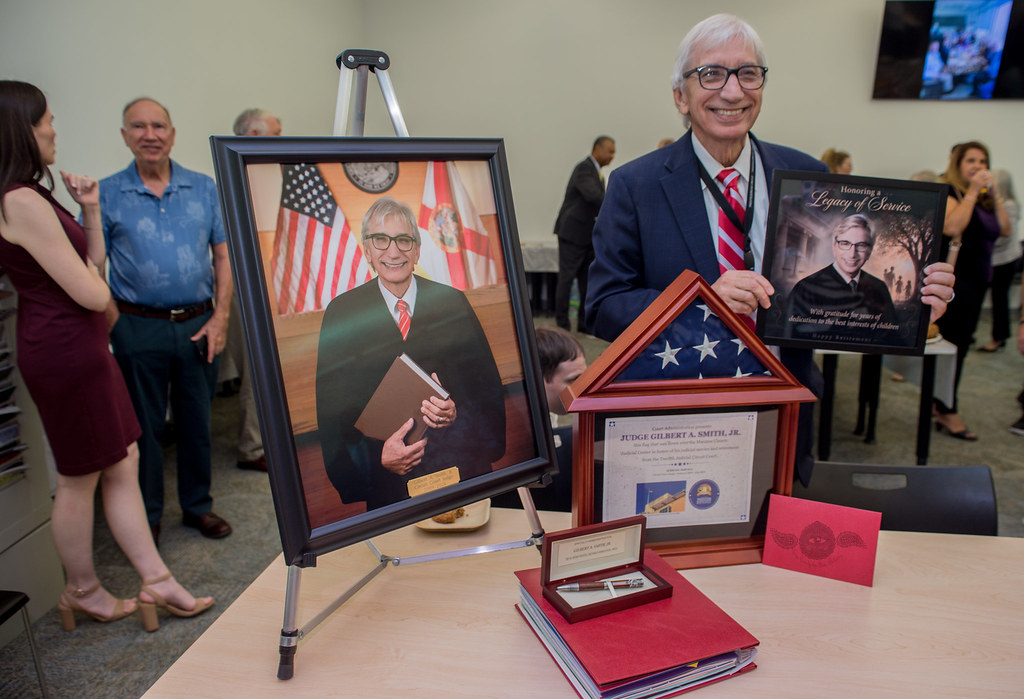
Judge Smith Jr. – Retirement Party Photos by: Siva Beharry
And, lucky for us, he will be writing. The judge’s research takes us back and helps us attach real names with actual events and places. Entrepreneur Anthony Rossi arrives in the area to start a citrus processing plant which will become Tropicana. In 1957, the same year two modern drawbridges are completed to Anna Maria Island, Francis Hutchinson moves here from Indiana to became the only woman practicing law in Manatee County at that time.
As we read, we are reminded how 9/11 changed security in every courthouse across America and how an infectious disease called COVID-19 changed the way judges hear cases. Zoom has become protocol, a convenience Judge Smith says he won’t miss.
Judge Smith is currently working on Legends of The Bench, Part Two and hints of an “After Dark” edition with stories of goings on outside day-to-day courthouse business. Please, Judge. Do tell.
“I couldn’t be prouder of this bench and these judges,” Judge Smith tells us in parting. “They are so conscientious, so good.”
Thank you, Judge, for all the good you have done and will continue to do, for your leadership and community involvement, your public service and the history you are curating for us all.
Happy Retirement.