
AMITW Nesting Numbers 8/7/2026
SEA TURTLES:
| 8/1/2026 – 8/7/2026 | |
| Nests this week | 6 |
| False Crawls this week | 5 |
| 2026 Total Nests | 455 |
| 2026 Total False Crawls | 569 |
| 2026 Adult Disorientations | 20 |
| 2026 Hatched Nests | 107 |
| 2026 Nests Inventoried | 96 |
| Nests remaining on the beach | 276 |
| 2026 Hatchlings Produced | 6,591 |
| 2026 Hatchling Disorientations | 27 |
| 2026 # Disoriented Hatchlings | 649-1530 |
| 2026 Diso Hatchlings found dead | 52 |
Nesting is slowing down and hatching is picking up. We appreciate everyone spreading the word about our 24-hr hotline (941) 301-8434, as we’ve gotten a lot of calls about disoriented hatchlings and washback post-hatchlings over the past week. These calls have helped us rescue hundreds of hatchlings and get them the help that they need – whether it’s rest for the day before being released at night, releasing disoriented hatchlings on a darker part of the beach, or bringing hatchlings found in pools or washbacks to Mote’s Sea Turtle Rehabilitation Hospital where they are cared for and eventually catch a ride offshore. In addition, these calls have helped us identify disorientations that we didn’t know about because the hatchling tracks that we usually follow have been obliterated by heavy rains. By tracking disoriented hatchlings, we can identify potential lights that are causing disorientations. These lights are reported to the local Code Enforcement, who reach out to the property to educate the occupants and request that lights be turned off or changed out to turtle friendly lighting. Small changes like these prevent future disorientations of the other nests still left on the beach and can end up saving the lives of hundreds or thousands of little hatchlings. With an estimated one in 1,000 hatchlings surviving to adulthood, it’s critical that we do our best to ensure that every sea turtle that hatches makes it to the water. You can help sea turtles too!
- Check your property from the beach at night to see if there is any lighting that sea turtles might be able to see.
- Contact AMITW at info@islandturtlewatch.com if you need help finding turtle friendly solutions.
- Keep flashlights and cell phone lights off when you are on the beach at night – your light could be seen by a turtle far down the beach and cause it to use up critical energy traveling down the beach instead of into the water.
- Report lights that can be seen from the beach to the local Code Enforcement.
- Educate your guests! Request FREE educational materials to place in your rental units and businesses from https://islandturtlewatch.com/get-involved/educate/
- Attend our weekly Turtle Tracks and Shorebird Facts talks on Mondays at 10am at Holmes Beach City Hall to learn more about sea turtles and shorebirds
- Call AMITW’s 24-hour Hotline FIRST whenever you find a hatchling or sea turtle in trouble. Please do not put them in the Gulf!
Nest Excavations
With so many hatches, AMITW is also conducting a lot of nest excavations. Nest excavations are done three days after a nest hatches to determine how well the nest did. Turtle Patrol often draws a crowd when excavating a nest with everyone hoping to see not only a lot of hatched eggs indicating that the nest did well, but also the possibility of finding a live hatchling that hasn’t left the nest. These are excellent educational experiences. Feel free to join us if you see the Turtle Patrol conducting a nest excavation. We love to educate people about the turtles as we celebrate the success of a good hatch.
Washbacks
AMITW has recovered more than 10 post-hatchling washbacks this week, including one found in a canal and another in the Bay. Washbacks are hatchlings that have made their way out into the Gulf and have been pushed back to shore. They are often dehydrated, exhausted and need rehabilitation. If you find a hatchling, please do not put it back in the water but call AMITW’s 24 hr hotline so they can assess the hatchling and get them the help that they need.
SHOREBIRDS:
Least Terns
Total Adults: 80 – 39
Total Chicks Produced: 17
Total Flight Capable Produced: 11
The shorebird nesting season is coming to a close. The colony of Black Skimmers failed to produce any chicks but the colony of Least Terns produced 17 chicks of which 11 survived to become flight-capable. In addition, six chicks received color identification bands.
As of press today, all 11 chicks have joined migrating flocks to start their journey to the Caribbean islands and the enclosure is being dismantled. Least Terns have nested on Bradenton Beach since 2021 and this has been the most successful season with a 65% fledge rate.
We wish to thank the Bradenton Beach Police Department and Code Enforcement, Manatee County Beach Patrol and Anna Maria Island Club for their support, along with all the hundreds of beachgoers who stopped to learn more about the nesting birds and respected their boundaries. With our Shorebird Monitor, Kathy Doddridge, who spent 87 mornings watching over this colony, we say “That’s a Wrap! . . . until next season!”
As these birds are starting their migration from Anna Maria Island, several young-of-year chicks are migrating with the flocks from other nesting beaches and stopping on Anna Maria Island to rest and feed so they can bulk up for their journey. You can help protect these avian visitors, too:
• Never intentionally force birds to fly. When birds are chased or disturbed, they use energy they need to reserve for nesting and migration.
• Keep pets away from birds – pets can be perceived as a threat to birds and will disturb them. Keep cats indoors.
• Keep the beach clean and do not feed wildlife. Birds need to find their own food and french fries are not healthy for them. Litter on beaches can attract predators and entangle birds.
• Spread the word! If you see people disturbing nesting birds, gently remind them how their actions may hurt birds’ survival. If they continue to disturb nesting birds, please call and report their activities to FWC’s Wildlife Alert hotline at 888-404-FWCC (3922)
For more information or ways to help protect nesting shorebirds and seabirds, please visit islandturtlewatch.com
PHOTOS:
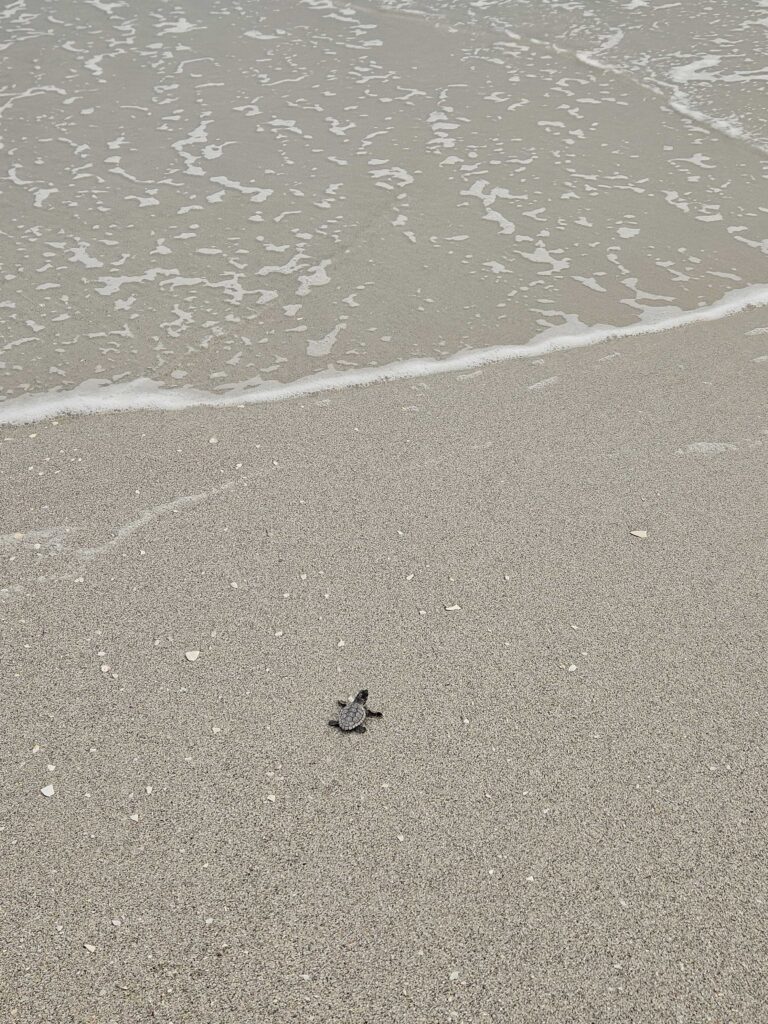
BigWorld – A tiny loggerhead hatchling makes its way to the Gulf. It’s a big world out there! Good luck little guy! Credit: Debbie Haynes
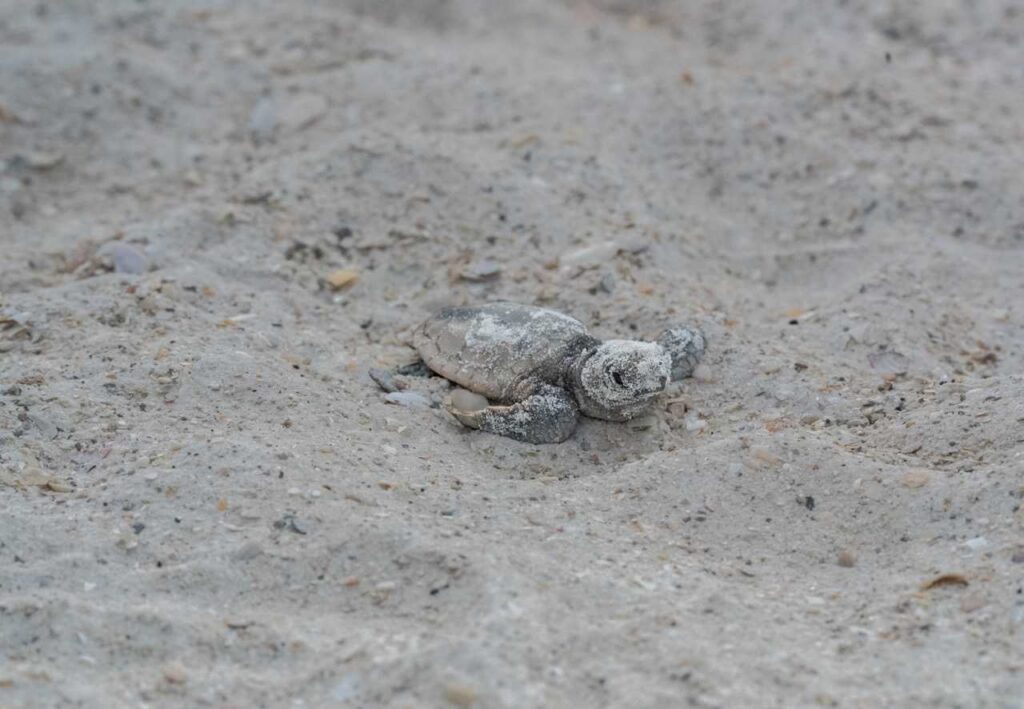
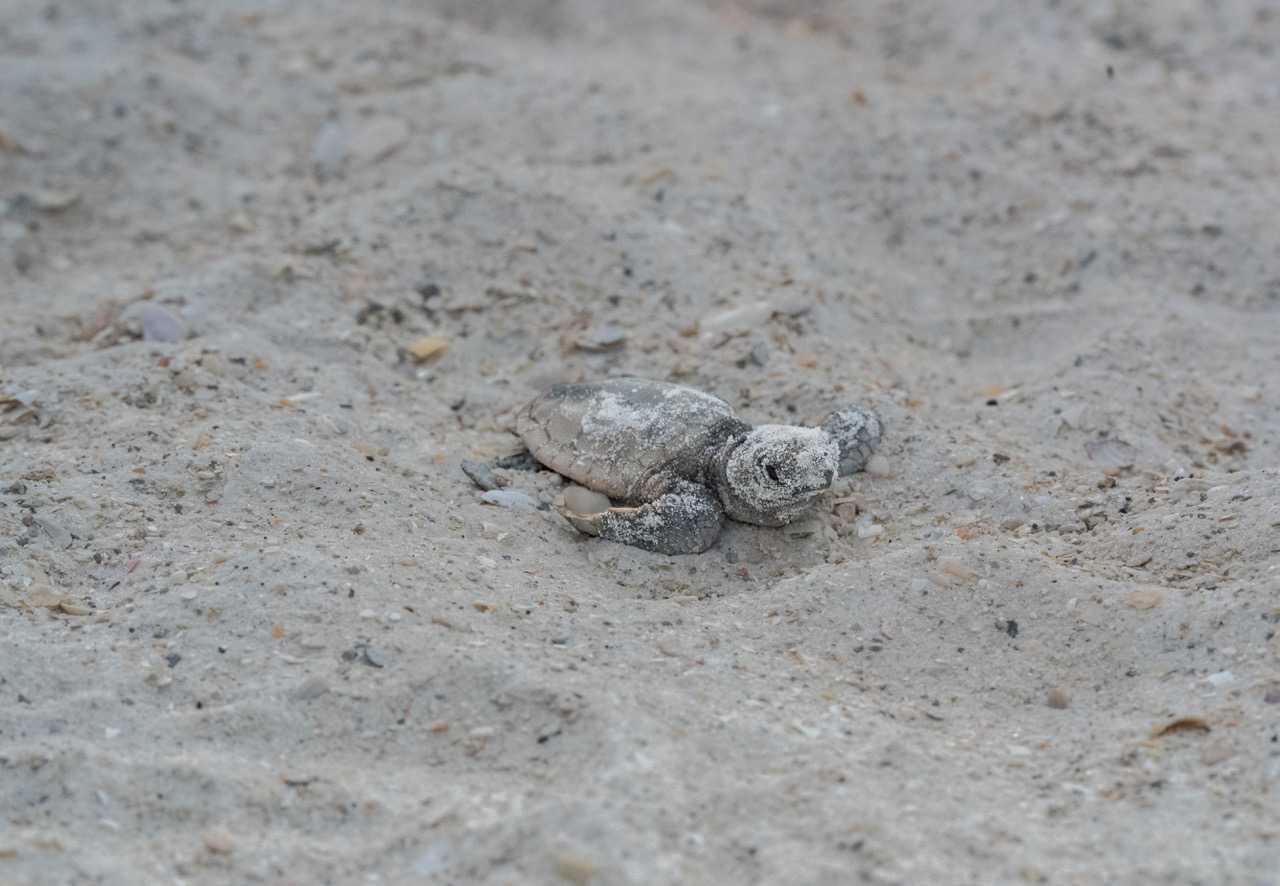
Loggerhead – A live loggerhead hatchling is found left in the nest after the rest of the hatchlings emerged three days prior. Credit: Amy Waterbury
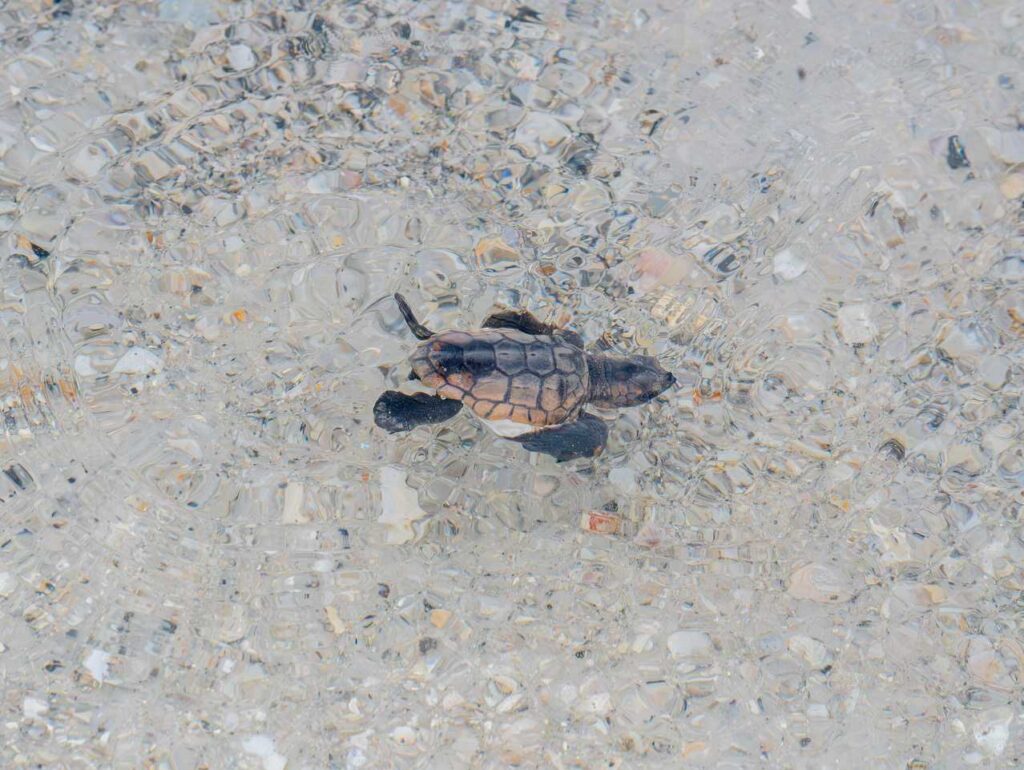
Swimming – A loggerhead hatchling starts its swim as it leaves the beach. Hatchlings use the motion of the waves to direct themselves against the wave action and find their way out into the Gulf. There they will continue to use the energy they absorbed from their yolk sac while still in the nest to swim for several days until they reach a floating line of seaweed where they will find food and shelter.
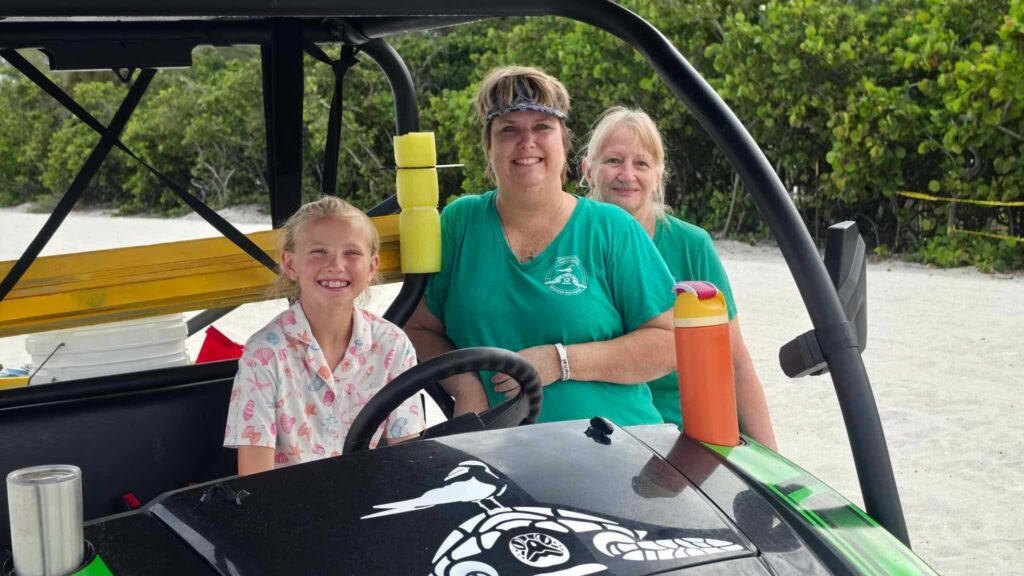
Patrol Education: Turtle Patrollers Danielle Kimberly and Linda O’Neal pose with an excited Scotland. Scotland came to watch AMITW patrollers conduct nest excavations every day for 4 days, but none of the nests had live hatchlings. Finally, on her last day on the Island she got her wish and saw 4 hatchlings released! Credit: Amy Waterbury
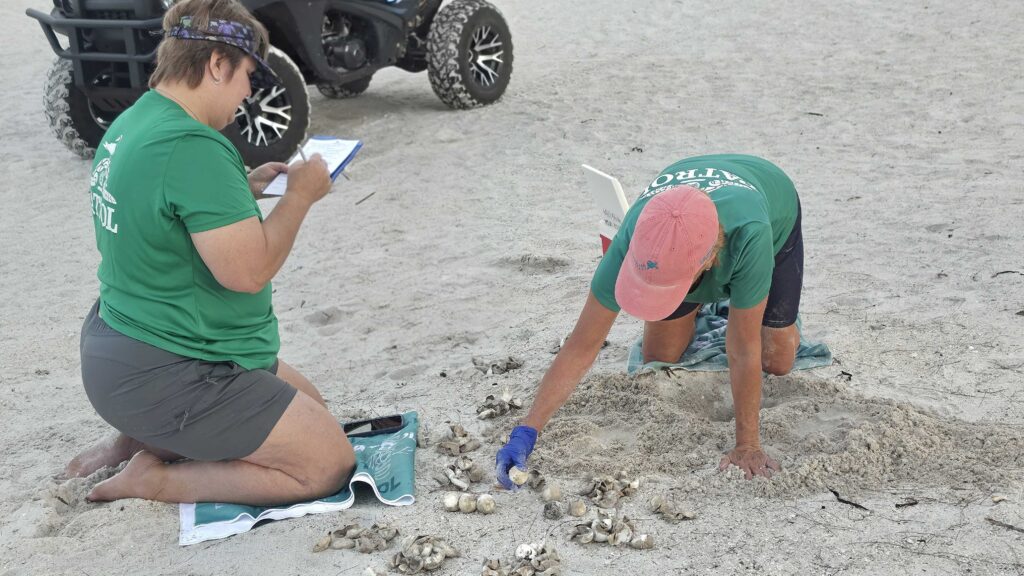
Nest Excavation: Turtle Patrollers Danielle Kimberly and Peggy Welch conduct a nest excavation on a nest that hatched three days prior. These excavations provide us important data about how successful each nest was at producing hatchlings. Credit: Amy Waterbury
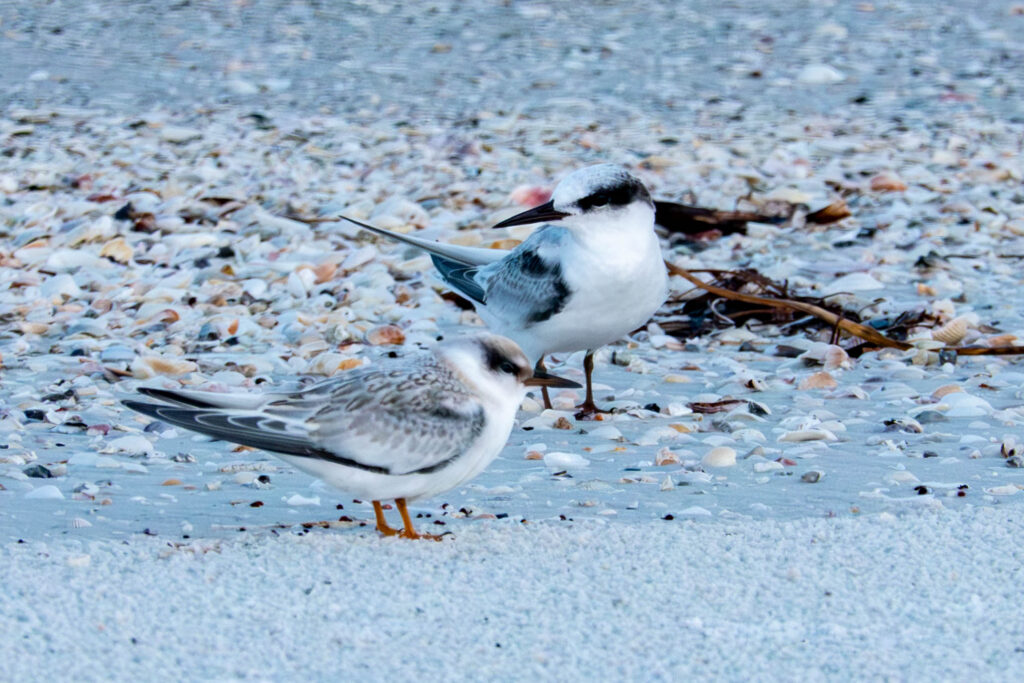
LETE with Chick -Rudy – Two young Least Terns rest on Anna Maria Island. Credit: Kathy Doddridge