
AMITW Nesting Numbers
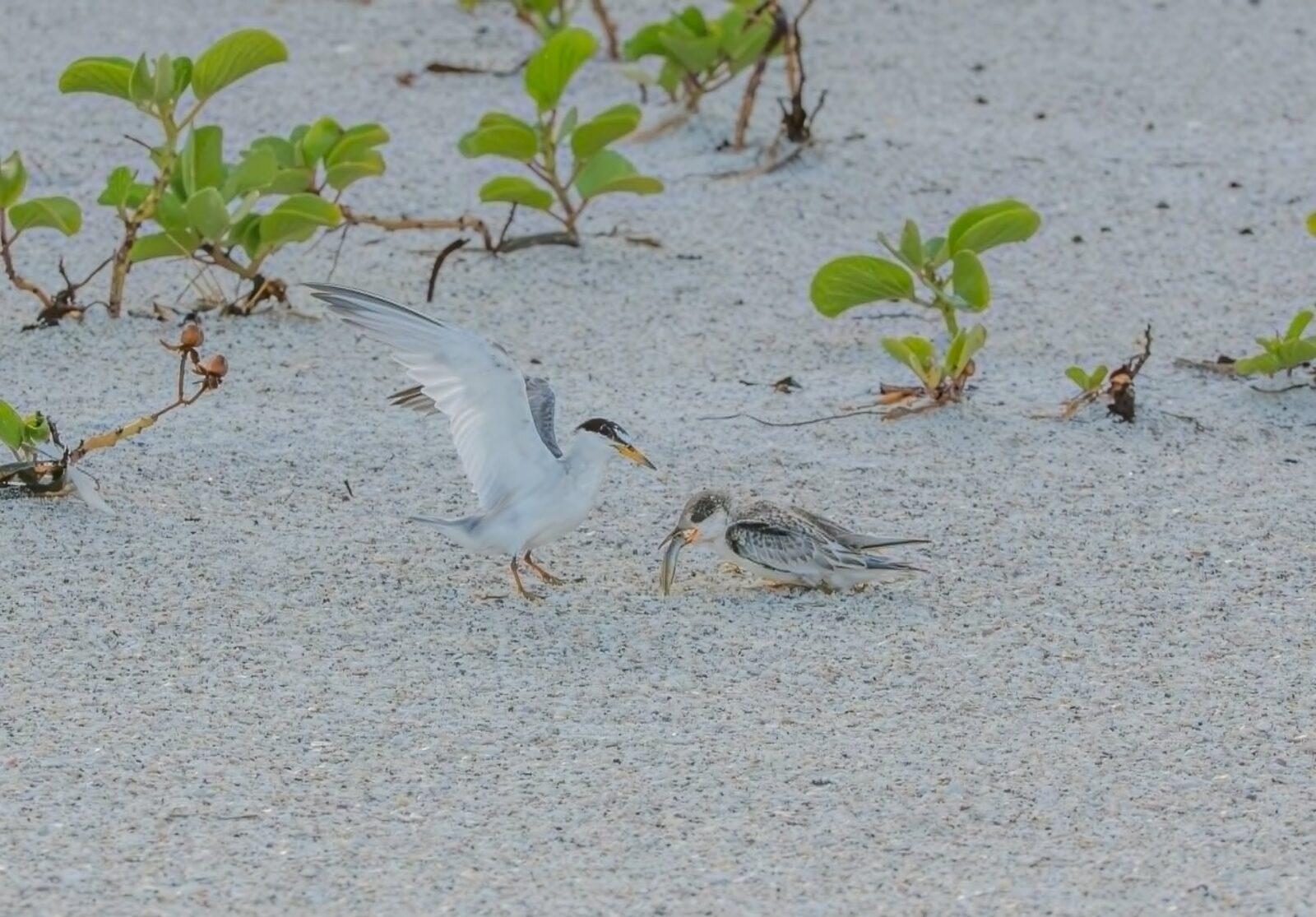
Leon, a Least Tern chick works on swallowing a fish that its parent has brought to feed him. Credit: Amy Waterbury
SEA TURTLES:
| 7/18/2026 – 7/24/2026 | |
| Nests this week | 27 |
| False Crawls this week | 36 |
| 2026 Total Nests | 436 |
| 2026 Total False Crawls | 553 |
| 2026 Adult Disorientations | 20 |
| 2026 Hatched Nests | 56 |
| 2026 Nests Inventoried | 37 |
| Nests remaining on the beach | 286 |
| 2026 Hatchlings Produced | 2,855 |
| 2026 Hatchling Disorientations | 20 |
| 2026 # Disoriented Hatchlings | 556-1290 |
| 2026 Diso Hatchlings found dead | 47 |
How Did Tropical Storm Bertha Affect Turtle Patrol?
Tropical Storm Bertha wreaked havoc on AMI beaches from 7/19 – 7/22 with heavy surf and winds bringing Gulf waters high on the beach. At that time, there were 371 loggerhead nests still incubating on the beach. Turtle patrol is tasked with protecting sea turtles and their nests from human impacts, but we do not interfere when nests are impacted by mother nature. Sea turtles have been around for millions of years and have adaptations that account for losses due to natural causes. They lay hundreds of eggs multiple times in one nesting season; likely resulting in one or two offspring that will survive to adulthood.
Sea turtle nests can withstand some overwash but too much may cause the eggs to stop developing and heavy surf may wash away sand over the nest and expose or pull out eggs. Once the eggs have been moving around in the surf, it’s likely that they are no longer viable. However, eggs left in the sand may still be viable after the water drains from the nest. Rain and washover from the surf can also cool the nest. Since the sex of the hatchlings is determined by the temperature of the nest during a specific part of incubation – with warmer temperatures producing more females and cooler temperatures producing more males – this may have increased the number of males produced in some nests.
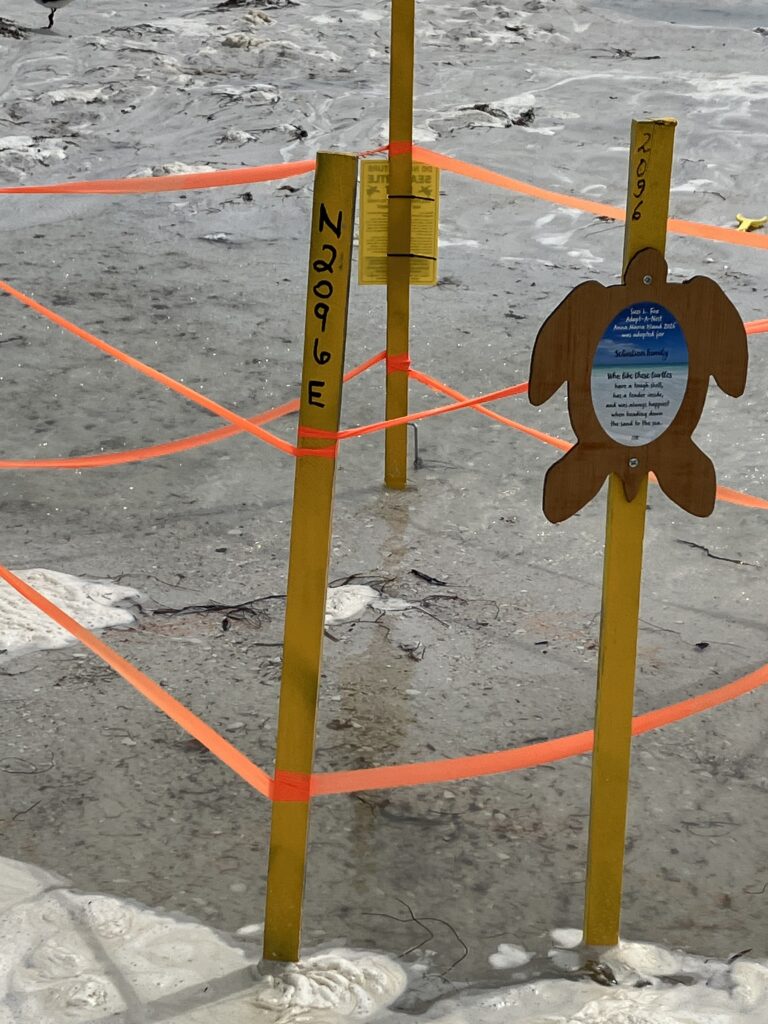
Some nests were completely under water from Tropical Storm Bertha. Even nests that were inundated like this one will be inventoried to determine if any eggs hatch after the sand dries out. Credit: Maureen Richmond
Each day of the storm, Anna Maria Island Turtle Watch (AMITW) patrolled the beach with a list of all 371 nests so they could check each one and determine if any of them lost their posts or had eggs washed away. Turtle patrol documented water disturbances, picked up nest stakes that washed away, used the original GPS coordinates to determine if nests were completely washed out, and reposted nests that had lost stakes but were still in place. The heavy rains made it difficult to see the tracks of the adult females that came up on the beach overnight and also obliterated hatchling tracks that show whether the hatchlings made it to the Gulf, but AMITW still found new nests and hatches. People calling the AMITW 24-hour Hotline (941-301-8434) were much appreciated as callers helped Turtle Patrol by alerting them to eggs and stakes washing out and hatchlings that were found off the beach.
In all TS Bertha impacted 189 nests, 51% of the nests left on the beach when the storm started impacting AMI, including
- 65 nests completely washed out
- 6 nests had some eggs washed out
- 7 nests were observed in standing water
- 111 nest were washed over by the surf
182 nests were not impacted by the surf during the storm.
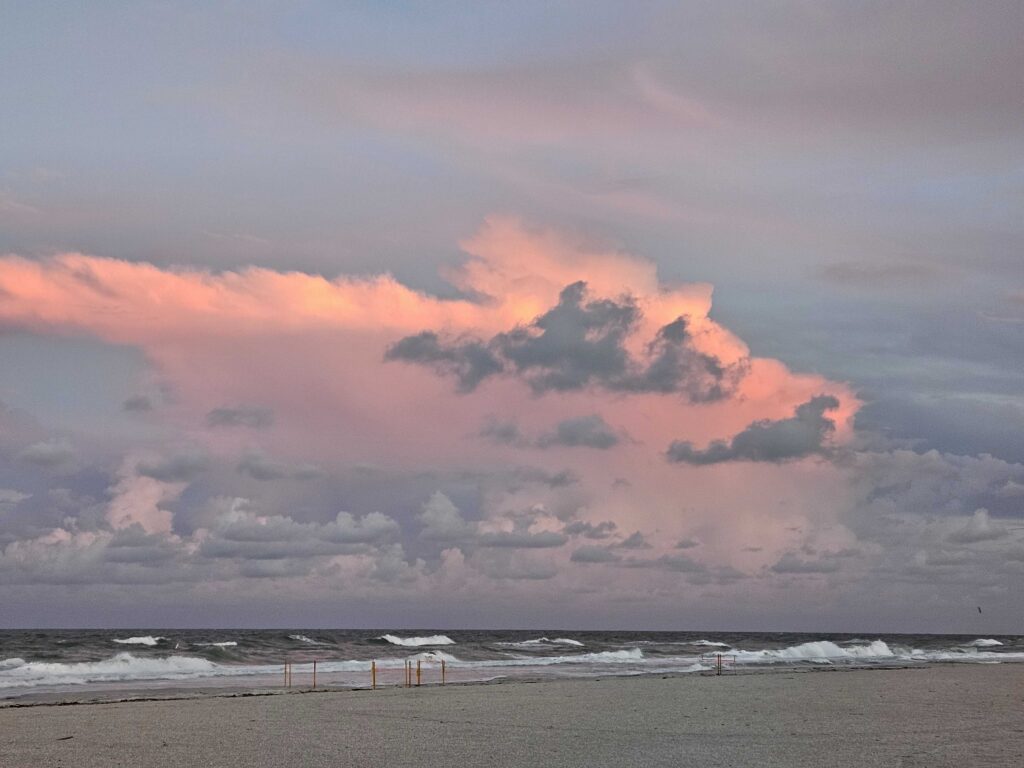
The heavy surf and winds pushed the Gulf waters high on the beach on Anna Maria as TS Bertha passed by offshore causing overwashes and washouts of loggerhead nests incubating on the Island. Credit: Kathy Doddridge
Nest Inventories
So far, AMITW has conducted 56 nest inventories and documented 2,855 hatchlings produced from those nests. Every nest that hatches is inventoried three days after the hatch is observed. During a nest inventory, all the contents of the nests are removed so we can determine how many eggs were in the nest and how many hatched. Currently we are seeing a 76.7% hatch success rate from these nests. Hatched nests are marked with a red flag, so if you see a nest with a red flag, keep an eye out for Turtle Patrol in the morning because they will be inventorying that nest within the next three days. If you are lucky to catch AMITW doing a nest inventory, you can learn a lot about sea turtles. And there might even be a live hatchling or two left in the nest that will be released after the nest is inventoried.
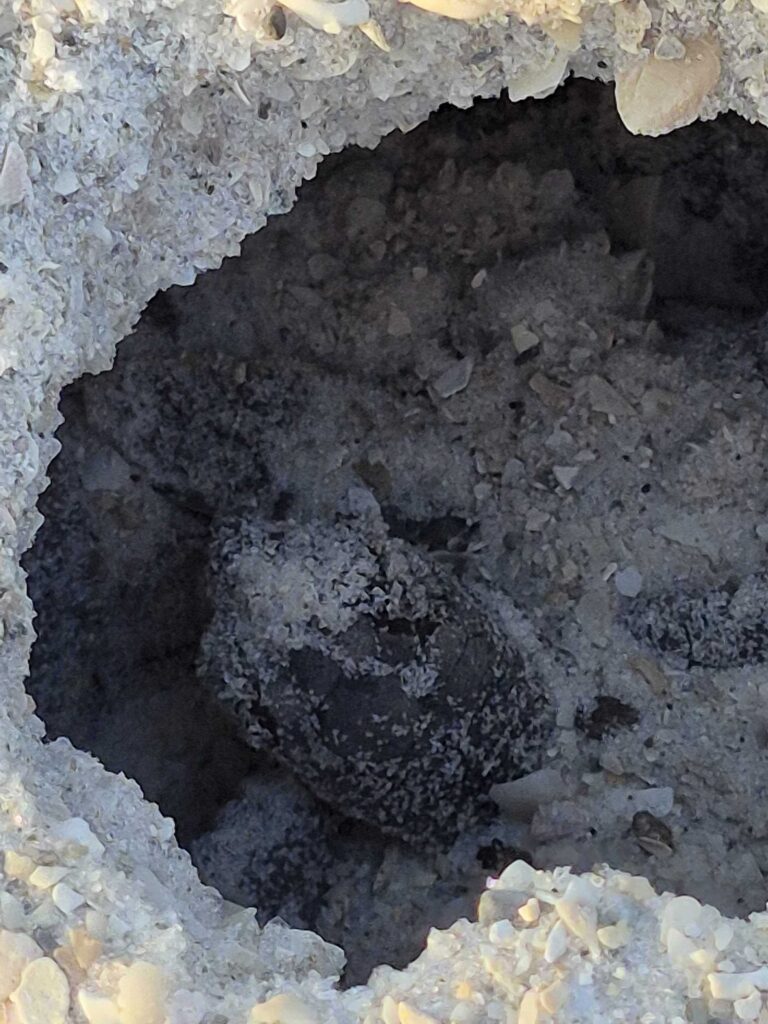
A loggerhead hatchling can be seen inside a nest right before the nest of hatchlings emerge. Hatchlings mostly emerge at night. Their cue is the drop in temperature from day to night. Credit: Hans Uwe Duerr
Find a Disoriented Hatchling? Call our 24-hour Hotline!
Please do not release found hatchlings to the Gulf! AMITW has a team of on-call trained volunteers manning the phones 24-hours. So, if you see a hatchling or adult sea turtle in distress, please call our 24-hour Hotline (941) 301-8434 and our volunteers will respond promptly. You can also find this number on the yellow nest signs and on our website www.islandturtlewatch.com
Need to Tell Your Guests about Turtle Season?
Order FREE outreach materials athttps://islandturtlewatch.com/get-involved/educate/
Provide to guests or post in your rental properties! Rack cards, door hangers, posters, and window clings, educate visitors about how to protect sea turtles and shorebirds on AMI.
Turtle Tracks and Shorebird Facts talks – Mondays from 10am – 11am at Holmes Beach City Hall 5801 Marina Drive, Holmes Beach. FREE. No reservations necessary!
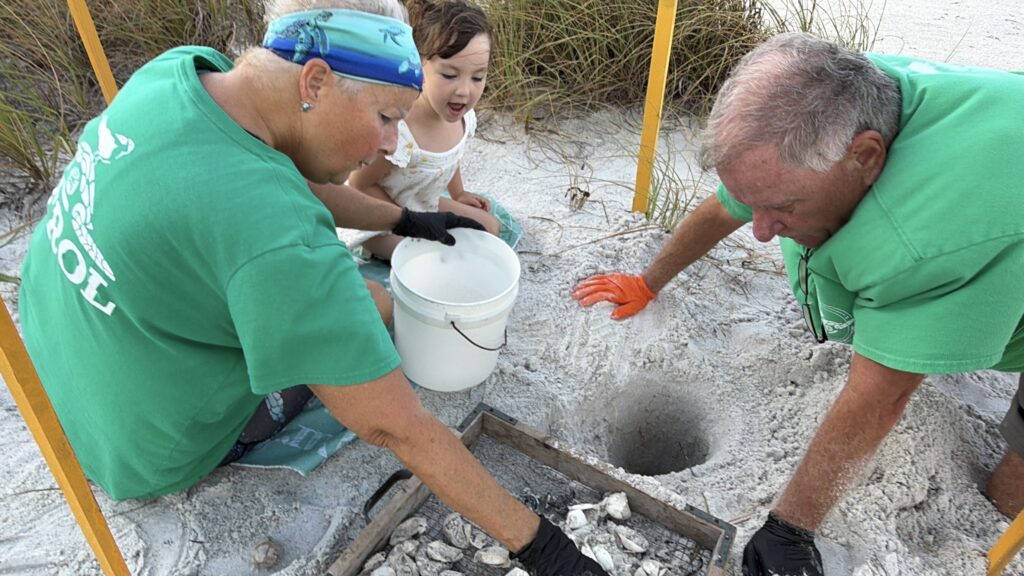
AMITW Turtle Patrollers, Karen and Chuck Anderson inventory a hatched nest to the delight of a family that got to watch! Every egg is counted and sometimes we even find live hatchlings to release. Credit: Cindy Hodge.
SHOREBIRDS:
Least Terns
Adults – 22-180
Chicks – 9-11
After 11 weeks, the dynamics of the Least Tern colony are changing. It is amazing that these small birds and their chicks could endure the high winds and rain from Tropical Storm Bertha. Over the last week, the number of adult Least Terns has been fluctuating from 22 to as many as 180. All along the Gulf Coast Least Terns are starting their annual migration southward to the Caribbean Islands and the northern coast of South America. One evening 150+ adult Least Terns arrived at the colony and left the next morning. Chicks Persi, Vera and Nancy have not been regularly seen since and it appears they may be joining some of these groups and then returning to the colony. The last banded chick, Leon, took his first flight on July 24.
The three remaining chicks, ranging in age from 2 – 4 weeks, continue to be fed by their parents. During this time, these flightless chicks can be seen roaming outside and beyond the enclosure. When chicks feel threatened by an avian predator, they lay flat on the sand and can be difficult to see. They will also hide in the wrack or seaweed that has accumulated along the shoreline. Beachgoers should use caution when walking in the area.
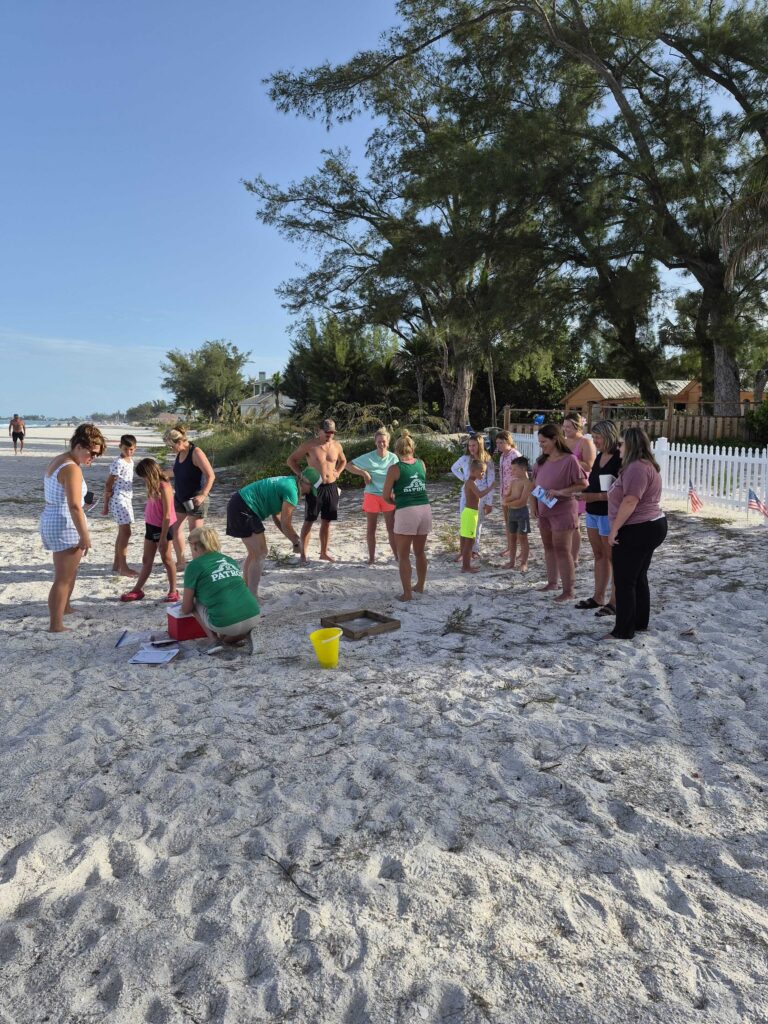
Nest inventories take place in the morning during Turtle Patrol and sometimes can draw a crowd. If you see AMITW conducting a nest inventory, come join us and learn about the nest and about sea turtles! We might even have some stickers and temporary tattoos! Credit: Hans Uwe Duerr