
AMITW Nesting Numbers
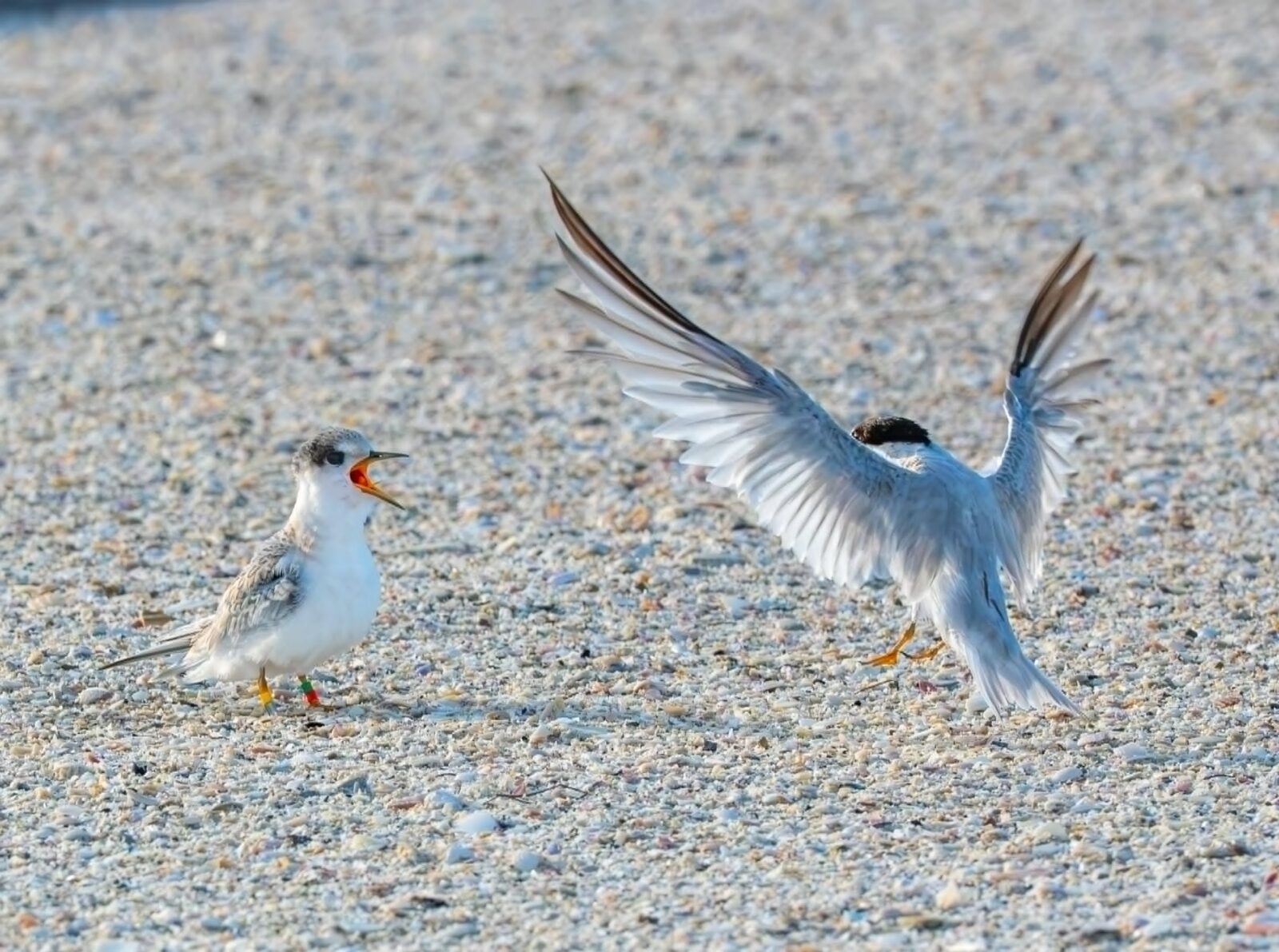
An adult flies in to feed her Least Tern chick, Persi. Chicks, even when flight capable, continue to be fed by their parents. Credit: Amy Waterbury
SEA TURTLES:
| 7/25/2026 – 7/31/2026 | |
| Nests this week | 13 |
| False Crawls this week | 11 |
| 2026 Total Nests | 449 |
| 2026 Total False Crawls | 564 |
| 2026 Adult Disorientations | 20 |
| 2026 Hatched Nests | 78 |
| 2026 Nests Inventoried | 70 |
| Nests remaining on the beach | 299 |
| 2026 Hatchlings Produced | 4,957 |
| 2026 Hatchling Disorientations | 21 |
| 2026 # Disoriented Hatchlings | 561-1300 |
| 2026 Diso Hatchlings found dead | 49 |
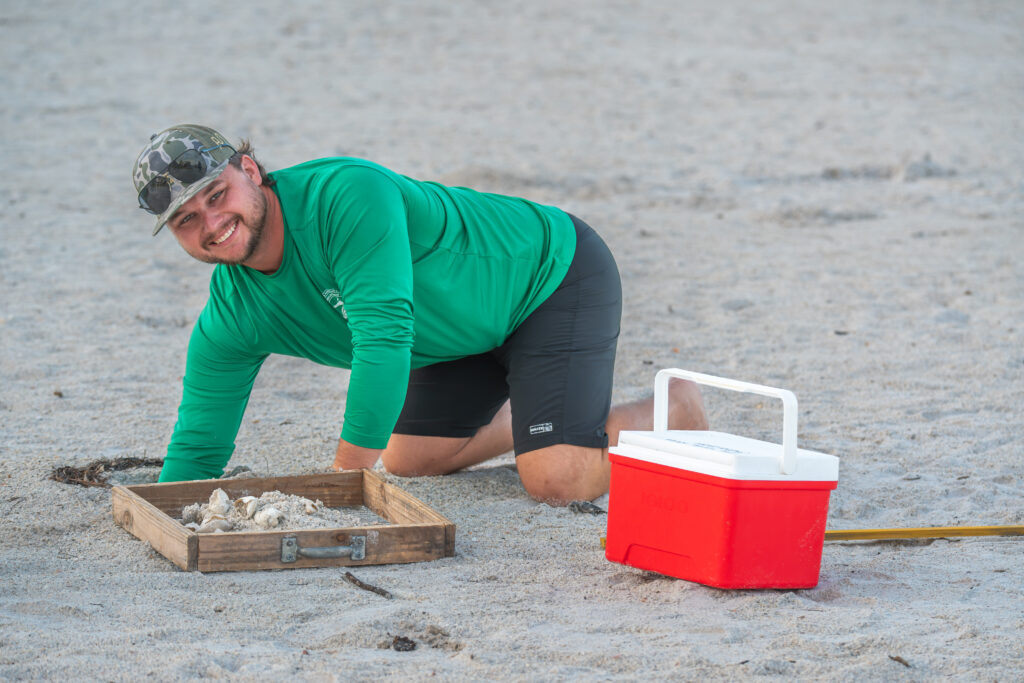
Turtle Patroller, Jerry Miller excavates a nest that hatched 3 days ago. During an excavation, AMITW removes all the contents of the nest and counts how many hatched shells and other eggs we find to determine how well the nest did. In this nest, Jerry found not only hatched eggs, but a live hatchling that was released. Credit: Amy Waterbury
Stormy weather
Stormy weather this week didn’t stop the turtles from laying new nests or the nests from hatching. Turtle patrollers must check the beach every day, rain or shine, only pausing to take shelter in thunderstorms. It takes a keen eye to find new crawls and identify hatches after a heavy rain because the tracks are not as obvious. Rain may also prevent us from documenting a hatchling disorientation because the faint hatchling tracks are often obliterated and all we will see is the depression left behind after all the hatchlings emerge from the nest. If we find a hatched nest but can’t see hatchling tracks, we try to check the area for lost hatchlings. However, often we are relying on the public to call in wayward hatchlings they find that have wandered landward towards artificial lighting. If you find a disoriented hatchling, please call our 24-hour Hotline 941-301-8434 so AMI Turtle Watch can get the hatchling the help it needs and make sure there aren’t more hatchlings in trouble in the area.
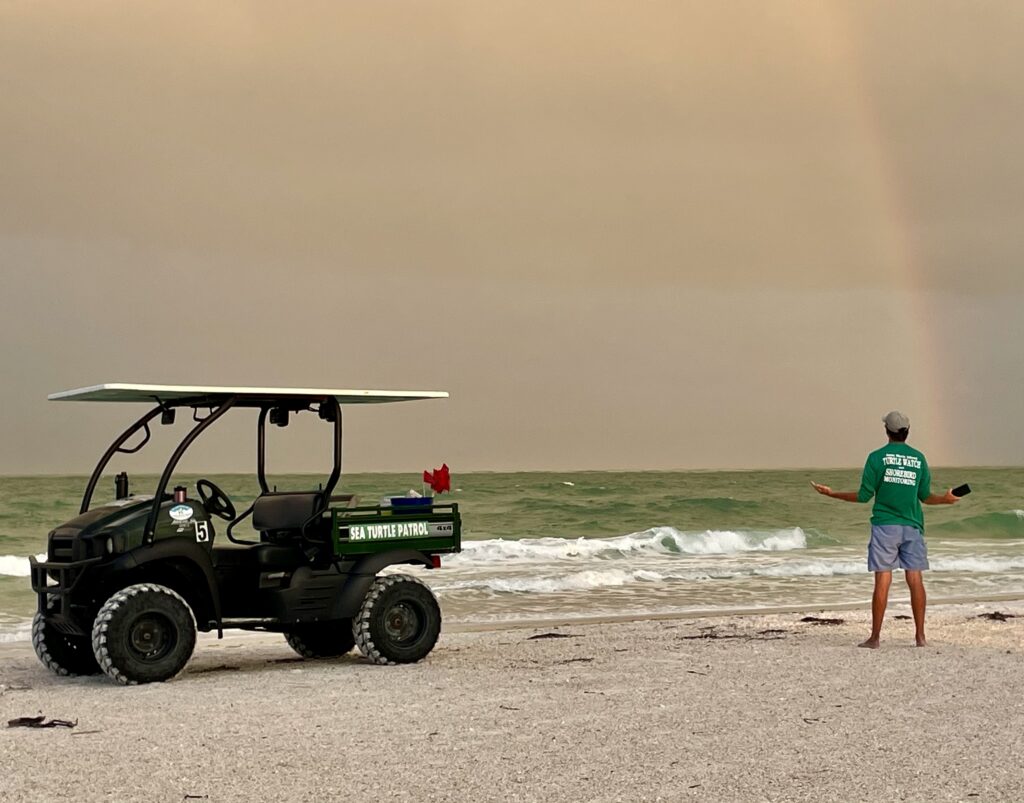
Turtle Patrol isn’t always sunshine and hatchlings! AMITW Patroller, Bob Haynes, takes in the rainbow that forms on a stormy day this week after getting caught in a squall and having to wait out patrol in a parking garage until the storm and lightning moved away. Credit: Bill Booher
Washback Post-hatchlings
This week our patrollers found a washback post-hatchling. Post-hatchlings are baby turtles that have already been in the Gulf for a while and have completed their swim frenzy. At this stage in their life, they would be floating in the sargassum line far out in the Gulf and taking an occasional swim to feed. Sometimes, the floating weed line gets pushed close to shore and the post-hatchlings wash in and are found hanging out in the wrack but not moving much. They are usually larger than newly emerged hatchlings and have algal growth on their bodies. If you find a washback post-hatchling, please DO NOT put it back in the water – they are exhausted and dehydrated and need rehabilitation. Please call AMITW’s 24-hour Hotline 941-301-8434.
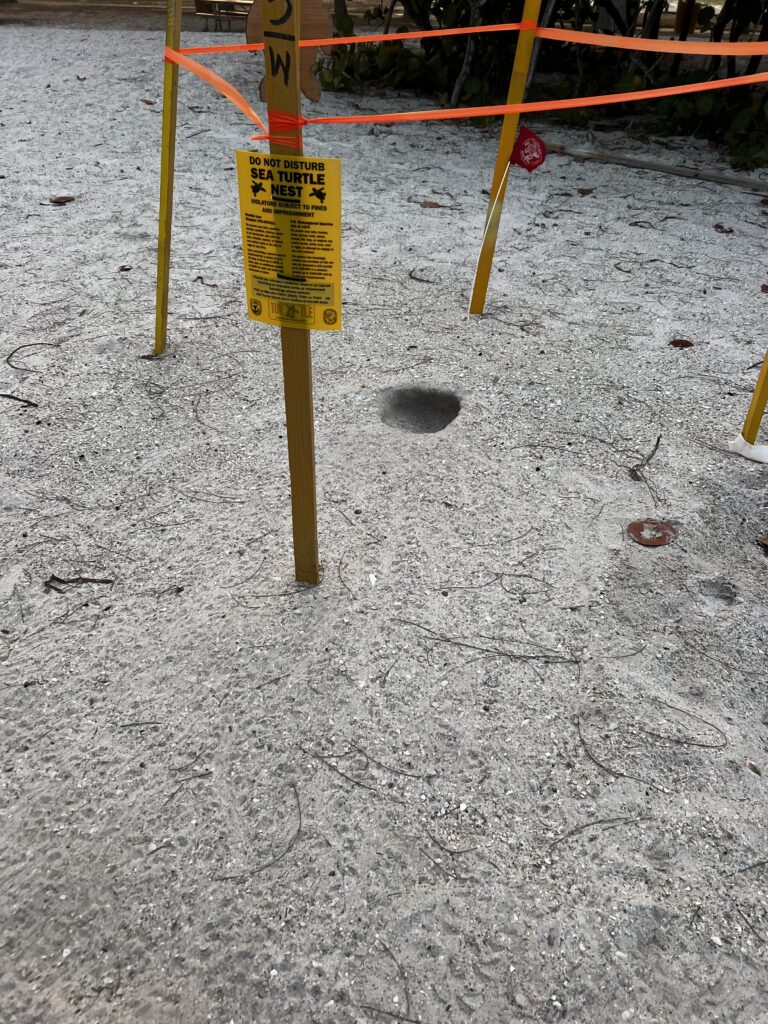
The BEST sighting on Turtle Patrol – a newly hatched nest with all the hatchling tracks going directly to the Gulf! When hatchlings emerge from a nest the sand fills in behind them leaving a depression behind and hatchling tracks that we can follow to see which direction they traveled. Sometimes when it rains, it destroys the hatchling tracks and it’s difficult to tell which way the hatchlings went. Credit: MaryKate Camara
Holes
Hatchling season is in full swing and nests are hatching all over the island. In addition to keeping the beach dark, it’s important to fill in your holes so that small hatchlings don’t get trapped in them on their way to the Gulf. This week not only did we find hatchlings trapped in a hole, but we also had a couple of mama turtles that had to traverse out of large holes on their way up the beach to nest. Before you leave the beach, please make sure you leave the area clean, flat and dark so the turtles feel welcome here!
Find a Disoriented Hatchling? Call our 24-hour Hotline!
Please do not release found hatchlings to the Gulf! AMITW has a team of on-call trained volunteers manning the phones 24-hours. So, if you see a hatchling or adult sea turtle in distress, please call our 24-hour Hotline (941) 301-8434 and our volunteers will respond promptly. You can also find this number on the yellow nest signs and on our website www.islandturtlewatch.com
Need to Tell Your Guests about Turtle Season?
Order FREE outreach materials athttps://islandturtlewatch.com/get-involved/educate/
Provide to guests or post in your rental properties! Rack cards, door hangers, posters, and window clings, educate visitors about how to protect sea turtles and shorebirds on AMI.
Turtle Tracks and Shorebird Facts talks – Only 4 more weeks left of Talks! Every Monday from 10am – 11am at Holmes Beach City Hall 5801 Marina Drive, Holmes Beach. FREE. No reservations necessary!
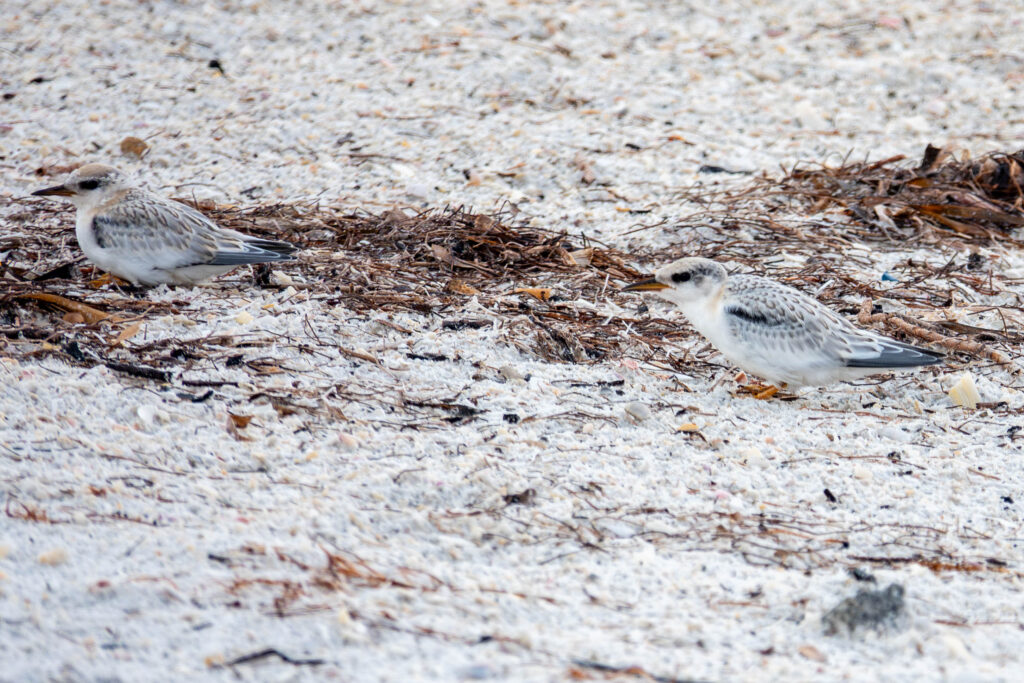
The last of the Least Tern chicks to hatch on Anna Maria Island, Libby and Rudy, are starting to take their first short flights. They are also wandering outside the posted closure and can often be found blending in with the wrack (seaweed) line. Beachgoers are asked to be careful when walking through this area as chicks don’t always move out of the way but rather crouch in the wrack to hide. Credit: Kathy Doddridge
SHOREBIRDS:
Least Terns
Adults: 41 – 272
Flight-capable Chicks: 11
Along with the stormy weather, we have also seen large numbers of least terns flock to the Bradenton Beach colony. They arrive in the late afternoon/evening to refuel and rest before continuing on their annual migration to the Caribbean islands. As of July 30, the youngest three chicks have taken their first short flights. Even though they can fly, all the chicks still depend on their parents to bring them fish and can often be seen outside the enclosure. Beachgoers should walk around resting birds and be mindful of young birds along the wrack (seaweed) line.
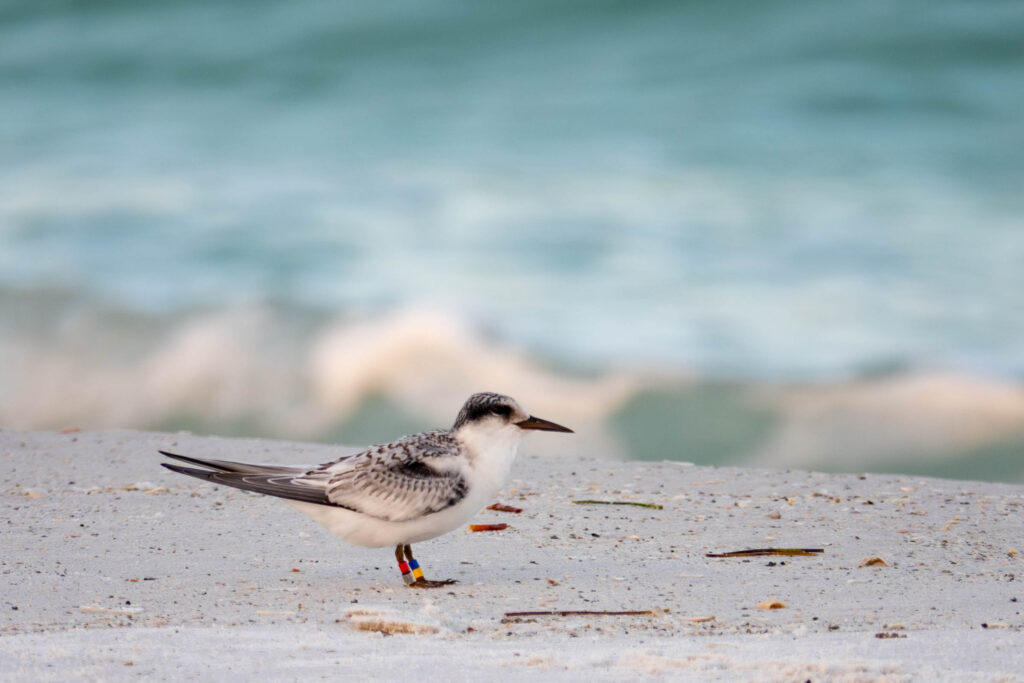
Although Persi has fledged, he still remains in the area of the Least Tern colony. The bands applied to him before he could fly will help us identify him in the future, such that when he is seen again the bands can be reported and we can learn where he flies to when he migrates from Florida to the Caribbean. Credit: Kathy Doddridge