
AMITW Nesting Numbers 8/21/2026
SEA TURTLES:
| 8/15/2026 – 8/21/2026 | |
| Nests this week | 0 |
| False Crawls this week | 0 |
| 2026 Total Nests | 458 |
| 2026 Total False Crawls | 468 |
| 2026 Adult Disorientations | 20 |
| 2026 Hatched Nests | 168 |
| 2026 Nests Inventoried | 189 |
| Nests remaining on the beach | 179 |
| 2026 Hatchlings Produced | 11,796 |
| 2026 Hatch Disorientations | 66 |
| 2026 # Disoriented Hatchlings | 1,974 – 4,470 |
| 2026 Diso Hatchlings found dead | 171 |
| Hatchling Disorientations on Anna Maria Island by City as of 8/21/2026 | ||||
| City | Nests Disoriented at Hatch | Hatched Nests | Diso Rate | Disoriented Hatchlings Found Dead |
| Anna Maria | 0 | 29 | 0% | 0 |
| Holmes Beach | 15 | 45 | 33% | 4 |
| Bradenton Beach | 51 | 94 | 54% | 167 |
| Total (Anna Maria Island) | 66 | 168 | 39% | 171 |
This week we had no new nests or adult turtle crawls on the Island. There’s still a chance of a late nest or two but the turtle mamas may be done for the season and headed to their foraging grounds where they will spend a couple years taking it easy and building up their energy and fat stores before returning for their next nesting season.
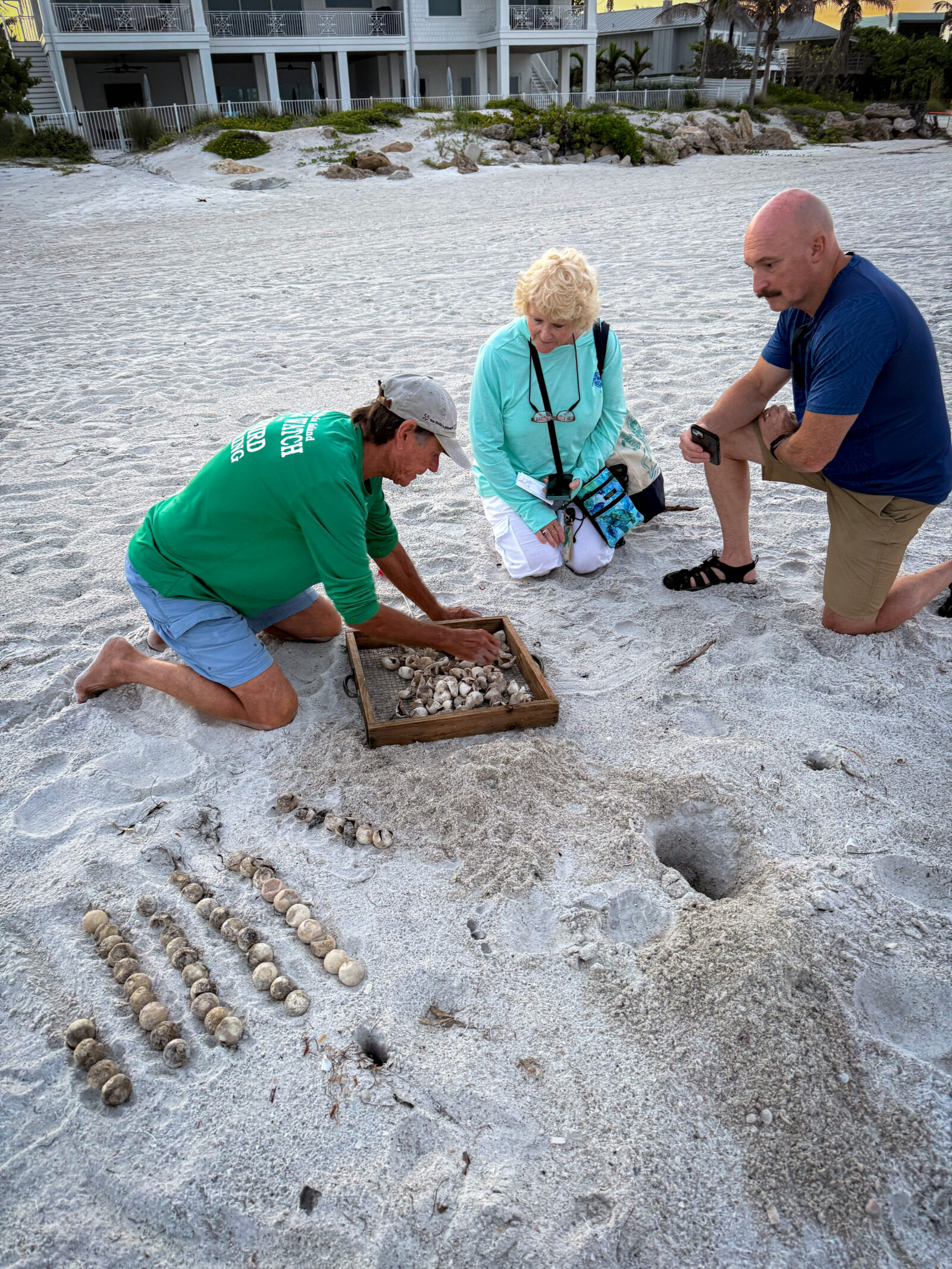
What we are seeing a lot of this week are HATCHES and we have a lot more hatching to go with 179 nests still left on the beach. This also means we will be conducting a lot more excavations before the end of the season. Excavations take place 3 days after a nest hatches. We dig up the contents of the nest to find out how well the nest did – how many eggs were in the nest and how many hatched out. Some of the nests that we excavated this week did not have the best hatch success. We believe that these nests may have been inundated during the couple of days that Tropical Storm Bertha came through and flooded the beaches and many of the nests- even those nests pretty high on the beach (far from the water). If nests are flooded at a specific time during their incubation, it may cause the eggs to stop developing and thus lead to lower hatch success. However, we like to think that the hatchlings that did survive the water inundation are stronger and may be the 1 in 1,000 that survive to adulthood!
Remember, it’s Lights Out for turtle nesting season (May 1 – October 31), so help us make the beach safe for sea turtles:
- Check your properties for any lights that can be seen from the beach and make sure they are turtle friendly
- Don’t use cell phone lights, flash, or flashlights on the beach at night – this can blind turtles and disorient hatchlings farther down the beach
- Educate your renters and patrons to keep blinds closed at night and turn off unnecessary lights
- Fill in your holes and knock down your sandcastles, so hatchlings don’t get stuck on their way to the water
- Take your furniture and all your trash with you when you leave the beach – leave the beach clean, flat and dark for the turtles!
- Call AMITW’s 24-hour hotline (941) 301-8434 if you find any wayward hatchlings (dead or alive). Please, don’t put them in the water!
What about this Turtle-Friendly lighting?
Sea turtles nest and hatch at night and during that time, they use the relatively dark background of the dunes and the vegetation which blocks the night sky to locate the relatively brighter ocean that reflects the night sky including the stars and the moon (when it is visible). It’s important to keep the landward side of the beach dark so they can navigate easily to the Gulf waters.
Any light directly or indirectly visible from the beach can disorient sea turtles by disrupting the dark background – especially if they create a bright background which can look like the night sky. This includes spotlights, pool lights, flashlights, cell phones, decorative uplights, interior lights and even skyglow from inland sources.
How can I make my property Wildlife-Friendly?
First, turn off or remove any lights that are purely decorative. For the remaining lights use these three rules: 1) Keep it Low (as in low to the ground), 2) Keep it Shielded (block the light source and don’t let it reflect off of surfaces that can be seen from the beach), and 3) Keep It Long (this refers to long wavelengths over 560nm in the red and orange end of the ROYGIV color spectrum).
Inside the house, you can use blinds or drapes to block light from being seen outside and move light sources away from windows.
Are there other benefits of Turtle-Friendly lighting?
YES! There are several. Turtle-friendly lighting benefits other wildlife, like migrating birds, by darkening the night sky. It makes our area better for stargazing. It is better for our night vision because our eyes adjust quicker in the dark to red or amber lights versus white light which causes temporary blindness while eyes adjust. Unlike white light, which reduces melatonin production, turtle-friendly lighting promotes good sleep and our natural circadian rhythms. Shielding light DIRECTS the light to where it is needed which makes the area safer to traverse in the dark.
If you have questions about Turtle-friendly lighting or need help figuring out what your property needs to make it more turtle-friendly, please reach out to AMITW at info@islandturtlewatch.com and we can help!
PHOTOS:
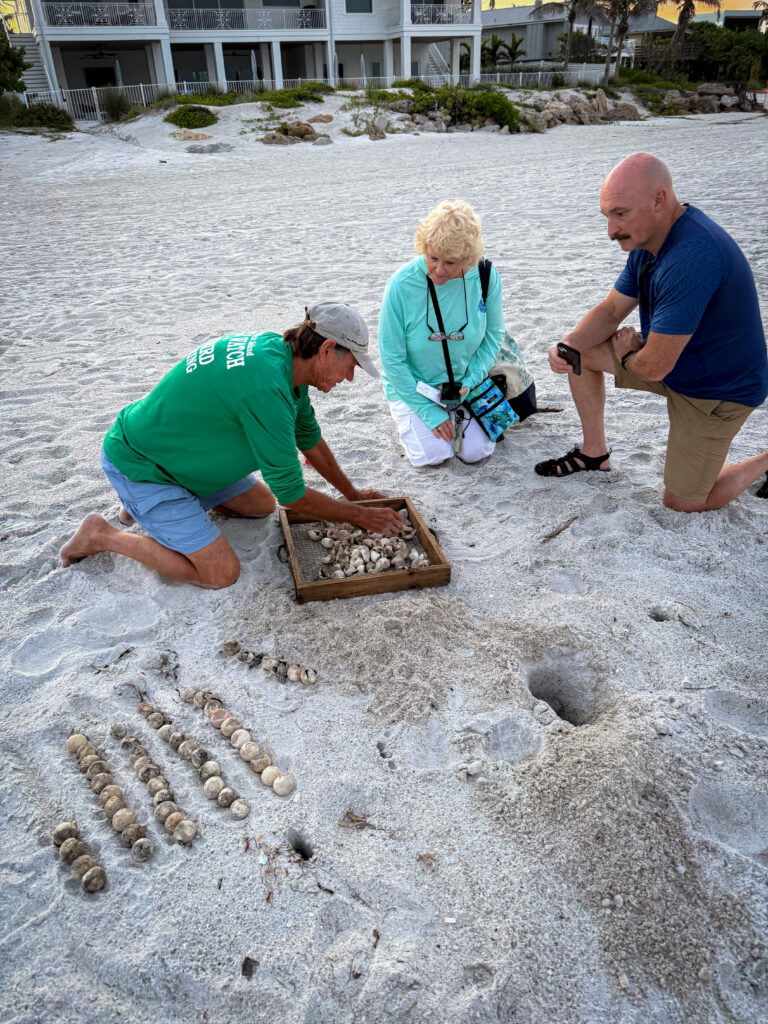
NestExcavation: AMITW Turtle Patrollers Bob Haynes and Joanie Derry excavate a nest that hatched three days earlier. Nest excavations are a great way to learn about sea turtles and possibly even get a chance to see a live hatchling released that was found left behind in the nest. Credit: Jerry Miller
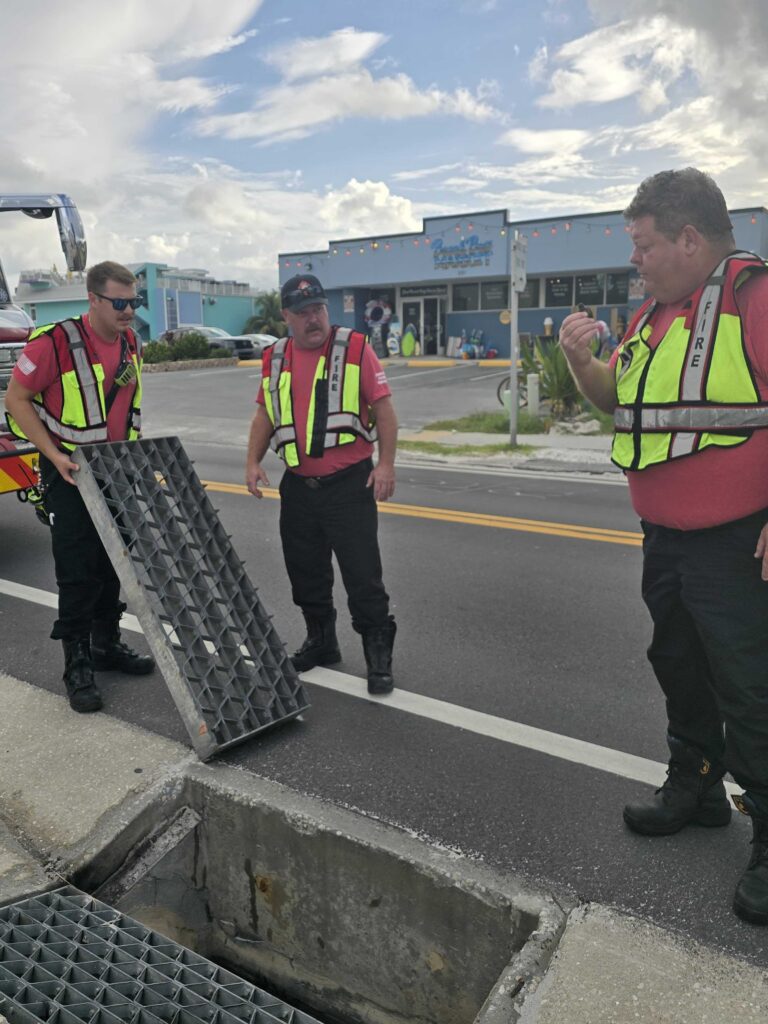
WMFR Hatchling Rescue: We love our community partners! West Manatee Fire and Rescue assist AMITW Turtle Patrol at retrieving a disoriented hatchling that fell into a storm drain. Credit: Peggy Welch
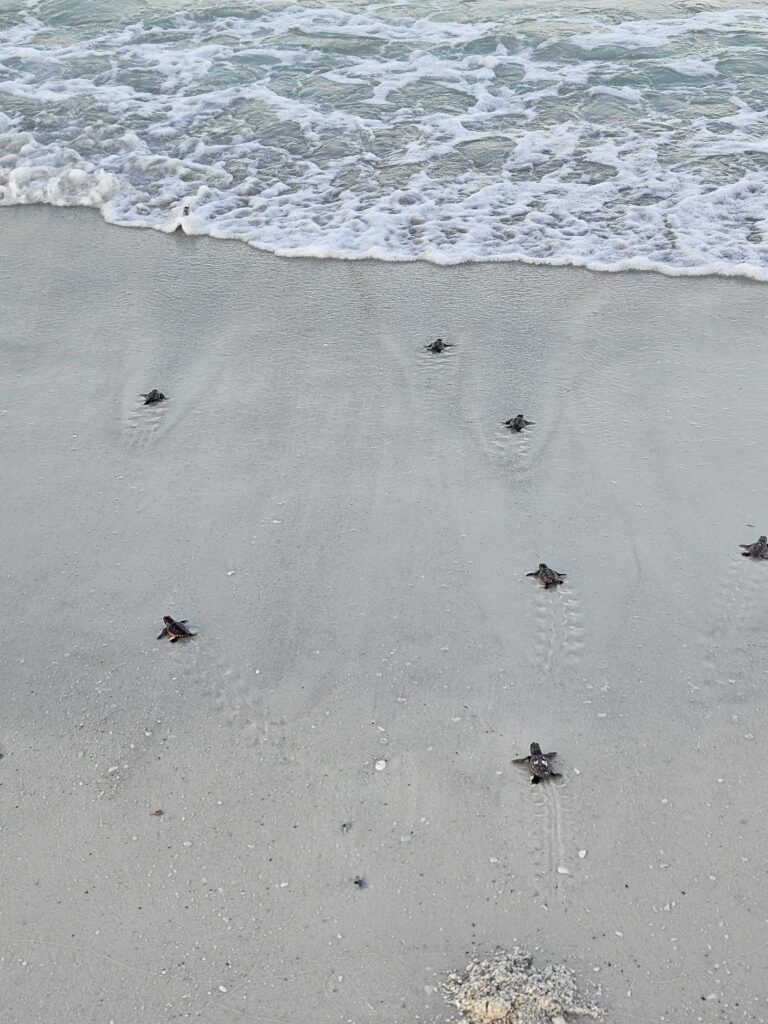
Hatchling with Tracks: A loggerhead hatchling takes its last few crawls to the water before it starts a big swim. Credit: Jerry Miller
ShorebirdSurvey: Our AMITW Shorebird team, equipped with their binoculars, surveys the Anna Maria Island at least once a month to document all the shorebirds that can utilized our beaches as a stopover or a home. Our data is used to determine trends of locations and which birds are here at what times of the year. Here, AMITW Shorebird Coordinator, Kathy Doddridge (right) gets the help from volunteer Cindy Hodge (left) on our monthly shorebird survey.
SHOREBIRDS:
We have been keeping an eye on the shorebirds migrating through and returning to Anna Maria Island. During our shorebird survey this week, we saw several visitors that are starting to return or stopping by: a Piping Plover, Marbled Godwits, a Reddish Egret, Red Knots and a Lesser Black-backed Gull. We remind people that these birds are here to rest and feed. Please respect their space and their ability to enjoy the Island.
- Never intentionally force birds to fly. When birds are chased or disturbed, they use energy they need to reserve for nesting and migration.
- Keep pets away from birds – pets can be perceived as a threat to birds and will disturb them. Keep cats indoors.
- Keep the beach clean and do not feed wildlife. Birds need to find their own food and french fries are not healthy for them. Litter on beaches can attract predators and entangle birds.
- Spread the word! If you see people disturbing nesting birds, gently remind them how their actions may hurt a birds’ survival. If they continue to disturb nesting birds, please call and report their activities to FWC’s Wildlife Alert hotline at 888-404-FWCC (3922).